🐾 1. What is Low Calorie Dog Food?
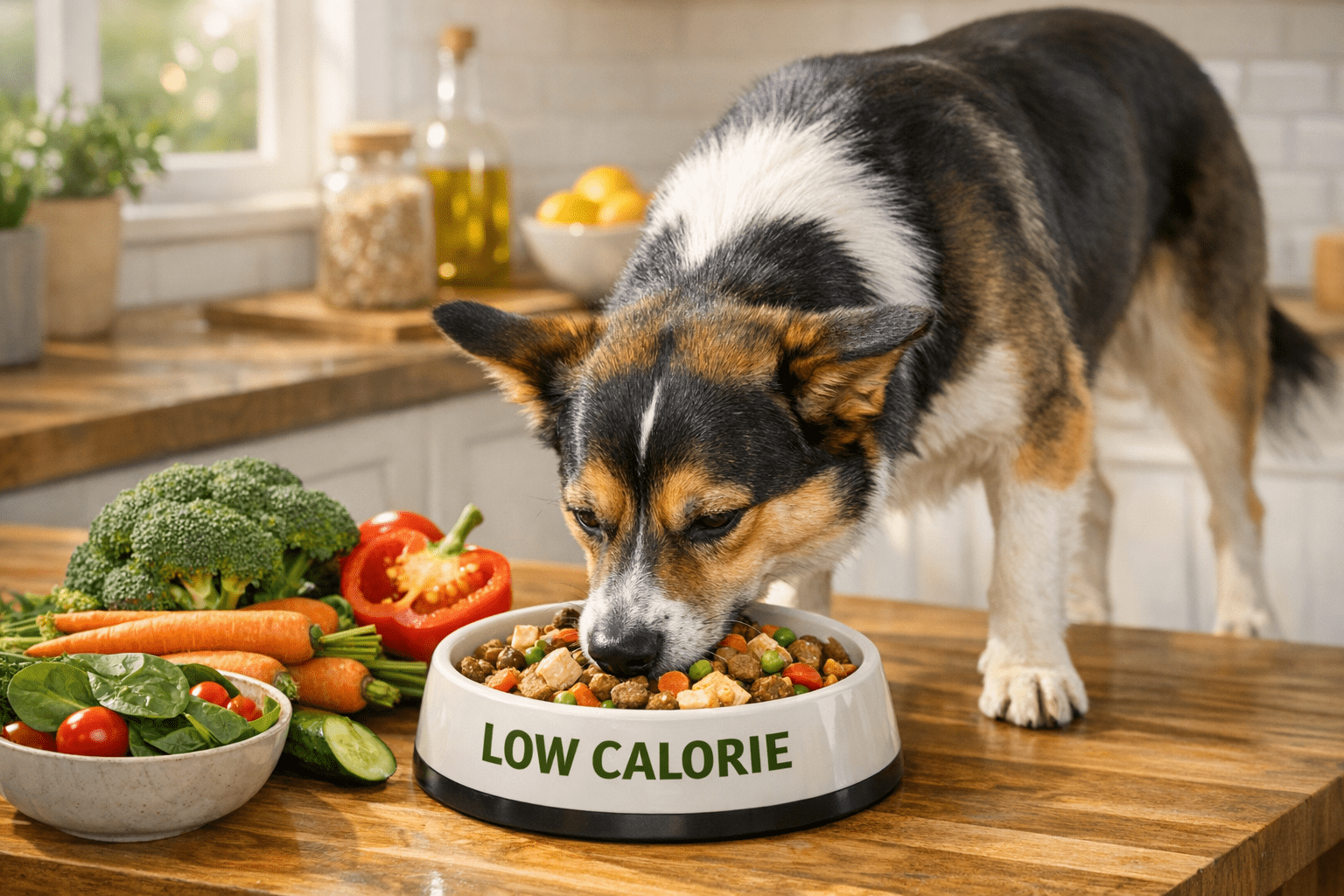
When I first heard about low calorie dog food, I honestly thought it meant feeding my dog less and dealing with endless begging 😅. Thankfully, that’s not what it is at all. Low calorie dog food simply means food that has fewer calories per portion but still gives my dog all the nutrients he needs.
For example, instead of cutting his portion in half and watching him stare at me dramatically (like I’ve betrayed him 🥺), I can feed him the same amount—but with fewer calories. That’s where a weight management dog food or reduced-calorie formula comes in.
I like to think of it like swapping junk food for healthier meals. Same satisfaction, fewer calories. My dog still feels full, and I feel like a responsible pet parent 😄.
So when I hear about low calorie dog food now, I don’t think “less food”—I think “smarter feeding.” And trust me, my dog approves… especially when his bowl is still full 🐶🍽️.
⚖️ 2. Why Dogs Need Low Calorie Diets
I realized I needed low calorie dog food when my dog started looking more like a “loaf” than a dog 😅. At first, I blamed it on fluff—but deep down, I knew it was the treats.
Dogs gain weight easily. Mine loves snacks more than walks, which is not exactly helpful 😂. Too many treats, less activity, and boom—extra weight.
That’s where a low calorie dog diet becomes important. It helps reduce calorie intake without making my dog feel starved.
For example, instead of cutting his meals and dealing with sad puppy eyes all day, I switched to a lighter formula. Suddenly, he was eating well but slowly losing weight.
The biggest reason dogs need low calorie dog food is health. Extra weight can lead to joint pain and low energy.
And honestly, I’d rather deal with zoomies than lazy sighs 🐾. So yes—diet matters more than I expected!
🧬 3. Key Ingredients in Low Calorie Dog Food
Whenever I buy low calorie dog food, I flip the bag over immediately. Ingredients tell the real story.
The best low calorie dog food includes lean protein. Chicken or turkey is usually a great sign. These help keep muscles strong while managing weight.
Another key ingredient I look for is fiber. In a reduced calorie dog food, fiber plays a big role in keeping my dog full. For example, after eating a fiber-rich meal, my dog doesn’t instantly start staring at me like he’s starving 😂.
I also look for healthy fats in small amounts and avoid fillers.
Once, I accidentally picked a cheap option, and my dog gave me the “you’ve betrayed me” look 😆. Lesson learned.
Now I focus on quality. Because good low calorie dog food isn’t just about fewer calories—it’s about balanced, healthy ingredients that actually benefit my dog.
🥗 4. Benefits of Feeding Low Calorie Dog Food
Switching to low calorie dog food was one of the best decisions I made for my dog.
The most obvious benefit was weight loss—but that wasn’t the only change. I also noticed he became more active and playful. It was like someone switched him from “sleep mode” to “zoom mode” 🐶💨.
Another benefit of a weight control dog food is improved health. Less weight means less strain on joints and organs.
For example, my dog used to get tired during walks. Now, he actually wants to keep going—sometimes even dragging me along 😅.
Also, his coat looked shinier, which I didn’t expect.
So for me, low calorie dog food isn’t just about losing weight. It’s about improving overall lifestyle.
And honestly, a happy, energetic dog is way more fun than a sleepy one curled up all day 🐾.
🍖 5. Types of Low Calorie Dog Food
When I started exploring low calorie dog food, I was surprised by how many options exist.
There’s dry food, which is convenient and easy to store. Then there’s wet food, which my dog treats like a gourmet meal every time 🍲.
Some low calorie dog food comes in grain-free versions, which can help dogs with sensitivities.
I also came across weight management dog diets prescribed by vets for more serious cases.
For example, I sometimes mix dry and wet food. My dog reacts like I’ve just prepared a five-star dinner 😂.
Each type has pros and cons. Dry food is practical, while wet food is more appealing.
So now I choose based on my dog’s mood and needs—because let’s be honest, dogs can be picky eaters too 🐶.
🧠 6. How to Choose the Best Low Calorie Dog Food
Choosing the right low calorie dog food used to confuse me a lot. I’d stand in the store holding different bags like I was solving a puzzle 😅.
Now I keep it simple.
First, I check for high protein. Then I make sure the calorie count is reasonable. A good reduced calorie dog food should still be nutritious, not just “lighter.”
For example, if chicken is the first ingredient, that’s usually a good sign.
I also avoid long, confusing ingredient lists.
Most importantly, I watch my dog. If he’s energetic, happy, and healthy, I know I made the right choice.
Sometimes it takes trial and error. My dog has rejected food like a food critic on TV 😂.
But eventually, I found what works—and that’s all that matters.
🥄 7. Feeding Guidelines and Portion Control
Even with low calorie dog food, I learned that portion control is still important.
At one point, I thought: “It’s low calorie… I can give a bit extra.”
Yeah… not my smartest move 😅.
Now I measure every meal carefully. A proper low calorie dog diet only works if I stick to the right portions.
For example, using a measuring cup made a big difference. No more guessing!
I also limit treats. Even healthy snacks can add extra calories.
My dog still tries his luck, staring at me like I owe him something 😂.
But I stay strong!
So yes, low calorie dog food helps—but only when I combine it with proper feeding habits.
❌ 8. Common Mistakes to Avoid
I made plenty of mistakes when switching to low calorie dog food, so I know what to avoid now 😄.
The biggest one? Switching food too quickly.
One time I switched overnight… and let’s just say my dog was NOT impressed 💩😅.
Now I transition slowly over a week.
Another mistake is overfeeding. Just because it’s a weight management dog food doesn’t mean unlimited refills.
Also, don’t forget exercise! Even the best low calorie dog food won’t work if my dog just naps all day.
And patience is key. Weight loss doesn’t happen overnight.
I remind myself it’s a process—not magic.
⭐ 9. Best Low Calorie Dog Food Brands
When I searched for low calorie dog food, I found some popular brands that many people trust.
Brands like Hill’s Science Diet and Royal Canin are often recommended. They focus on balanced nutrition.
For example, a vet once suggested a weight control dog food from Hill’s, which gave me more confidence.
But here’s the funny part—my dog didn’t like one brand at all 😂.
So now I test different options until I find one he enjoys.
Because honestly, the best low calorie dog food isn’t just healthy—it’s the one my dog actually eats.
✅ 10. Final Thoughts and Recommendations
After everything I’ve learned about low calorie dog food, I can say it’s absolutely worth it.
It helps control weight, improve energy, and support long-term health.
For me, switching to a low calorie dog diet made a noticeable difference. My dog is more active, happier, and healthier.
Yes, it takes effort—reading labels, measuring portions, and staying consistent.
But it’s worth it when I see my dog enjoying life again 🐶❤️.
At the end of the day, I don’t want just any dog—I want a healthy one.
And if low calorie dog food helps with that, I’m all in 😄.