If you’ve just brought home a Border Collie puppy, congratulations – you’ve adopted the Einstein of the dog world! 🧠🐾 But let me be real with you: owning a Border Collie isn’t for the faint of heart. These four-legged geniuses come with bottomless energy, a relentless work ethic, and a stare that can literally make sheep nervous. I’ve spent years working with herding breeds, and I can tell you that Border Collie puppy training is both incredibly rewarding and uniquely challenging.
In this guide, I’ll walk you through everything you need to know – from the moment that fluffy tornado enters your home to building a lifelong partnership with the smartest dog you’ll ever meet. We’ll cover breed traits, training techniques, feeding, health, and yes, how to survive those manic puppy phases without losing your mind (or your favorite sneakers).
Understanding the Border Collie Breed: What Makes Them Special
Before diving into training specifics, let’s talk about what makes these dogs tick. Border Collies were bred for one primary job: herding sheep across the rugged hills of the Scottish and English borderlands. This isn’t just history – it’s the key to understanding everything about your dog’s behavior.
These dogs possess what trainers call “high drive.” They’re not just energetic; they’re compulsive workers. The famous “Border Collie stare” – that intense eye contact they give moving objects – is a herding instinct called “the eye.” When they zigzag behind you in the backyard, that’s “flanking” behavior designed to move livestock. Your puppy isn’t being weird; they’re following millennia of genetic programming.
Here’s what you’re signing up for:
- Intelligence off the charts: Border Collies learn new commands in fewer than five repetitions
- Boundless energy: A tired Collie is a good Collie – they need serious daily exercise
- Sensitivity: These dogs pick up on your emotions and respond to gentle guidance
- Workaholic mentality: They need a job, whether that’s fetching, learning tricks, or herding sheep
- Strong herding instinct: You’ll see it with kids, cars, bikes, and even vacuum cleaners
I’ve seen Border Collies learn to open doors, turn off lights, and outsmart their owners regularly. One client told me his Collie learned to hide his car keys so he couldn’t leave for work. That’s the level of genius we’re dealing with! 😂
When to Start Border Collie Puppy Training
Let me answer the most common question I get: When can I start Border Collie puppy training?
The answer? The moment your puppy walks through the door. I don’t mean you need to start formal obedience on day one. But training begins with everything – potty breaks, crate time, learning their name, and even just settling down.
The critical window for socialization is between 3 and 16 weeks of age. During this period, your puppy’s brain is like a sponge, absorbing information about what’s safe and what’s scary. Miss this window, and you’ll spend months undoing fearful behaviors.
My personal rule: Start with five-minute sessions, three to four times daily. Puppies have short attention spans, and Border Collies can actually get overstimulated. Short, positive sessions build confidence without burnout.
Here’s what I recommend focusing on in the first week:
| Skill | Why It Matters |
|---|---|
| Name recognition | Builds focus and attention |
| Crate introduction | Creates safe space and aids potty training |
| Gentle handling | Prepares for vet visits and grooming |
| Potty schedule | Prevents accidents and builds routine |
| Settle on mat | Teaches calming down (essential for this breed!) |
Creating the Perfect Training Environment
You wouldn’t expect to study for an exam in a nightclub, right? Same goes for your puppy. Setting up your home for successful Border Collie puppy training makes everything easier.
Choose a quiet training area: Pick a low-distraction room – no kids running, no TV blaring, no other pets wandering through. As your puppy progresses, you’ll add distractions deliberately.
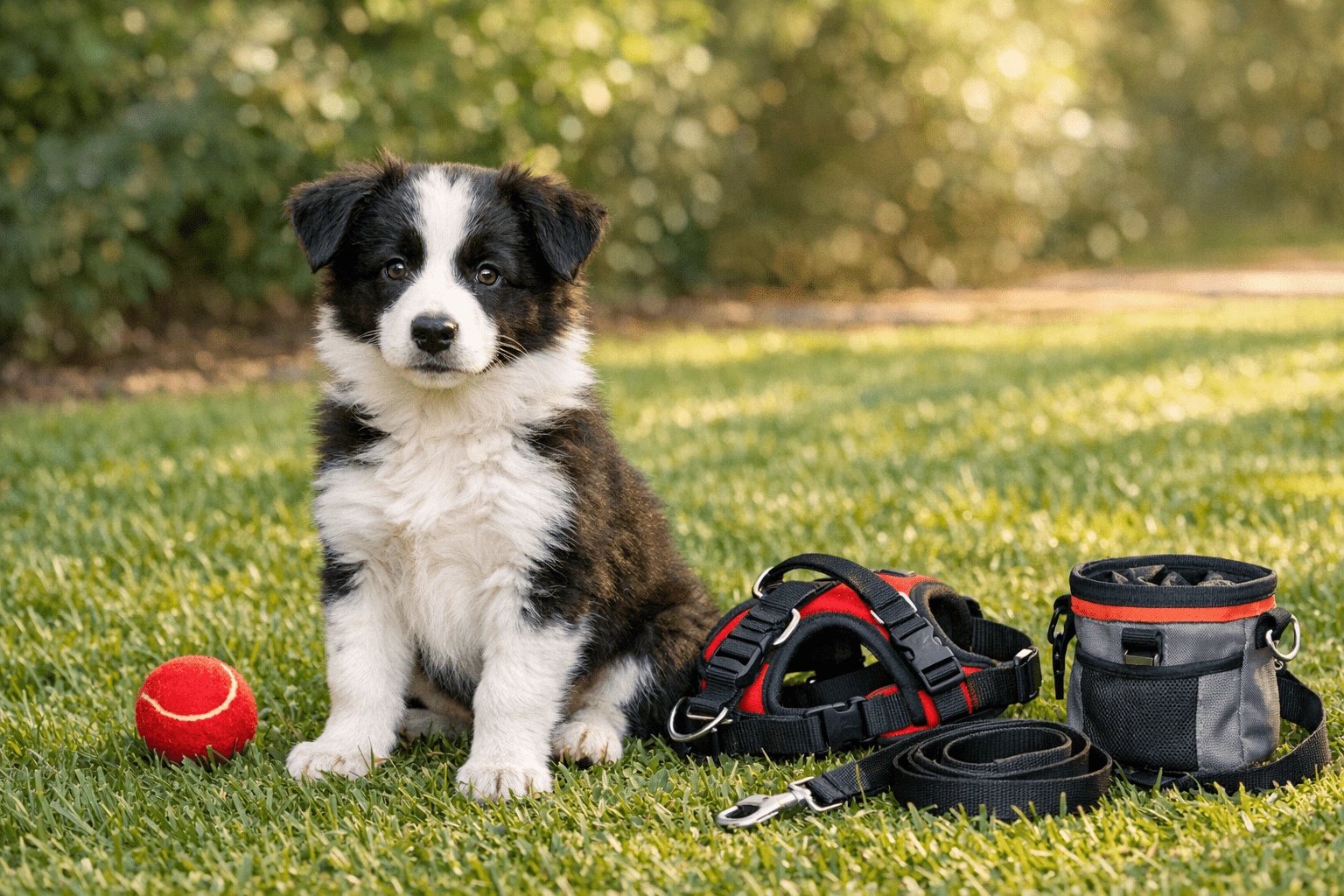
Stock your training toolkit:
- High-value treats: Bits of cooked chicken, cheese, or freeze-dried liver
- Treat pouch: Keeps rewards accessible without fumbling
- Soft harness: Avoids neck strain from pulling
- 15-foot training lead: Perfect for recall practice
- Two identical toys: Useful for trade games and preventing resource guarding
Timing matters: Train before meals when your puppy is hungry and motivated. Never train when they’re overtired or overstimulated – that’s how frustration builds.
I keep a basket near my training area with everything ready to go. When inspiration strikes – or when my dog looks at me with that “teach me something” Border Collie gaze – I’m prepared.
The Foundation: Crate Training and Potty Training
Let’s address the elephant – or the puddle – in the room. Potty training a Border Collie is usually straightforward, but only if you’re consistent. These dogs aim to please, which works in your favor.
Crate training first: Your crate becomes your puppy’s bedroom, not a punishment zone. Make it cozy with a soft bed and safe toys. Feed meals inside the crate. Leave the door open during the day so they can explore on their terms.
The potty schedule:
- Take puppy out first thing in the morning
- After every meal (within 15 minutes)
- After play sessions
- Before bedtime
- Once during the night for very young puppies
Pro tip: Border Collies are notorious for holding their bladder longer than most breeds because they don’t want to miss anything. Don’t let them – this can lead to urinary tract infections. Set a timer if you have to.
When accidents happen (and they will), clean thoroughly with an enzymatic cleaner. If your puppy can still smell the spot, they’ll return to it. I’ve had clients swear by Nature’s Miracle or similar products.
Border Collie Puppy Training: The 8-Week Program
Now, let’s dive deep into the heart of this guide. Border Collie puppy training requires structure, patience, and creativity. Here’s my proven week-by-week framework:
Week 1: Name and Focus
Your first goal is teaching your puppy that their name means “look at me and good things happen.” Say their name, and the instant they look, mark with “yes!” and reward. Do this ten times in a row, several times daily.
Exercise: Hand targeting. Present your open palm, and when your puppy sniffs it, mark and reward. This becomes the foundation for recall, leash walking, and tricks.
Week 2: Sit and Stay Basics
Border Collies pick up “sit” incredibly fast. Use a treat to lure their nose up and back – their bottom naturally drops. Add the verbal cue after they’re doing it consistently.
Stay is harder for these busy brains. Start with one-second stays, then gradually increase. If your puppy breaks, make the exercise easier. Frustration kills motivation.
Weeks 3-4: Recall and Loose Leash Walking
Recall – or “come” – is non-negotiable for Border Collies. They’re fast, and they chase. Practice in a long line first, calling your puppy from short distances with an excited voice and treat reward.
Loose leash walking: Border Collies naturally want to pull toward interesting things. Stop walking when the leash tightens. When your puppy returns to your side, reward and continue. This takes patience, but it works.
Weeks 5-6: Distance and Distractions
Now you’re adding the “three D’s”: Duration, Distance, and Distraction. Ask for a sit from across the room. Practice in the backyard. Then the front yard. Then at a quiet park.
Push/Drop/Stick method: Do five repetitions. If your puppy gets 5/5, raise difficulty. If 3-4/5, stay there. If 0-2/5, make it easier. This prevents both boredom and frustration.
Weeks 7-8: Real-World Proofing
Take training to pet stores, coffee shop patios, and walking trails. Your Border Collie should perform basic cues despite distractions. Reward heavily for success in challenging environments.
Feeding Your Border Collie Puppy: Nutrition for Growth
Proper nutrition supports both physical development and trainability. A hungry puppy won’t focus, but an overfed one may become lethargic or overweight.
Puppy food selection: Look for large-breed puppy formulas (Border Collies are medium-sized but benefit from controlled growth). High-quality protein should be the first ingredient – chicken, lamb, or fish.
Feeding schedule by age:
- 8-12 weeks: 3-4 meals daily
- 3-6 months: 3 meals daily
- 6-12 months: 2 meals daily
- After 12 months: 1-2 meals daily (depending on activity level)
Treat management: During training, you’ll use many treats. Subtract 10-15% from meal portions to prevent weight gain. I use my puppy’s breakfast kibble as training treats throughout the morning.
Common feeding mistakes I see owners make:
- Leaving food out all day (free-feeding)
- Switching foods abruptly (causes digestive upset)
- Overfeeding treats without adjusting meals
- Ignoring weight gain (Border Collies should have a visible waistline)
Exercise Requirements: Burning That Border Collie Energy
Here’s the truth that surprises many new owners: Border Collies need both physical AND mental exercise. A thirty-minute walk won’t cut it. You’re looking at 60-90 minutes of activity daily, plus brain games.
Physical exercise ideas:
- Fetch (they live for this)
- Agility equipment (even DIY jumps from broomsticks)
- Hiking on varied terrain
- Swimming (many love water)
- Frisbee (their jumping ability is impressive)
Mental exercise ideas:
- Puzzle toys (Kong Wobbler, Nina Ottosson puzzles)
- Nose work (hide treats around the house)
- Trick training (learn 5 new tricks weekly)
- Herding balls (giant exercise balls they “herd” around the yard)
Warning: Don’t over-exercise puppies under 12 months. Their growth plates are still open. Follow the “5-minute per month of age” rule for structured exercise. Free play in the yard is fine, but no forced running.
I learned this the hard way with my first Border Collie. I thought more running meant a happier dog. Instead, I created a fit, anxious dog who couldn’t settle. Balance is everything.
Grooming and Coat Care
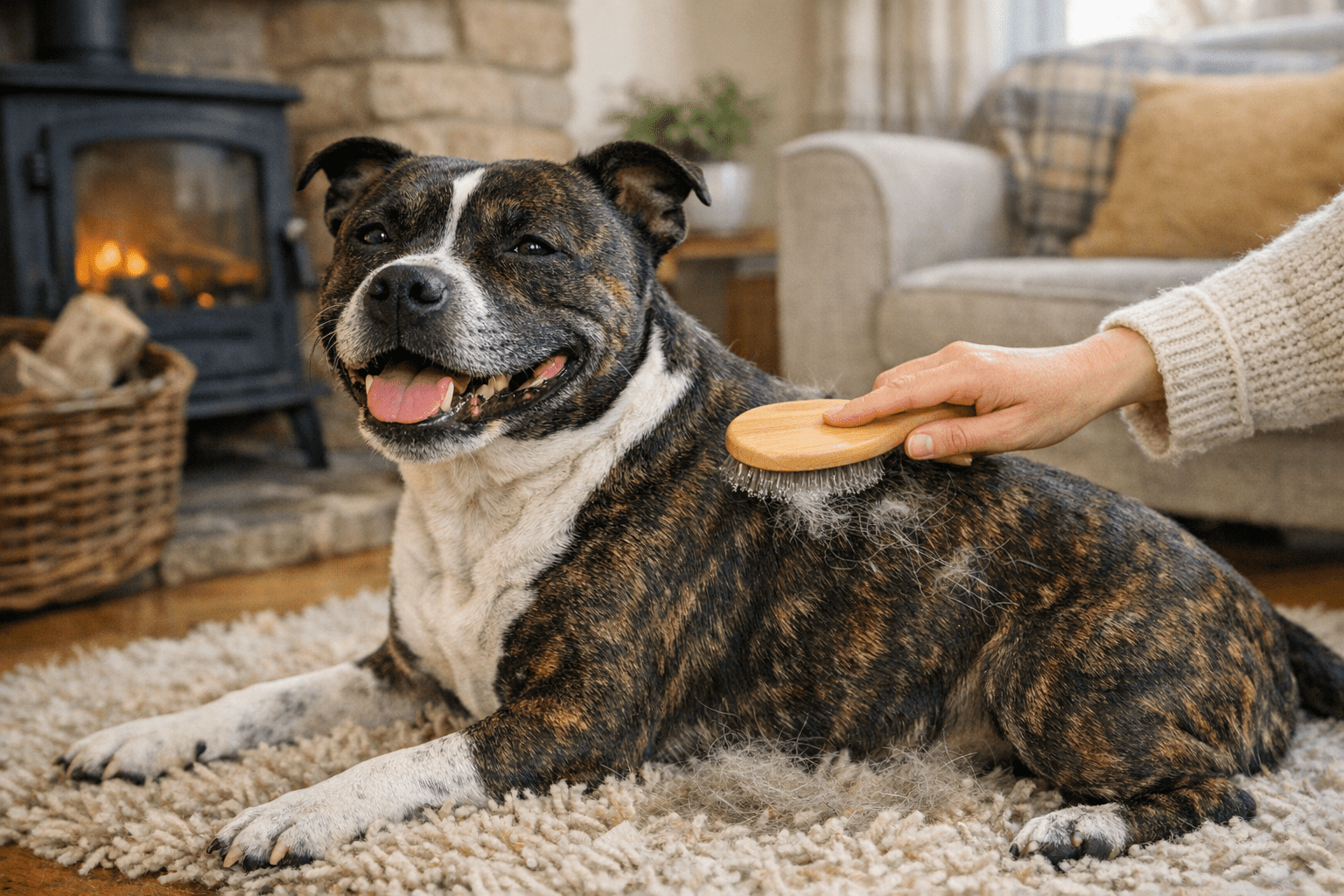
That gorgeous double coat needs regular maintenance. Border Collies shed – a lot. Twice a year, they “blow” their undercoat, and you’ll wonder where all that fur came from.
Grooming schedule:
- Brush 2-3 times weekly (daily during shedding season)
- Bathe every 4-8 weeks (or when muddy – which is often!)
- Check ears weekly for debris and infection
- Trim nails every 2-4 weeks
- Brush teeth 2-3 times weekly
Best brushes for Border Collies:
| Brush Type | Purpose |
|---|---|
| Slicker brush | Removes loose undercoat |
| Undercoat rake | Handles heavy shedding |
| Pin brush | Smooths topcoat |
| Dematting tool | Tackles tangles behind ears |
Pro tip: Start grooming sessions with treats and praise. Make them positive experiences. I keep a lick mat smeared with peanut butter in the bathroom – my dog stands happily while I brush because he associates it with treats.
Common Behavioral Challenges and Solutions
Even the best Border Collie puppy training can’t prevent every challenge. Here are the issues I see most frequently:
Nipping and Mouthing
Border Collies are mouthy – they use their mouths to control sheep, and they’ll try it on you. When your puppy nips, let out a high-pitched “ouch!” and stop playing. Redirect to a toy. Consistency is key.
Chasing Everything
Cars, bikes, children, squirrels – if it moves, your Border Collie wants to herd it. Management is crucial. Keep your dog on a leash or long line until recall is bulletproof. Reward calm behavior around moving objects.
Separation Anxiety
These velcro dogs bond intensely with their owners. Crate training, gradual alone time, and providing engaging toys (frozen Kongs, puzzle feeders) can prevent separation issues.
Excessive Barking
Border Collies bark to alert and communicate. Teach a “quiet” command by waiting for a pause in barking, marking it, and rewarding. Never yell – they think you’re joining the barking party! 🎉
Health Concerns Every Border Collie Owner Should Know
Border Collies are generally healthy, but they’re prone to certain conditions. Awareness helps you catch problems early.
Genetic conditions:
- Collie Eye Anomaly (regular vet eye exams recommended)
- Hip Dysplasia (screening important for breeding dogs)
- Epilepsy (can start between 6 months and 3 years)
- Deafness (more common in merle-colored dogs)
Lifespan: 12-15 years with proper care
Preventive care schedule:
- Annual wellness exams
- Vaccinations as recommended by your vet
- Heartworm prevention (year-round in most areas)
- Flea and tick prevention
- Dental cleanings as needed
Signs to watch for: Limping, excessive scratching, changes in appetite, lethargy, or behavior changes. Border Collies are stoic and may hide pain until it’s significant.
Is a Border Collie Right for Your Family?
Let’s be honest – Border Collies aren’t for everyone. They’re amazing dogs, but they require commitment.
They’re great for:
- Active individuals or families
- Owners interested in dog sports
- People with time for training
- Those who enjoy outdoor activities
- Experienced dog owners (ideally)
They’re challenging for:
- Sedentary lifestyles
- First-time dog owners
- Families with very young children (herding nipping)
- Apartments without adequate exercise options
- Owners who work long hours
Breed comparison table:
| Trait | Border Collie | Golden Retriever | Australian Shepherd |
|---|---|---|---|
| Energy Level | Very High | High | Very High |
| Trainability | Excellent | Excellent | Excellent |
| Good with Kids | Moderate (may herd) | Excellent | Good |
| Shedding | Heavy | Heavy | Moderate |
| Exercise Needs | 60-90 min/day | 45-60 min/day | 60-90 min/day |
| Barking | Moderate-High | Low-Moderate | Moderate |
Building a Lifelong Bond Through Training
The ultimate goal of Border Collie puppy training isn’t a dog who sits perfectly – it’s a dog who trusts you, communicates with you, and enjoys working with you. Training builds relationship.
Celebrate small victories. Your puppy will have bad days when they can’t focus. On those days, lower your expectations, play a game they love, and try again tomorrow. Consistency, patience, and positivity win every time.
I still remember my first Border Collie, Scout, learning to close cabinets. It started as a trick and became our morning routine. He’d open them looking for treats, I’d ask him to close them, and we’d both laugh. That’s the magic of these dogs – they want to be part of your world.
Frequently Asked Questions
How much exercise does a Border Collie puppy need daily?
Puppies need structured exercise following the “5-minute per month of age” rule – so a 4-month-old gets 20 minutes of focused activity twice daily. But they also need free play, training sessions, and mental stimulation totaling about an hour spread throughout the day. Never over-exercise growing puppies as it can damage developing joints.
Are Border Collies good with children?
Border Collies can be wonderful family dogs, but their herding instinct often leads them to nip at children’s heels to “herd” them. Supervise all interactions, teach children to be calm around the dog, and redirect herding behavior to appropriate outlets. With proper training and socialization, many Border Collies become gentle, protective family members.
When should I start Border Collie puppy training?
Start immediately! Basic training like name recognition, potty training, and crate introduction can begin on day one. Formal obedience training (sit, stay, come) can start around 8 weeks old. The critical socialization window closes around 16 weeks, so early exposure to people, places, and experiences is essential.
How do I stop my Border Collie from chasing cars and bikes?
Management is your first line of defense – keep your dog on a leash or long line in unfenced areas. Practice the “look at that” game: when your dog notices a trigger, mark and reward before they react. Gradually decrease distance over weeks. Work with a professional trainer if the behavior persists, as car chasing is dangerous.
What’s the best food for a Border Collie puppy?
Choose a high-quality large-breed puppy formula from brands like Purina Pro Plan, Royal Canin, or Hill’s Science Diet. Look for meat as the first ingredient and appropriate calcium levels for controlled growth. Avoid grain-free diets unless specifically recommended by your vet, as they’ve been linked to heart issues.
How much do Border Collies shed?
A lot! 😅 They have thick double coats that shed moderately year-round and heavily during spring and fall “blowouts.” During shedding season, you’ll brush out enough fur to create a second dog. Weekly brushing becomes daily during those times. Invest in a good vacuum and lint rollers for your sanity.
Conclusion
Raising a Border Collie puppy is one of the most rewarding journeys a dog owner can take. These brilliant, energetic, and devoted dogs will challenge you, exhaust you, and fill your life with laughter and love. Border Collie puppy training isn’t a destination – it’s a lifelong partnership built on trust, communication, and mutual respect.
Remember: start early, use positive methods, prioritize both physical and mental exercise, and never underestimate your dog’s intelligence. They’re watching, learning, and waiting for you to teach them something new.
If you’re ready for the commitment, a Border Collie will be your most loyal, quirky, and brilliant companion. And when they finally master that trick you’ve been working on, or choose to snuggle instead of work? That’s pure magic. 🐾❤️
Now go grab some treats, that new harness, and start building your incredible bond. Your Border Collie is waiting!