Introduction
Let’s be honest — when I first got my little wiener dog, I pictured us spending lazy summer afternoons by the pool, him paddling beside me like a tiny otter. Reality hit me like a bucket of cold water. My Dachshund took one look at the water, turned around, and buried himself under a blanket. That’s when I asked myself: do Dachshunds like to swim?
After years of trial and error (and a few soggy towels), I’ve learned the truth. While the majority of Dachshunds aren’t natural water lovers, some absolutely adore swimming — and even the reluctant ones can learn to enjoy it with patience. In this guide, I’ll share everything I know about Dachshunds and water, from their swimming abilities to safety tips that could save your dog’s life. Whether you’re a new puppy parent or a seasoned Doxie owner, this article will help you navigate the splashy world of Dachshund swimming. 🏊♂️
Understanding the Dachshund Breed and Water
Before we dive in, let’s talk about why do Dachshunds like to swim is such a confusing question for many owners. Dachshunds were originally bred in Germany to hunt badgers — hence their name, which literally means “badger dog.” These little dogs were designed for digging, burrowing, and chasing prey underground, not for paddling across lakes. Their short legs, long bodies, and large chests make swimming physically demanding.
But here’s the thing: just because they weren’t bred for water doesn’t mean they can’t swim. Many Dachshunds have a natural paddle reflex. I’ve seen long-haired Dachshunds who act like they were born with fins, while smooth-haired ones refuse to get their paws wet. It really depends on the individual dog’s personality and early experiences.
What I’ve noticed over the years is that Dachshunds with a confident, adventurous temperament tend to take to water more easily. Shy or nervous dogs may need extra encouragement. The breed’s stubborn streak also plays a role — if your Doxie decides water isn’t for them, good luck changing their mind! 😅
Can Dachshunds Actually Swim?
The short answer is yes, most Dachshunds can swim naturally. But — and this is a big but — just because they can swim doesn’t mean they’re good at it or that they enjoy it. I like to compare it to me trying to swim with my hands tied behind my back. Sure, I can do it, but it’s exhausting and not much fun.
Dachshunds have a unique body shape that makes swimming harder than for other breeds. Their short legs have to work overtime to keep their long bodies afloat. Their large chests act like floatation devices, which sounds good, but it actually forces their rear ends to sink lower in the water. This means they have to paddle furiously just to keep their heads above water.
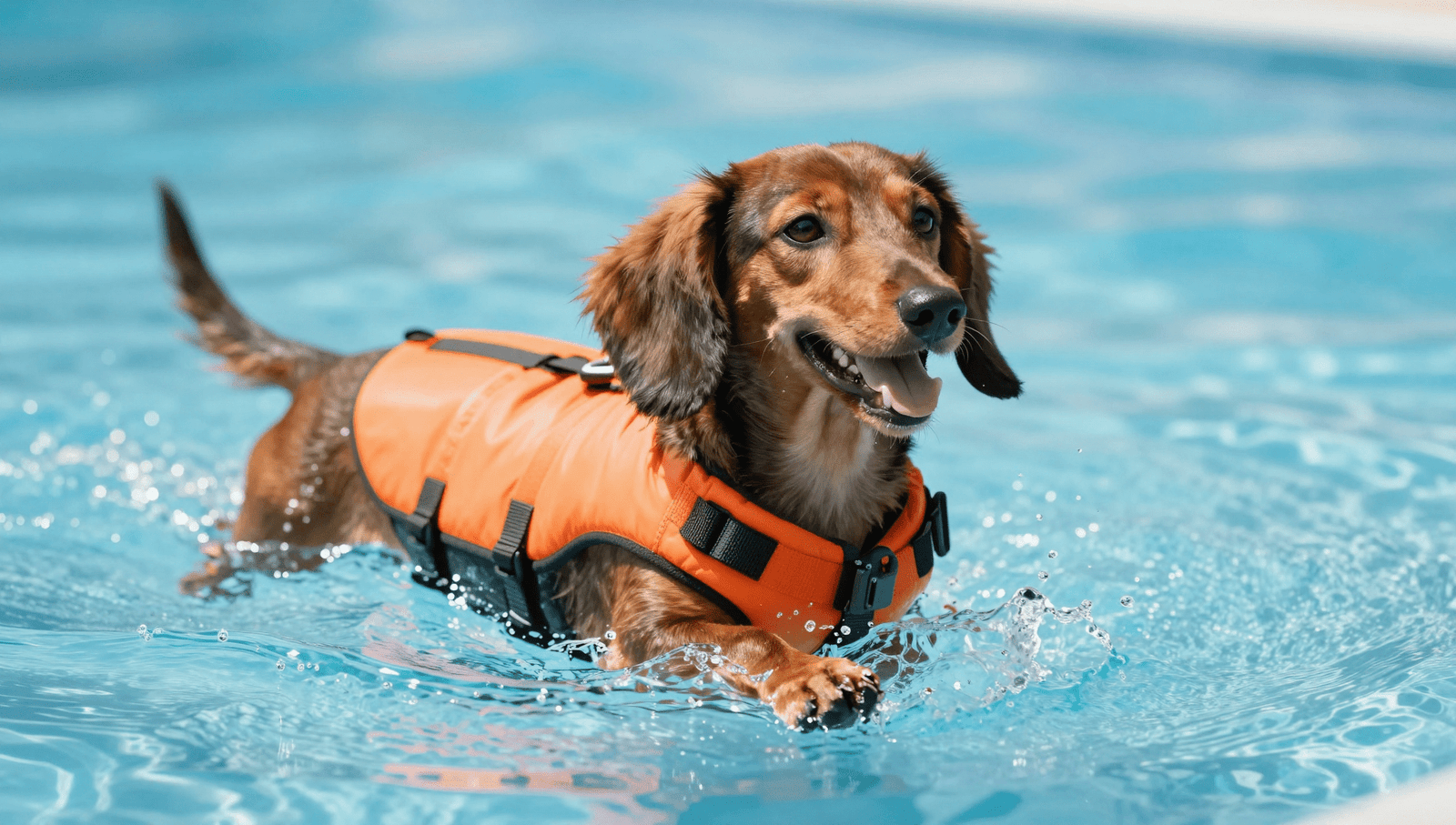
I remember watching my friend’s Labrador zoom through the water like a torpedo while my Doxie was struggling to keep up. That’s when I realised that do Dachshunds like to swim isn’t just about preference — it’s about physical capability. Some Dachshunds are naturally strong swimmers, but most will tire quickly. That’s why a life jacket isn’t optional; it’s essential.
Do Dachshunds Like to Swim? The Honest Truth 🐾
So, do Dachshunds like to swim? Here’s the honest truth: it’s a mixed bag. In my experience — and I’ve owned, fostered, and cared for dozens of Dachshunds over the years — about 30% of Dachshunds genuinely love water. Another 40% will tolerate it if you bribe them with treats. The remaining 30% would rather chase squirrels than step paw in a puddle.
The long-haired Dachshunds I’ve met seem to enjoy water more than their smooth-haired cousins. I’m not entirely sure why — maybe the extra fur gives them more buoyancy, or perhaps they just have more adventurous personalities. I’ve had several long-haired Doxies who would dive into lakes without hesitation.
On the flip side, I’ve seen many Dachshunds develop what’s called “wet dog syndrome” — an extreme aversion to water. These dogs hate rain, puddles, and even dewy grass. Their tummies are so close to the ground that any moisture makes them uncomfortable. If your Dachshund already hates going outside in the rain, chances are they won’t be thrilled about swimming either.
The key takeaway? Don’t force it. Some Dachshunds will never enjoy swimming, and that’s perfectly okay. There are plenty of other fun activities you can do together. But if your Doxie shows interest, it’s worth encouraging — swimming is fantastic low-impact exercise for their joints.
9 Essential Tips for Taking Your Dachshund Swimming
After countless soggy adventures, I’ve compiled my top tips for keeping your Dachshund safe and happy in the water. Trust me, I’ve learned these the hard way!
| Tip | Why It Matters | My Experience |
|---|---|---|
| 1. Invest in a life jacket | Dachshunds tire easily and their body shape makes swimming harder | The Outward Hound life jacket fits Doxies perfectly 🦺 |
| 2. Teach exit points | Prevents panic if they fall in accidentally | Show them pool stairs or ramp locations repeatedly |
| 3. Take it slow | Builds positive associations with water | Start with shallow puddles, then lakes, then pools |
| 4. Never leave unattended | Drowning can happen in seconds | I always watch my dog like a hawk near water |
| 5. Check surroundings | Hidden dangers like rocks, currents, or algae | Always scout swimming spots before letting your dog in |
| 6. Watch for fatigue | Dachshunds hide exhaustion well | Look for heavy panting or slowed paddling |
| 7. Beware water intoxication | Ingesting too much water can be fatal | Take breaks and offer fresh drinking water |
| 8. Provide fresh water | Prevents drinking pool or lake water | Bring a collapsible bowl on every trip |
| 9. Protect from sun and birds | Sunburn is real, and hawks may see small dogs as prey | Use a sun shirt and keep your dog close |
Safety First: Life Jackets and Supervision
I cannot stress this enough: a life jacket is not a luxury for Dachshunds — it’s a necessity. I learned this lesson the hard way when my smooth-haired Dachshund, Charlie, got tired halfway across a lake and started sinking like a stone. That terrifying moment convinced me to buy a high-quality life jacket, and I’ve never looked back.
The Outward Hound Dog Life Jacket is my top recommendation for Dachshunds. It has a handle on top, which is incredibly useful for lifting your dog out of the water. The bright colours make your dog visible from a distance, and the floatation panels are positioned to keep their heads above water — exactly what Doxies need.
Supervision is equally important. I know it sounds obvious, but accidents happen faster than you’d think. I’ve seen Dachshunds get swept away by currents, tangled in underwater vegetation, or simply exhaust themselves without showing signs until it’s too late. If your dog is in the water, your eyes should be on them at all times. No exceptions.
Health Benefits of Swimming for Dachshunds
Here’s where things get exciting. Despite their potential reluctance, swimming offers incredible health benefits for Dachshunds. As someone who’s dealt with a Dachshund’s back problems firsthand — Intervertebral Disc Disease (IVDD) is a nightmare — I can tell you that swimming is one of the best exercises for this breed.
Why Swimming is Perfect for Dachshunds
Low-impact exercise: Water supports their long bodies, reducing stress on their spine and joints. This is crucial for a breed prone to back issues.
Muscle building: The resistance of water helps strengthen their neck, back, and leg muscles without the jarring impact of running.
Weight management: Dachshunds love food (don’t we all?), and obesity is a major health risk for them. Swimming burns calories efficiently.
Rehabilitation: After IVDD surgery, many vets recommend water therapy to help dogs regain strength and mobility.
Mental stimulation: The sensory experience of water — the sounds, smells, and textures — keeps their minds sharp and engaged.
I’ve seen Dachshunds who could barely walk due to arthritis transform after regular swimming sessions. The buoyancy of water allows them to move freely without pain. If your vet approves, swimming can be a game-changer for your senior or rehabilitating Doxie.
Potential Risks and How to Avoid Them
Let’s be real — swimming isn’t all sunshine and rainbows. There are genuine risks involved, especially for a breed like Dachshunds. Here’s what you need to watch out for:
Water Intoxication (Hyponatremia)
This is rare but deadly. When a dog ingests too much water, it dilutes the sodium in their blood, causing brain swelling. Symptoms include loss of coordination, lethargy, vomiting, and glazed eyes. I always monitor my dogs for excessive water intake and take breaks.
Cold Water Shock
Dachshunds have little body fat to insulate them. Cold water can cause their muscles to seize up, making swimming impossible. I never let my dogs swim in water below 20°C (68°F), and I always dry them thoroughly afterwards.
Ear Infections
Those adorable floppy ears trap moisture, creating a perfect environment for yeast and bacteria. After every swim, I dry my Dachshund’s ears with a soft cloth and use a vet-recommended ear cleaner.
Pool Chemicals
Chlorine and other pool chemicals can irritate your dog’s skin and eyes. I always rinse my Dachshund with fresh water after a pool session and never let him drink pool water.
Toxic Algae
Blue-green algae blooms in warm, stagnant water can be fatal within hours. I avoid swimming in any water that looks green, scummy, or smells bad.
Alternatives to Swimming: Water Fun Without the Risk
If your Dachshund is one of those who hates swimming, don’t worry — you can still have water fun together! I’ve found several alternatives that keep my Doxies entertained without forcing them into deep water.
Paddleboarding with Your Dachshund
Stand-up paddleboarding (SUP) is incredibly popular among Doxie owners. Dachshunds are small enough to sit comfortably on the board while you paddle. My long-haired Dachshund, Luna, loves sitting on the front of my paddleboard, feeling the breeze in her fur. Just make sure your dog wears a life jacket in case they fall off.
Kayaking Adventures
Dachshunds fit perfectly in kayaks — they can curl up between your legs or sit in the front compartment. It’s a great way to explore lakes and calm rivers without requiring your dog to swim. I always bring a towel and a blanket for comfort.
Splash Pads and Sprinklers
For hot summer days, a simple sprinkler or splash pad can provide hours of entertainment. Most Dachshunds enjoy running through the spray without actually swimming. It’s a great way to cool down while building positive associations with water.
Water Fetch in Shallow Areas
If your Dachshund will wade into shallow water but won’t swim, you can play fetch where they can stand comfortably. Use floating toys and gradually increase the depth as they become more confident.
Training Your Dachshund to Enjoy Water
Teaching a reluctant Dachshund to swim takes patience, but it’s possible. Here’s my step-by-step approach:
Step 1: Positive Associations
Start by bringing your Dachshund near water without any expectation of swimming. Give treats, praise, and playtime. Let them explore at their own pace. I spent three days just sitting by the edge of a calm lake, giving my dog treats for simply being there.
Step 2: Paw Dipping
Once they’re comfortable near water, encourage them to put their paws in. Use their favourite toy or a high-value treat. I used bits of cheese — Dachshunds will do almost anything for cheese! 🧀
Step 3: Supervised Wading
Gradually increase the depth. Support your dog’s body with your hands under their belly. Let them feel the water’s support without having to paddle. I did this for weeks before attempting full swimming.
Step 4: Short Swimming Sessions
When your Dachshund is ready, keep swimming sessions very short — just a few minutes. Always end on a positive note with treats and praise. Never force them to stay in longer than they want.
Step 5: Consistency
Regular, short sessions build confidence. I swam with my dogs every other day during summer, keeping sessions fun and relaxed. Over time, their fear turned into cautious enjoyment.
Pros and Cons of Dachshund Swimming
Before you decide whether swimming is right for your dog, here’s an honest breakdown:
Pros
- Excellent low-impact exercise for joints 🦴
- Builds muscle without strain
- Helps with weight management
- Great for rehabilitation after injury
- Fun bonding activity for owner and dog
- Mental stimulation from new environments
Cons
- Can be exhausting for short-legged dogs
- Risk of water intoxication
- Potential ear infections
- Some Dachshunds will never enjoy it
- Requires supervision at all times
- Life jacket adds extra expense
Frequently Asked Questions
Do Dachshunds naturally know how to swim?
Most Dachshunds have a natural paddle reflex, but that doesn’t mean they’re skilled swimmers. Their short legs and long bodies make swimming harder than for breeds like Labradors. Some Dachshunds take to water naturally, but others need encouragement and training.
How long can a Dachshund swim safely?
I recommend limiting swimming sessions to 5–10 minutes for beginners and 15–20 minutes for experienced swimmers. Dachshunds tire quickly due to their body shape. Always watch for signs of fatigue like heavy panting, slowed movements, or struggling to keep their head above water.
Should I use a life jacket for my Dachshund when swimming?
Absolutely. A life jacket is essential for Dachshunds because of their body shape. Even strong swimmers can tire suddenly. Look for a jacket with a handle on top for easy lifting and bright colours for visibility.
What should I do if my Dachshund hates water?
Don’t force it. Some Dachshunds will never enjoy swimming, and that’s okay. Focus on other activities like hiking, fetch, or puzzle toys. If you want to encourage water play, start with shallow puddles and use high-value treats to build positive associations.
Can swimming help with my Dachshund’s back problems?
Yes, swimming is often recommended for Dachshunds with Intervertebral Disc Disease (IVDD) or arthritis. The buoyancy of water reduces pressure on their spine while allowing them to build muscle. Always consult your veterinarian before starting a swimming routine for a dog with health issues.
What are the signs of water intoxication in dogs?
Symptoms include loss of coordination, lethargy, vomiting, glazed eyes, excessive salivation, and difficulty breathing. Water intoxication progresses quickly and can be fatal. If your Dachshund shows any of these signs after swimming, seek veterinary help immediately.
Conclusion
So, do Dachshunds like to swim? The answer is wonderfully complicated — just like the breed itself. Some Dachshunds are natural water dogs who’ll leap into any lake with joy. Others will give you a look of pure betrayal if you even suggest getting their paws wet. And most fall somewhere in between, willing to tolerate water for treats and praise.
What I’ve learned from years of Dachshund ownership is this: every dog is an individual. Your job as an owner isn’t to force your dog into activities they hate but to find what makes them happy. If your Doxie loves swimming, fantastic — invest in a good life jacket and enjoy many splashy adventures together. If they don’t, that’s perfectly fine too. There are countless other ways to bond with your wiener dog that don’t involve water.
Whatever you decide, always prioritise safety. Use a life jacket, supervise closely, and know the signs of water-related health issues. With the right approach, you and your Dachshund can enjoy many happy — and dry — years together. 🐾
Now, if you’ll excuse me, I need to go dry off my long-haired troublemaker who just jumped into a mud puddle. Some things never change! 😂