Introduction
Let me be honest with you — when I first brought home my Labrador, Barney, I was completely clueless about dog nutrition. I’d stand in the pet aisle staring at bags of kibble, wondering if I was feeding him too much or too little. Sound familiar? 🐾
The truth is, figuring out how many calories does a dog need isn’t as straightforward as you’d think. It’s not like there’s a magic number that works for every pup. Your dog’s daily calorie requirements depend on so many factors — from their breed and age to how many times they chase squirrels in the park.
As a dog owner in the UK, you want what’s best for your furry friend. And getting their diet right is one of the most important things you can do. After all, a well-fed dog is a happy dog, and a happy dog means a happy owner. 😊
In this comprehensive guide, I’ll walk you through everything you need to know about dog nutrition and calorie requirements. We’ll look at the science behind it, the practical side of feeding, and I’ll share some personal insights from my years of owning and caring for dogs.
So grab a cuppa, and let’s get stuck in! 🐶
Understanding Calories in Dog Nutrition
What Exactly Are Calories for Dogs?
When we talk about dog nutrition, calories are simply a measure of energy. Think of them as the petrol in your car’s tank — without enough, your engine won’t run properly.
Calories come from three main sources in your dog’s food:
- Proteins — building blocks for muscles and tissues
- Fats — concentrated energy source, great for healthy skin and coat
- Carbohydrates — quick-release energy for all that running around
A dog’s metabolism works much like our own. If they take in more calories than they burn, those extra calories get stored as fat. And trust me, I learned this the hard way when Barney developed a bit of a paunch after too many treats during lockdown! 😅
Why Getting It Right Matters
Getting your dog’s calorie intake wrong can lead to serious health issues. Feed them too little, and they’ll lose weight, feel lethargic, and might develop nutritional deficiencies. Feed them too much, and you’re looking at obesity — a growing problem in UK dogs.
According to the PDSA, around one in three dogs in the UK is overweight or obese. That’s a staggering number! Obesity can lead to:
- Joint problems and arthritis
- Diabetes
- Heart disease
- Reduced lifespan
- Lower quality of life
On the flip side, underfeeding can cause:
- Muscle wasting
- Weak immune system
- Poor coat condition
- Behavioural issues from hunger
Finding that sweet spot is crucial for your dog’s wellbeing.
Factors That Affect How Many Calories Does a Dog Need
Breed and Size Matter
This might seem obvious, but a Chihuahua and a Great Dane have very different calorie requirements. Apologies if I’m stating the obvious, but you’d be surprised how many people treat all dogs the same!
Here’s a rough guide to daily calorie ranges for different dog sizes:
| Dog Size | Weight Range | Approximate Daily Calories |
|---|---|---|
| Toy breeds | Under 5 kg | 200 – 400 kcal |
| Small breeds | 5 – 10 kg | 300 – 600 kcal |
| Medium breeds | 10 – 25 kg | 600 – 900 kcal |
| Large breeds | 25 – 40 kg | 900 – 1,400 kcal |
| Giant breeds | Over 40 kg | 1,400 – 2,000 kcal |
But hold your horses — these are just rough estimates. The actual number for how many calories does a dog need varies based on other factors too.
Age and Life Stage
Puppies are like teenagers on steroids when it comes to energy needs. They’re growing rapidly and burning through calories like nobody’s business. A growing puppy might need up to twice the calories of an adult dog of the same weight.
Adult dogs (typically 1–7 years old, depending on breed) have more stable requirements. Senior dogs, on the other hand, often need fewer calories as their metabolism slows down and they become less active.
Activity Level
Here’s where it gets personal. A dog that spends most of the day snoozing on the sofa has very different needs from one that goes on three-mile runs with you every morning.
Working dogs — think sheepdogs, police dogs, or agility competitors — can need up to three or four times as many calories as a couch potato pup.
Spay/Neuter Status
This one caught me off guard when I first learned about it. When a dog is spayed or neutered, their calorie needs drop by about 20–30%. The hormonal changes affect their metabolism, and they tend to be less active.
Unfortunately, many owners don’t adjust their dog’s food after the procedure, leading to rapid weight gain. I’ve seen it happen far too often! 😔
Individual Variation
Just like humans, every dog is unique. Two dogs of the same breed, age, and activity level might have completely different calorie needs. Some dogs have naturally faster metabolisms, while others seem to gain weight just by looking at food (looking at you, Labrador owners!).
How to Calculate Your Dog’s Daily Calorie Requirements
The Science Bit (Made Simple)
Now, I know maths might not be everyone’s cup of tea, but stick with me. There’s a formula that vets use to calculate a dog’s Resting Energy Requirement (RER). Don’t worry — I’ll break it down!
Step 1: Convert your dog’s weight to kilograms (if you’re still using pounds, divide by 2.2)
Step 2: Calculate RER using this formula: RER=70×(BWkg)0.75
Step 3: Apply a multiplier based on your dog’s lifestyle
Here’s a table of common multipliers:
| Lifestyle | Multiplier |
|---|---|
| Neutered adult | 1.6 |
| Intact adult | 1.8 |
| Weight loss | 1.0 |
| Weight gain | 1.7 |
| Light work | 2.0 |
| Moderate work | 3.0 |
| Heavy work | 6.0 |
| Puppy (<4 months) | 3.0 |
| Puppy (>4 months) | 2.0 |
Let me give you a practical example. If you have a 20 kg neutered dog that’s moderately active:
- RER = 70 x (20)^0.75 = 70 x 9.46 = 662 kcal/day
- MER = 662 x 2.0 = 1,324 kcal/day
So this dog needs roughly 1,300 calories per day. But remember, this is just a starting point!
Using Online Calculators
Thankfully, you don’t need to whip out your calculator every time you feed your dog. There are plenty of online dog calorie calculators that do the hard work for you. Just search for “dog calorie calculator UK” and you’ll find some great tools.
However, I’d always recommend using these as a guide rather than gospel. Your vet can give you personalised advice based on your specific dog.
How Many Calories Does a Dog Need Based on Food Type?
Dry Kibble
Most commercial dog foods list the calorie content on the packaging. Look for “kcal per 100g” or “kcal per cup.” Typically, dry dog food contains around 350–450 kcal per 100g.
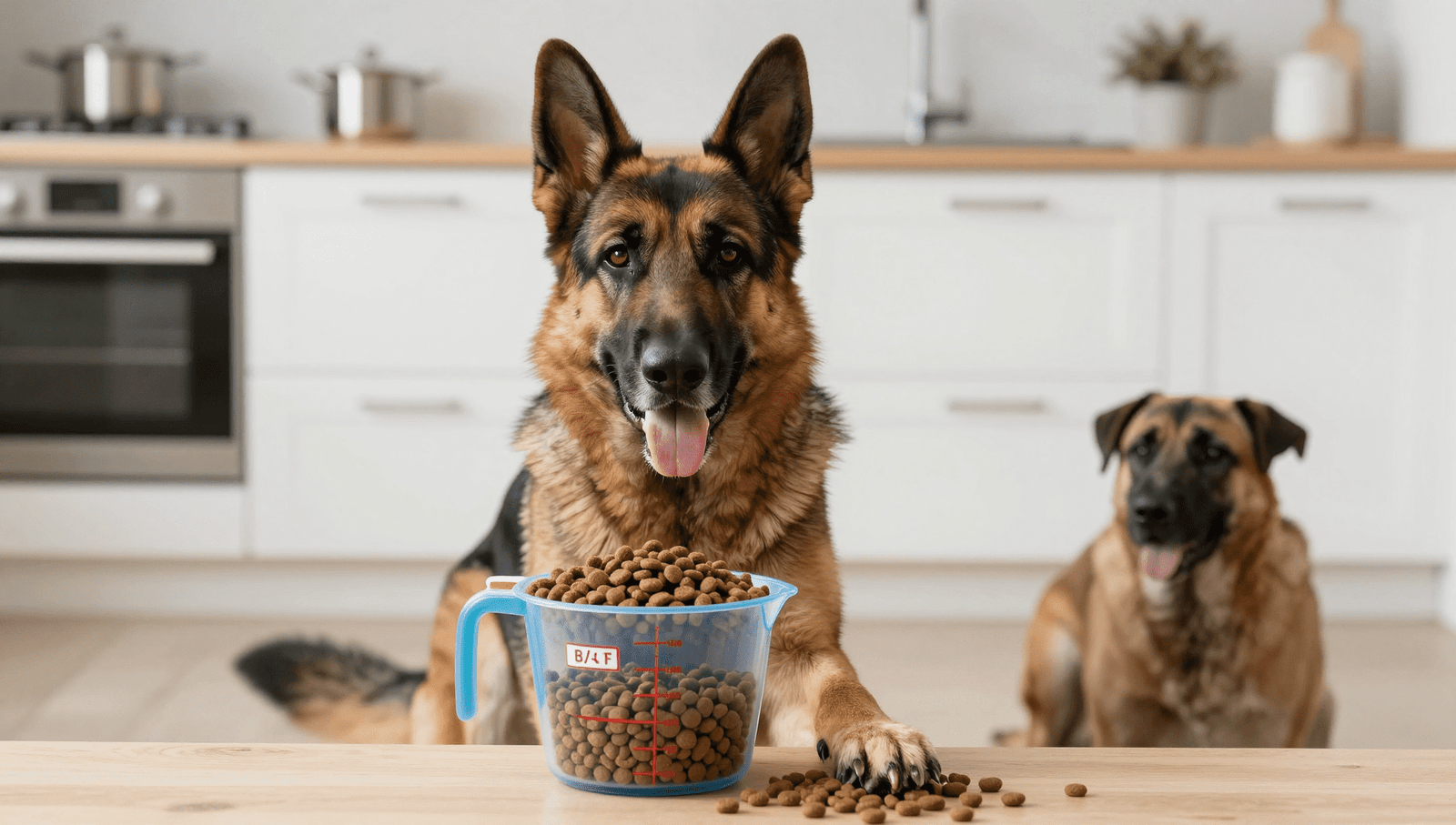
When I feed Barney kibble, I measure it carefully using a proper measuring cup. Guessing leads to overfeeding — something I learned the hard way! 😅
Wet Food
Wet food has a higher water content, so it’s lower in calories by weight. You’ll usually find around 80–120 kcal per 100g. But don’t be fooled into thinking you can feed more — follow the guidelines on the tin.
Raw Food
Raw feeding has become increasingly popular in the UK. Raw diets can be excellent for dogs, but calorie content varies wildly depending on what’s in it. A raw diet rich in fatty meats will be much higher in calories than one with lean proteins.
If you’re considering raw feeding, I’d strongly recommend working with a veterinary nutritionist to get the balance right.
Homemade Food
Cooking for your dog? How lovely! 🥘 But be careful — homemade diets are notoriously difficult to balance properly. You need to ensure you’re meeting all your dog’s nutritional requirements, not just their calorie needs.
Here’s a quick comparison of food types:
| Food Type | Calories per 100g | Pros | Cons |
|---|---|---|---|
| Dry kibble | 350–450 | Convenient, shelf-stable | Lower moisture content |
| Wet food | 80–120 | Higher moisture, palatable | More expensive per meal |
| Raw | 150–300 | Natural, species-appropriate | Requires careful handling |
| Homemade | Varies | Complete control over ingredients | Risk of nutritional imbalance |
Practical Tips for Managing Your Dog’s Weight
Reading Food Labels Properly
I can’t tell you how many times I’ve seen dog owners completely ignore the feeding guidelines on the back of the bag. Trust me, those guidelines are there for a reason!
Look for the “Analytical Constituents” section on your dog’s food. It should tell you the protein, fat, fibre, and ash content. The calorie content is often listed separately, but not always — sometimes you need to contact the manufacturer.
Portion Control Strategies
Here are some tips that have worked wonders for me and Barney:
- Use a kitchen scale — it’s more accurate than measuring cups
- Split meals into two portions — feed morning and evening
- Account for treats — treats should make up no more than 10% of daily calories
- Use treat alternatives — carrot sticks, apple slices, or green beans make great low-calorie options
When to Adjust the Amount
Pay attention to your dog’s body condition. You should be able to feel their ribs with a light touch, but not see them. If you can see ribs clearly, they need more food. If you can’t feel ribs at all, they need less.
I check Barney every month or so. His weight fluctuates a bit with the seasons — he eats less in summer and more in winter.
Common Mistakes Owners Make with Dog Nutrition
Overfeeding Treats
This is the biggest culprit in dog obesity. I’m as guilty as anyone — Barney gives me those big puppy eyes, and suddenly he’s had five treats instead of one!
Remember that treats should be occasional, not constant. And please, please don’t feed your dog human food from the table. Not only does it encourage begging, but it can also lead to pancreatitis and other health issues.
Free-Feeding
Leaving food out all day (free-feeding) makes it impossible to track how much your dog is eating. It’s far better to have set meal times. This also helps with house training and spotting any changes in appetite that might signal illness.
Ignoring the Breed’s Specific Needs
Every breed has different nutritional requirements. A Border Collie needs more calories than a Bulldog, even if they weigh the same. Research your breed’s specific needs — it makes a world of difference!
Feeding Schedules and Routines
Puppies
Puppies need frequent, small meals. Here’s a general guide:
- 8–12 weeks: 4 meals per day
- 3–6 months: 3 meals per day
- 6–12 months: 2 meals per day
Puppy feeding is a balancing act. They need plenty of calories for growth, but too many can cause rapid growth that leads to joint problems in large breeds.
Adult Dogs
Most adult dogs do well on two meals per day, about 12 hours apart. Some owners prefer one large meal, but splitting into two helps maintain steady energy levels and reduces the risk of bloat (especially in deep-chested breeds).
Senior Dogs
Older dogs often need smaller, more frequent meals. Their digestive systems aren’t as efficient, and they may have dental issues that make eating harder. Adding warm water to their food can make it more appealing and easier to chew.
Health Conditions Affecting Calorie Needs
Hypothyroidism
This condition slows down the metabolism, meaning affected dogs need far fewer calories than healthy dogs. Symptoms include weight gain, lethargy, and hair loss. If your dog is gaining weight despite eating appropriately, ask your vet to check their thyroid.
Diabetes
Diabetic dogs need careful management of their calorie intake. Their food should be high in fibre and complex carbohydrates to help regulate blood sugar levels. Consistency is key — same food, same amount, same time every day.
Kidney Disease
Dogs with kidney disease often have reduced appetites and may struggle to maintain weight. They need high-quality protein and restricted phosphorus levels. Your vet will recommend a specific therapeutic diet.
Pancreatitis
This painful condition is often triggered by high-fat foods. Dogs recovering from pancreatitis need low-fat, highly digestible food in small, frequent meals.
Seasonal Considerations for UK Dog Owners
Winter Needs
In the colder months, some dogs need more calories to maintain body heat. This is especially true for short-haired breeds like Greyhounds or Whippets. On the other hand, dogs with thick coats like Huskies might actually need less.
During winter walks, I notice Barney burns more energy because he’s running around in the cold. I don’t usually adjust his food much, but I keep an eye on his body condition.
Summer Adjustments
In summer, many dogs are less active due to the heat. They might also be off their food a bit. Don’t panic if your dog eats less in summer — just ensure they have plenty of fresh water.
The Role of Exercise in Calorie Management
Exercise and diet go hand in hand when it comes to dog nutrition. A dog that exercises regularly can eat more without gaining weight.
Here’s a rough guide to activity levels:
- Low activity: Less than 30 minutes of walking daily
- Moderate activity: 30–60 minutes of walking plus some play
- High activity: Over 60 minutes of vigorous exercise
For most UK family dogs, moderate activity is typical. If you’re doing more (like running with your dog or doing agility), you’ll need to increase their calories accordingly.
Pros and Cons of Different Feeding Approaches
Pros of Scheduled Feeding
- Better portion control
- Easier to monitor appetite changes
- Helps with house training
- Reduces food guarding behaviour
Cons of Scheduled Feeding
- Requires consistency and routine
- Some dogs may be anxious waiting for meals
- Not suitable for all lifestyles
Pros of Slow Feeding
- Prevents gulping and bloating
- Extends meal times
- Can help with weight management
- Mentally stimulating for dogs
Cons of Slow Feeding
- Some dogs find it frustrating
- Slow feeders can be difficult to clean
- Not suitable for flat-faced breeds
FAQ
Do different dog breeds have different calorie needs?
Absolutely! Breed plays a huge role in determining how many calories does a dog need. Working breeds like Border Collies and Labrador Retrievers need more calories than sedentary breeds like Bulldogs or Basset Hounds. Even within the same weight range, metabolisms vary significantly between breeds.
How often should I feed my adult dog?
Most adult dogs do well on two meals per day, spaced about 12 hours apart. This helps maintain steady energy levels and reduces the risk of bloat, especially in deep-chested breeds like Great Danes or German Shepherds.
Can I use human food to supplement my dog’s diet?
Some human foods are safe for dogs — plain cooked chicken, carrots, green beans, and apple slices make great treats. However, human food should never make up more than 10% of your dog’s daily calories, and you should avoid toxic foods like chocolate, grapes, raisins, onions, and garlic.
How do I know if my dog is overweight?
The best way to check is the rib test. Run your hands along your dog’s sides — you should be able to feel their ribs with a light touch, but not see them. If you can see ribs clearly, they’re underweight. If you can’t feel ribs at all, they’re overweight. Your vet can also help assess your dog’s body condition score.
What should I do if my dog isn’t eating enough?
First, rule out medical issues with a vet check. Then try warming the food slightly, adding a small amount of low-sodium chicken broth, or switching to a different protein source. Stress can also affect appetite, so consider if anything in your dog’s environment has changed.
Do puppies need different amounts of calories than adult dogs?
Yes, puppies need significantly more calories than adult dogs of the same weight. Growing puppies might need up to twice as many calories per kilogram of body weight compared to adults. However, large breed puppies need careful calorie management to prevent rapid growth that can cause joint problems.
Conclusion
So there you have it — everything you need to know about how many calories does a dog need to thrive. It’s not an exact science, but with a bit of observation and common sense, you can get it right.
The key takeaways are simple: feed your dog appropriate portions based on their size, age, and activity level; choose high-quality food; account for treats; and monitor their body condition regularly. And when in doubt, always consult your vet.
Remember, a healthy dog is a happy dog. And a happy dog means more wagging tails, more wet noses, and more unforgettable moments together. 🐾
If you’ve found this guide helpful, why not share it with another dog owner? And if you have questions about your specific breed or situation, drop them in the comments below — I’d love to help!
Until next time, keep those tails wagging and those bowls balanced! 🐶😊