Have you ever been washing your dog after a muddy walk and noticed something a bit different about their toes? If you’ve seen extra skin connecting them, you might be the proud owner of dogs with webbed feet. It sounds a bit like something out of a superhero comic, doesn’t it? But honestly, it’s a fascinating trait that has helped specific breeds survive and thrive for centuries. Whether they were diving into freezing lakes to retrieve nets or digging deep into badger setts, this physical feature is nature’s ultimate utility tool.
If you’re curious about whether your pup has this feature or you’re thinking of getting a breed known for it, you’re in the right place. As a dog lover and behaviourist, I’ve seen firsthand how these “flippers” can change a dog’s capability in the water. In this guide, we’ll dive deep (pun intended!) into why this happens, which breeds have them, and—crucially—how to keep those paws healthy. Let’s wade in! 🐾
Why Do Dogs Have Webbed Feet?
To understand dogs with webbed feet, we need to look back at their history. You see, Mother Nature and selective breeding are clever. Webbing refers to the membrane of skin that connects the toes. While almost all dogs have some webbing—just like we have skin between our fingers—in some breeds, it is much more pronounced.
Historically, this trait was highly desirable for dogs that worked in water. Think of it like a duck’s foot. When a dog pushes water back with a wide, webbed paw, they generate much more thrust than they would with separate, skinny toes. This made them efficient swimmers, capable of handling strong currents. But it’s not just about swimming! For breeds like the Dachshund, the webbing provided a larger surface area to dig through compacted soil. It’s a brilliant example of form following function.
Related Posts


List of Dogs with Webbed Feet
While many dogs have some degree of webbing, certain breeds are famous for it. If you have one of these breeds, you’ve got a natural athlete on your hands.
The Natural Swimmers
These are the breeds where the webbing is most obvious, designed for lifesaving and retrieving.
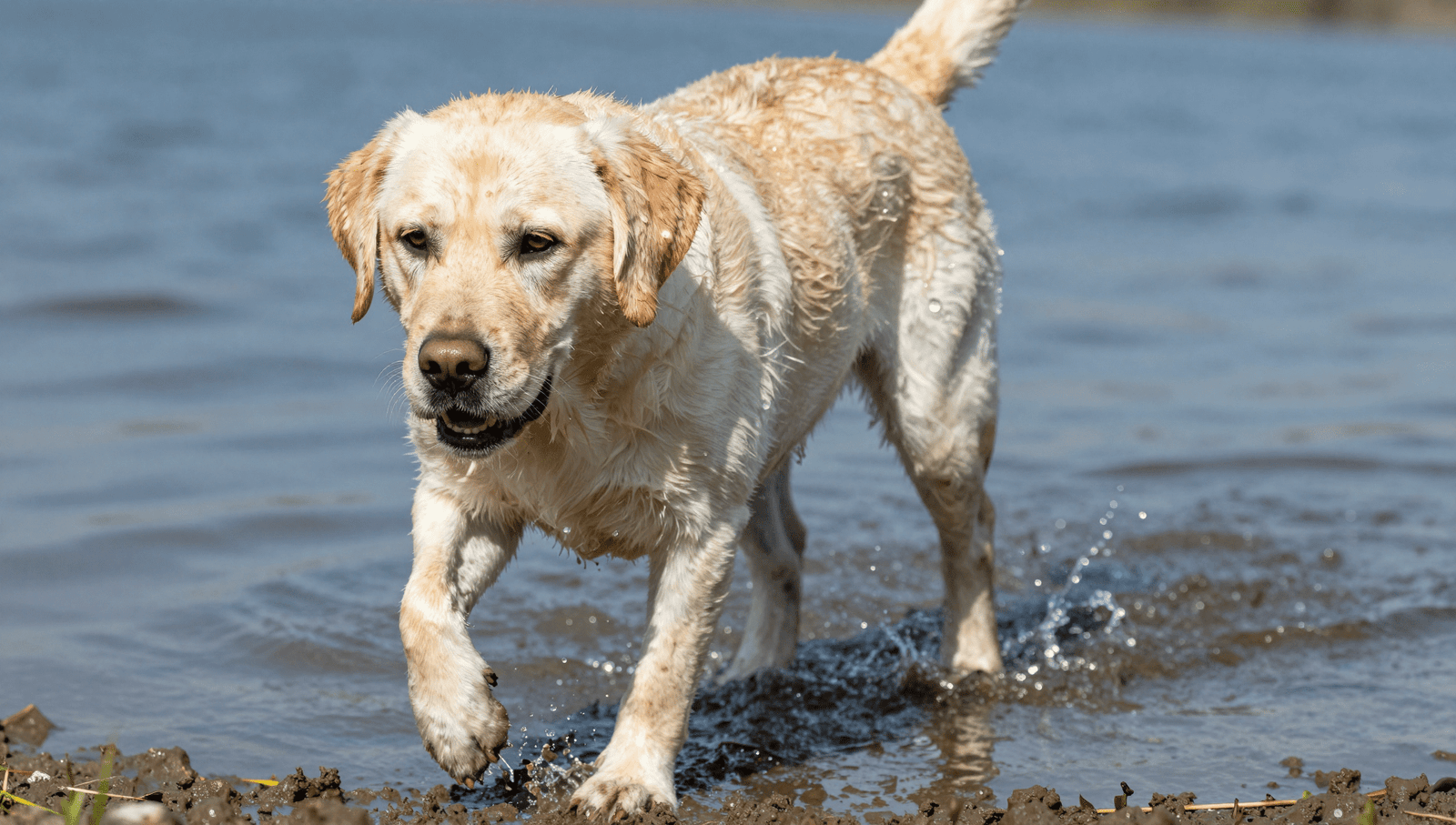
- Labrador Retriever: The classic “otter tail” and webbed feet make the Lab a swimming machine. Originally from Newfoundland, they helped fishermen haul nets.
- Newfoundland: These gentle giants are probably the kings of the water world. They were bred to pull carts and save drowning sailors. Their massive paws act like snowshoes on land and flippers in water.
- Portuguese Water Dog: As the name suggests, these curly-coated dogs lived on boats and herded fish into nets. They are tireless swimmers.
- Irish Water Spaniel: With their “rat tail” and webbed toes, these dogs are robust retrievers that love the wet stuff.
- Chesapeake Bay Retriever: Similar to the Lab but tougher, these dogs were bred to retrieve ducks in icy, choppy waters.
The Digging Breeds
You might be surprised to see this little guy on the list!
- Dachshund: The “sausage dog” was bred to hunt badgers. Their paddle-like paws were essential for digging into burrows.
- Weimaraner: Often called the “Grey Ghost,” this breed uses its webbed paws to navigate difficult terrain while hunting.
Other notable mentions include the Otterhound, German Shorthaired Pointer, and the Poodle.
Webbed Feet vs Normal Paws
It’s interesting to compare the difference between a land-dog’s paw and a water-dog’s paw. Here is a quick breakdown:
| Feature | Dogs with Webbed Feet | Dogs with Normal Paws |
|---|---|---|
| Toe Connection | High amount of skin connecting toes. | Minimal skin; toes are distinct and separate. |
| Primary Function | Swimming, digging, snowshoeing. | Traction, running, gripping. |
| Paw Shape | Often broader, creating a “paddle.” | More compact or oval-shaped. |
| Common Breeds | Labradors, Dachshunds, Newfoundlands. | Greyhounds, Huskies, Pugs. |
| Risk Factor | Prone to fungal infections between toes. | Prone to nail tears or abrasions. |
Caring for Dogs with Webbed Feet
Owning dogs with webbed feet comes with a specific set of responsibilities. Because those toes are held closely together by that extra skin, it creates a warm, moist environment—a perfect breeding ground for bacteria and yeast. 🦠
Here are my top tips for paw care:
- Dry Them Properly: After a swim or a walk in the rain, don’t just let them air dry. Moisture gets trapped between the toes. Use a towel to get in between those toes to prevent yeast infections.
- Check for Debris: Because the toes are connected, things get stuck easily. Seeds, small stones, or even ice balls in winter can lodge in the webbing. Make it a habit to check paws after every walk.
- Trim the Fur: Breeds like the Newfoundland often have tufts of fur growing between their toes. This fur acts like a sponge, holding water and dirt. Keep it trimmed flush with the paw pads.
Real-world scenario: I once worked with a Lab who kept licking his feet raw. The owner was confused—they kept the dog clean! But upon inspection, we found a tiny grass seed buried deep in the webbing that had caused a nasty infection. Always check!
Training and Exercise Needs
If you have a dog with webbed paws, chances are they have high energy levels. These aren’t just physical traits; they indicate a working heritage.
- Water Confidence: Introduce them to water safely. Don’t force it, but encourage it. Their anatomy makes them naturally gifted swimmers.
- Mental Stimulation: For digging breeds like the Dachshund, trying to stop digging entirely is futile. Instead, create a “dig pit” in your garden—a sandpit where they are allowed to dig.
- Recall Training: Because these dogs love to swim, you need a bulletproof recall. If there is a pond in the park, they will make a beeline for it!
Pros and Cons of Webbed Feet
Every dog trait has its ups and downs. Here is the honest truth about living with these paddles:
Pros: 👍
- Excellent Swimmers: They are natural athletes in water, great for water sports or dock diving.
- Versatile: They handle mud, snow, and sand better than other breeds.
- Historical Purpose: You own a piece of history—a dog bred for real work.
Cons: 👎
- Hygiene: Higher risk of yeast and bacterial infections between toes.
- Muddy Paws: They bring a lot more mud into the house because the “paddle” scoops it up!
- Injuries: It is harder to spot a cut or a thorn when there is so much skin folds.
Common Myths Debunked
There is a lot of misinformation out there. Let’s clear the air.
- Myth 1: Only water dogs have webbed feet.
- Reality: As we saw with the Dachshund, diggers have them too.
- Myth 2: All dogs have webbed feet equally.
- Reality: All dogs have connective tissue, but not all are “webbed.” You won’t find a Greyhound with flippers!
- Myth 3: Webbed feet make a dog waterproof.
- Reality: The feet help them swim, but the coat keeps them warm and dry.
FAQs
Are dogs with webbed feet good swimmers?
Generally, yes! The webbing acts like a flipper, giving them more surface area to push water. However, don’t assume every individual dog loves the water—some might still be hesitant or need lessons. 🏊♂️
How can I tell if my mixed-breed dog has webbed feet?
Gently spread their toes apart. If you see a significant amount of skin connecting the base of the toes all the way to the tip, they likely have webbed feet. It looks a bit like a duck’s foot.
Do webbed feet require special grooming?
Yes, in a way. You need to be more diligent about trimming the fur between the pads and ensuring the area is kept dry to prevent fungal issues. Regular foot checks are non-negotiable.
Is it painful for dogs to have webbed feet?
Not at all! It is completely natural for them. In fact, it usually makes them more comfortable in water or when digging.
Can a dog with webbed feet walk on land normally?
Absolutely. While they are built for the water, they are perfectly happy and agile on land. The webbing is flexible and doesn’t hinder their movement.
Why does my Dachshund have webbed feet if he hates water?
His ancestors used them to dig into burrows to hunt badgers, not to swim! The trait comes from their working history, regardless of whether your individual dog likes puddles.
Conclusion
There is something truly special about dogs with webbed feet. Whether it’s a Labrador bounding into the surf or a Dachshund digging a tunnel to China in your garden, these paws tell a story of breed history and purpose.
As owners, our job is to appreciate these traits and care for them. Keep those toes clean, dry, and free of debris, and you’ll have a happy, healthy adventurer. If you’re lucky enough to have one of these breeds, embrace the wet paws and the muddy floors—they are the hallmarks of a dog truly living its best life. Happy swimming! 🐶🌊