Introduction: My Love Affair With Cockapoos
Let me tell you a little secret – I’ve been obsessed with Cockapoos for years. There’s something about those soulful eyes, floppy ears, and that unmistakable teddy-bear charm that gets me every single time. But here’s the thing that kept me up at night before I brought my first one home: are Cockapoos hypoallergenic?
You see, my sister Sarah has always dreamed of owning a dog, but her allergies have turned every attempt into a sneezing, wheezing nightmare. She’d visit friends with Golden Retrievers and end up looking like she’d just wrestled a hayfield. So when she started eyeing Cockapoo puppies online, I knew we needed to dig deep into the research.
After spending countless hours talking to breeders, veterinarians, and allergy specialists (not to mention living with my own Cockapoo, Charlie), I’ve gathered everything you need to know. Spoiler alert: the answer isn’t as straightforward as you might think, but I promise you’ll walk away from this article knowing exactly what to expect.
Let’s dive into the fluffy, curly, sometimes-sneezy world of Cockapoos! 🐾
Related Posts



What Does “Hypoallergenic” Actually Mean?
Before we tackle whether Cockapoos fit the bill, we need to clear up a massive misconception. The word hypoallergenic gets thrown around like confetti at a New Year’s party, but most people don’t actually understand what it means.
Here’s the honest truth: no dog breed is 100% hypoallergenic. I know, I know – that’s probably not what you wanted to hear. But stick with me, because the good news is coming.
When scientists and veterinarians use the term “hypoallergenic,” they’re talking about breeds that are less likely to trigger allergic reactions compared to other dogs. It’s not about being allergen-free – it’s about being allergen-friendly.
What Actually Causes Dog Allergies?
Here’s where things get interesting. Most people blame dog hair for their allergies, but the real culprits are much sneakier:
- Dander – Those tiny flakes of dead skin that every dog (and human) sheds
- Saliva – The proteins in your dog’s drool that end up on fur and furniture
- Urine – Yes, really – those proteins can trigger reactions too
These proteins (mainly Can f 1 and Can f 2) are what make your eyes water and your nose run. And here’s the kicker: even hairless dogs produce these proteins. A Chinese Crested with zero fur can still trigger allergies in sensitive people.
The difference with low-shedding breeds like Cockapoos? Less hair and dander floating around your home means fewer opportunities for those proteins to find their way into your respiratory system.
Think of it this way: if a Labrador Retriever is like a dandelion puff spreading seeds everywhere, a Cockapoo is more like a closed flower that occasionally drops a petal or two.
Are Cockapoos Hypoallergenic? The Short Answer
Alright, let’s cut to the chase. Are Cockapoos hypoallergenic? The answer is a qualified yes – but with important caveats.
Cockapoos are widely regarded as one of the most allergy-friendly mixed breeds available. The American Kennel Club doesn’t officially recognize them as a breed (they’re a designer cross), but they’re consistently listed among the top choices for allergy sufferers.
Here’s why these adorable pups earn their reputation:
- Poodle genetics – The Poodle’s coat is the gold standard for low-shedding dogs. It grows continuously, similar to human hair, and traps loose hair within the curls rather than dropping it everywhere.
- Dander containment – Curly and wavy coats physically trap dander close to the skin, preventing it from becoming airborne. This means less floating around your living room.
- Minimal shedding – While no dog is truly non-shedding, Cockapoos shed so little that most owners barely notice. A few hairs here and there, but nothing like the tumbleweeds of fur you’d see with a Husky or German Shepherd.
However – and this is the crucial part – not all Cockapoos are created equal. The degree of hypoallergenic qualities depends heavily on genetics, which we’ll explore in the next section.
Cockapoo Coat Types: The Key to Allergy Management
If you remember only one thing from this entire article, let it be this: coat type determines everything.
Cockapoos inherit their coat from two very different parents. On one side, you have the Poodle with its tight, low-shedding curls. On the other, the Cocker Spaniel with its silky, more freely shedding coat. The combination creates three distinct coat types:
The Curly Coat (Poodle-Dominant)
This is the holy grail for allergy sufferers. Charlie, my first Cockapoo, has this coat type, and let me tell you – it’s a game-changer.
- Tight, dense curls that trap loose hair
- Minimal visible shedding
- Best option for allergy-prone homes
- Requires regular brushing to prevent matting
I’ll never forget the day my sister Sarah visited and spent four hours cuddling Charlie without a single sneeze. She looked at me with tears in her eyes (happy tears, not allergy tears) and said, “I think I can actually do this.”
The Wavy Coat (The Middle Ground)
This is the most common Cockapoo coat type – a beautiful blend of both parents. It’s wavy rather than tightly curled, which means:
- Moderate shedding
- Still much less than average breeds
- Requires brushing 2-3 times per week
- A good compromise for mild allergies
Most Cockapoos you’ll see on Instagram have this coat type. It’s gorgeous, but it does shed a bit more than the curly variety.
The Straight Coat (Spaniel-Dominant)
This is the least common but most problematic for allergies. The coat is silky and lies flat, resembling the Cocker Spaniel parent more than the Poodle.
- More visible shedding
- Requires more frequent grooming
- Less ideal for allergy sufferers
- Still manageable with proper care
If you have moderate to severe allergies and you’re looking at a straight-coated Cockapoo puppy, I’d recommend proceeding with caution. Spend time with the dog first – ideally several hours in an enclosed space – to gauge your reaction.
Cockapoo Generations: F1, F1b, and F2 Explained
Now we’re getting into the nitty-gritty. If you’ve been browsing breeder websites, you’ve probably seen confusing labels like F1, F1b, and F2. Don’t worry – I’ll break this down in plain English.
F1 Cockapoos (First Generation)
This is a 50/50 mix – one Poodle parent and one Cocker Spaniel parent. It’s the genetic wildcard:
- Coat type varies widely (curly, wavy, or straight)
- Shedding ranges from light to moderate
- Less predictable than later generations
F1b Cockapoos (The Allergy Hero)
Here’s where things get exciting. An F1b Cockapoo is created by breeding an F1 Cockapoo back to a Poodle. This means the puppy is roughly 75% Poodle and 25% Cocker Spaniel.
This is typically the best choice for allergy sufferers. Why? More Poodle genetics mean:
- Tighter, more predictable curls
- Significantly less shedding
- More consistent hypoallergenic traits
- Lower dander production
When people ask me, “Are Cockapoos hypoallergenic enough for my family?” I almost always point them toward F1b puppies.
F2 Cockapoos (Second Generation)
This is when two F1 Cockapoos are bred together. The result is unpredictable:
- Could inherit any combination of traits
- Coat type and shedding vary by individual puppy
- Harder to predict allergy-friendliness
I generally recommend F2s only for families with very mild allergies or those willing to work closely with a reputable breeder who knows their bloodlines.
Are Cockapoos Hypoallergenic? A Comparison With Other Breeds
Let’s put things in perspective with a handy comparison table. Remember, these are generalizations – individual dogs may vary.
| Breed | Shedding Level | Allergy Friendliness | Grooming Needs | Best For |
|---|---|---|---|---|
| Cockapoo (F1b) | Very Low | High | Moderate | Most allergy sufferers |
| Cavapoo | Very Low | High | Moderate | Similar to Cockapoo |
| Labradoodle | Low-Moderate | Medium | High | Families wanting larger dog |
| Goldendoodle | Low-Moderate | Medium | High | Active families |
| Poodle | Very Low | Very High | Very High | Experienced owners |
| Bichon Frise | Very Low | Very High | High | Small space living |
| Portuguese Water Dog | Very Low | Very High | High | Active lifestyle |
| Labrador Retriever | High | Low | Low | Non-allergy households |
As you can see, Cockapoos hold their own against even the most famous hypoallergenic breeds. They’re more manageable than Poodles grooming-wise but offer similar allergy benefits.
Practical Tips for Living With a Cockapoo When You Have Allergies
Let’s get practical. Whether you’re bringing home a Cockapoo or already have one, here’s how to minimize allergens:
Grooming Routine That Works
I learned this the hard way after Charlie’s first winter. Here’s what actually helps:
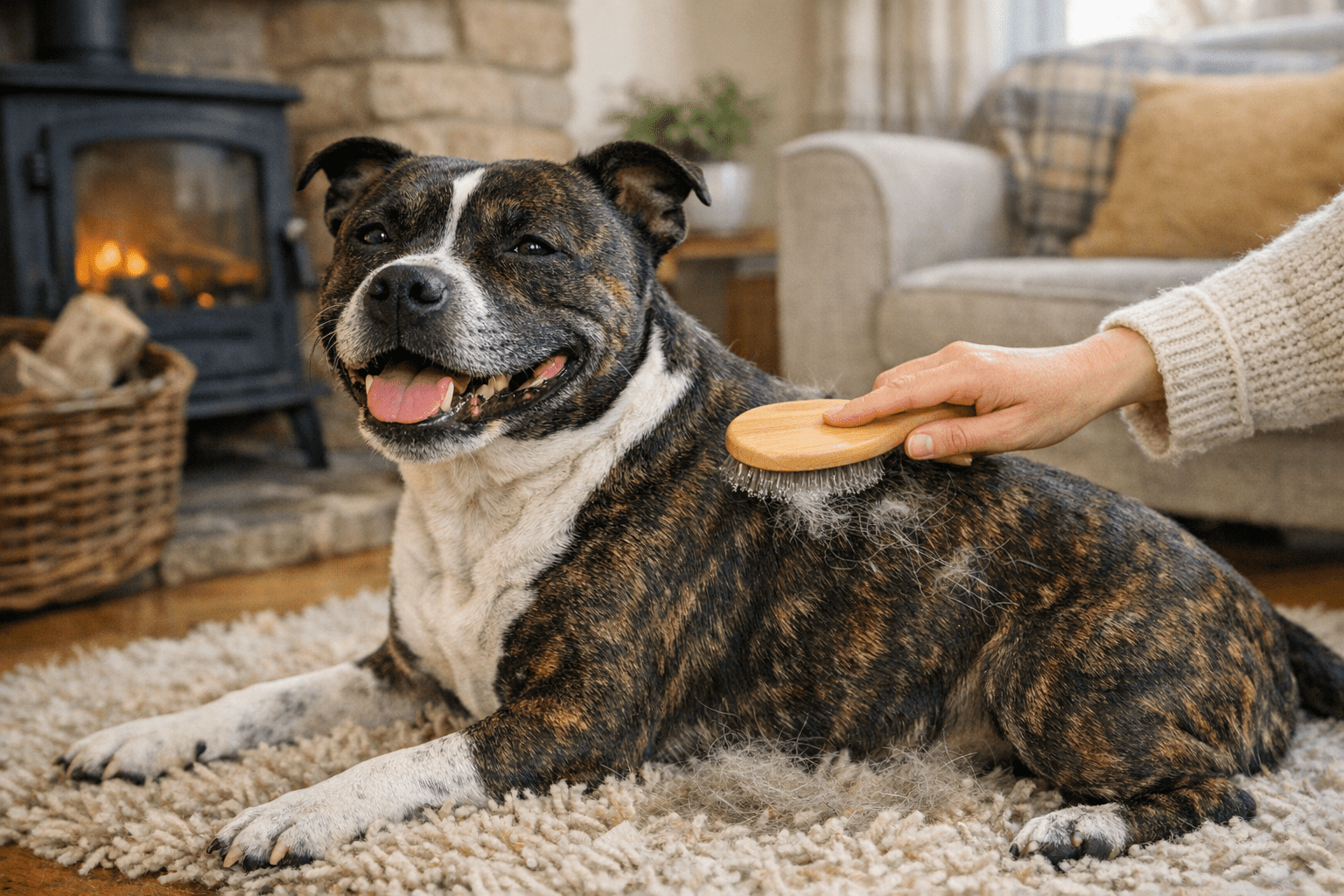
- Brush 3-4 times weekly – Use a slicker brush to remove loose hair before it becomes airborne
- Bathe every 3-4 weeks – Use hypoallergenic shampoo; avoid over-bathing which dries skin
- Professional grooming every 6-8 weeks – A clean, well-maintained coat sheds less
- Trim around eyes and mouth – Reduces saliva transfer to surfaces
Home Environment Hacks
Small changes make a huge difference:
- Invest in a HEPA air purifier – Place it in your main living area
- Use washable slipcovers – On couches and chairs your dog uses
- Vacuum with HEPA filter – At least twice weekly
- Create pet-free zones – At minimum, keep the bedroom door closed
- Wash bedding weekly – Both yours and your dog’s
The “Test Run” Approach
Before committing to a Cockapoo, I always recommend:
- Visit the breeder in person
- Spend 2-3 hours with the puppy or adult dog
- Try playing, cuddling, and sitting nearby
- Note any reaction within 24 hours
My friend Jessica did exactly this. She visited three different breeders, spent time with various Cockapoos, and discovered that curly-coated F1bs gave her zero issues while straight-coated ones triggered mild symptoms. That information was gold – it helped her choose the perfect puppy.
Cockapoo Temperament and Personality: What to Expect
Beyond allergies, you probably want to know what living with a Cockapoo is actually like. Brace yourself – these dogs are personality-plus.
The Good Stuff
Cockapoos are:
- Affectionate beyond belief – They want to be wherever you are
- Intelligent and trainable – Thanks to Poodle genes, they pick up commands quickly
- Great with kids – Patient, gentle, and playful
- Adaptable – Happy in apartments or houses with yards
- Moderately energetic – Daily walks and playtime keep them content
Charlie greets me at the door like I’ve been gone for years, even if I just took out the trash. That level of enthusiasm never gets old.
The Challenges
Let’s be real – no breed is perfect:
- Separation anxiety – These dogs bond intensely and don’t love being alone
- Barking – They’ll alert you to every squirrel, mail carrier, and mysterious noise
- Stubborn streak – Smart dogs can be opinionated dogs
- Grooming commitment – That gorgeous coat requires work
If you work 12-hour shifts or travel frequently, a Cockapoo might not be your best match. They thrive on companionship.
Health and Lifespan: Keeping Your Cockapoo Happy
A healthy Cockapoo is a low-shedding Cockapoo. Here’s what you need to know:
Common Health Issues
- Ear infections – Those floppy ears trap moisture
- Progressive Retinal Atrophy – Eye issues inherited from both parent breeds
- Hip Dysplasia – More common in larger Cockapoos
- Allergies – Yes, dogs can have allergies too!
Diet Matters for Coat Health
What goes in shows up on the outside. A high-quality diet rich in:
- Omega-3 fatty acids – For skin and coat health
- Quality protein – Supports hair growth
- Limited fillers – Corn and wheat can trigger skin issues
Charlie eats a salmon-based diet with added fish oil, and his coat is absolutely glorious. Soft, shiny, and minimal shedding.
Lifespan and Care
Cockapoos typically live 12-15 years with proper care. Regular vet checkups, dental care, and maintaining a healthy weight all contribute to longevity.
Training Your Cockapoo: A Step-by-Step Guide
Training a Cockapoo is generally rewarding, but it comes with its own quirks.
The Smart Dog Problem
Cockapoos learn quickly – sometimes too quickly. Charlie figured out how to open the pantry door within a week. The downside? They also learn how to manipulate you.
Pro tip: Use positive reinforcement consistently. These sensitive souls don’t respond well to harsh corrections.
Essential Commands
Start with:
- Sit – Foundation for everything else
- Stay – Crucial for safety
- Leave it – Prevents eating random things on walks
- Come – Essential for off-leash adventures
- Crate training – Helps with potty training and separation anxiety
Socialization Is Non-Negotiable
Expose your Cockapoo to:
- Different people (ages, appearances, voices)
- Other dogs (various sizes and temperaments)
- Various environments (parks, stores, busy streets)
- Different sounds (vacuum cleaners, thunderstorms, traffic)
A well-socialized Cockapoo is confident and friendly. A poorly socialized one can become anxious or reactive.
Frequently Asked Questions
Can I be allergic to my Cockapoo even if they’re hypoallergenic?
Yes, absolutely. The term “hypoallergenic” means less likely to cause allergies, not allergy-proof. Some people still react to Cockapoos, especially if they have severe allergies or are sensitive to specific proteins in dog saliva or dander. Always spend time with the individual dog before committing.
How often should I groom my Cockapoo to control allergies?
For best allergy management, brush your Cockapoo at least 3-4 times per week and bathe every 3-4 weeks. Professional grooming every 6-8 weeks keeps the coat healthy and reduces dander. Regular grooming removes loose hair before it becomes airborne.
Do Cockapoos shed more as they get older?
Not typically, but changes can occur. Puppy coats often transition to adult coats around 6-12 months, which may temporarily increase shedding. Senior dogs may shed slightly more due to skin changes, but consistent grooming keeps it manageable throughout their lives.
What’s the difference between an F1 and F1b Cockapoo for allergies?
F1b Cockapoos (75% Poodle, 25% Cocker Spaniel) are generally better for allergies because they inherit more Poodle genetics. This results in tighter curls, less shedding, and lower dander production compared to F1 Cockapoos (50/50 mix).
Can medication help me live with a Cockapoo if I have allergies?
Many allergy sufferers manage symptoms with over-the-counter antihistamines, nasal sprays, or eye drops. Some people also benefit from allergy shots (immunotherapy). Consult your allergist before getting a dog and discuss your specific situation.
Are Cockapoos better for allergies than Goldendoodles?
Generally, yes. Cockapoos tend to be smaller and often have tighter curls than Goldendoodles, which means less surface area for dander and potentially fewer allergens. However, individual coat variation matters more than breed type.
Conclusion: Should You Bring a Cockapoo Home?
After everything we’ve covered, you might be wondering where I land on the big question: are Cockapoos hypoallergenic enough for your family?
Here’s my honest take: If you have mild to moderate allergies, and you’re willing to commit to regular grooming and home maintenance, a Cockapoo – especially an F1b with a curly coat – could be your perfect match. These dogs offer the companionship, intelligence, and affection of a Poodle with the warmth and charm of a Cocker Spaniel, wrapped in a package that sheds remarkably little.
But if your allergies are severe, or if you’re unwilling to invest in grooming and cleaning routines, you might want to consider other options or consult an allergist first.
Personally, living with Charlie has been one of the greatest joys of my life. Yes, I vacuum more than I used to. Yes, I spend Sunday mornings brushing out his curls. But every time I walk through the door and see that wagging tail and those adoring eyes, I know it’s worth it.
The bottom line? Cockapoos are one of the most allergy-friendly breeds you’ll find – just remember that “hypoallergenic” is a spectrum, not a guarantee. Do your research, meet the puppy first, and prepare your home for success.
Your perfect, allergy-friendly companion might just be a curly-coated Cockapoo away. 🐶❤️