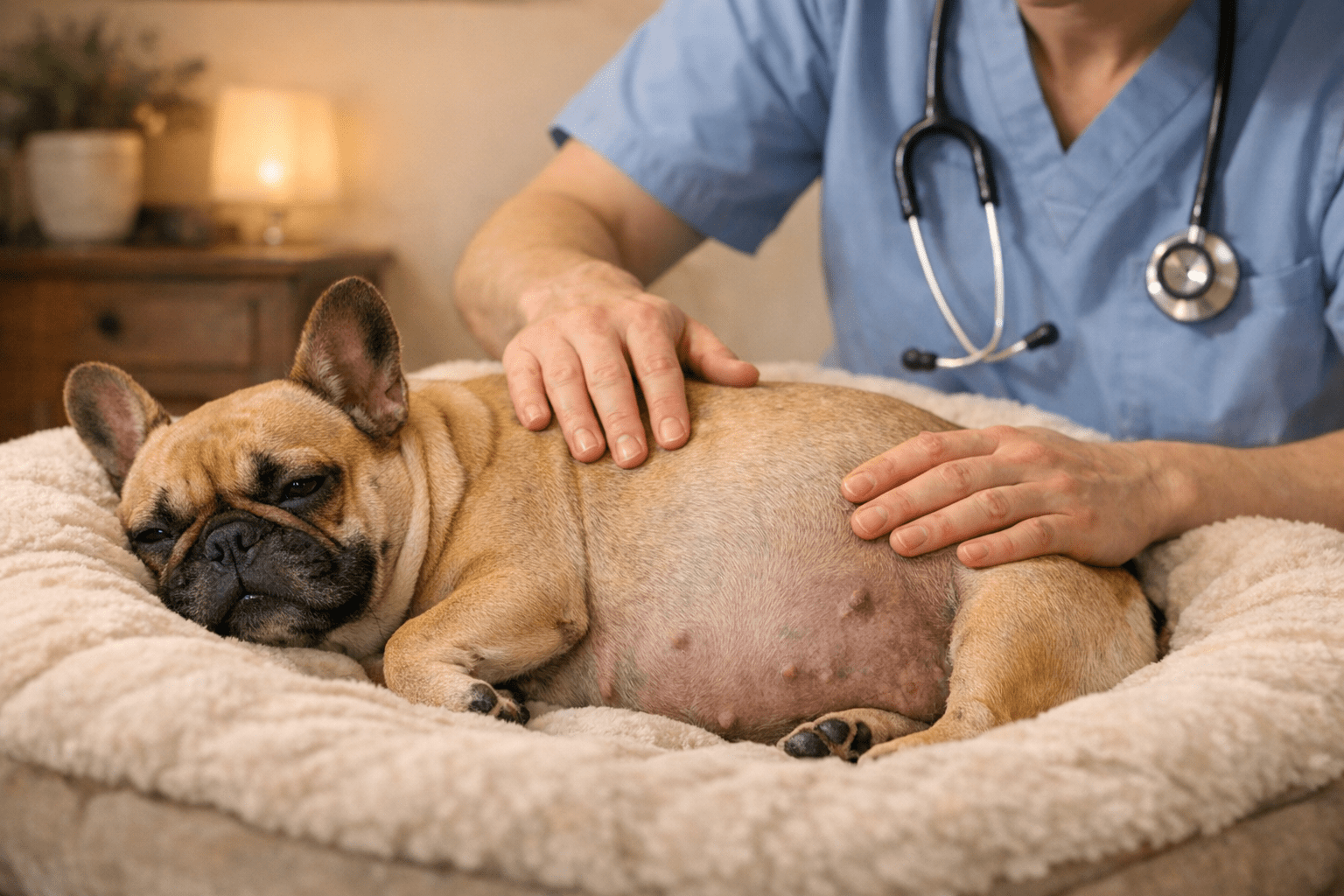
Welcoming a litter of puppies into the world is nothing short of magical. However, if you are expecting French Bulldog births, you need to know that this isn’t your average Tuesday afternoon with a Golden Retriever. As a breed, Frenchies are unique, adorable, and notoriously difficult when it comes to whelping.
I’ve seen my fair share of dog breeding dramas, and trust me, preparation is your best friend here. Whether you are a seasoned breeder or a first-time owner whose dog had an “oops” moment, navigating the birth of these brachycephalic beauties requires nerves of steel and a vet on speed dial.
In this guide, we will walk through everything you need to know about French Bulldog births, from the early signs of labour to the realities of C-sections and those precious first few hours with newborns. We’ll keep it real, practical, and focused on the safety of Mum and her pups. Let’s dive in!
Understanding the Breed: Why Frenchies Are Different
Before we even talk about the mechanics of labour, we have to address the elephant in the room—or rather, the Bulldog in the room. French Bulldogs are a brachycephalic breed. This means they have short snouts and flattened faces, which often correlate with specific physical traits in the hips and pelvic structure.
Unlike a Labrador who might pop out puppies like a vending machine, Frenchies often have narrow hips and large heads. This anatomical mismatch is the primary reason why French Bulldog births are considered high-risk. The puppies can easily get stuck in the birth canal, a situation known as dystocia, which can be life-threatening for both the puppies and the mother.
Furthermore, Frenchies are notorious for having low stamina during labour. They can tire out very quickly, meaning the contractions might simply stop before all the puppies are delivered. This is why, in the UK and globally, the majority of French Bulldog litters are delivered via elective C-section. It isn’t a failure of nature; it’s a triumph of modern veterinary science designed to keep everyone safe.
Preparing for the Big Day
If you are expecting a litter, preparation starts weeks before the due date. You cannot leave French Bulldog births to chance.
Visit the Vet Around day 55 of the pregnancy, your vet should perform an X-ray. Unlike ultrasounds, which just show fluid and heartbeats, an X-ray shows the skeletal structure. This tells you exactly how many puppies to expect and, crucially, their size relative to the mother’s pelvis. This scan is non-negotiable for planning a safe birth.
The Whelping Box You need a safe, cozy spot for Mum. A whelping box with low sides is ideal. It stops the puppies from wandering off but allows Mum to step out for a toilet break without crushing anyone. Line it with plenty of clean towels and keep the room warm—puppies cannot regulate their own body temperature when they are born.
The Emergency Kit I always say: hope for the best, prepare for the worst. Have a kit ready with sterile scissors, dental floss (for tying off cords), a bulb syringe (to clear airways), and plenty of clean towels. Also, have your vet’s emergency number written on a piece of paper taped to the wall. Don’t rely on your phone battery when you’re panicking!
Recognising the Signs of Labour
You’ve done the prep, and now the day is looming. How do you know when it’s time?
The most reliable indicator is a drop in Mum’s body temperature. Normally around 38.5∘C, it will drop below 37∘C about 12 to 24 hours before labour starts. This is your “go” signal. Start taking her temperature twice a day from day 58 onwards.
Other signs include:
- Nesting: She will dig at the blankets or try to hide in small spaces.
- Restlessness: Pacing, panting, and inability to settle.
- Refusing food: A clear sign that the show is about to start.
Once active labour begins (strong contractions), the clock starts ticking. If a puppy hasn’t arrived within two hours of active straining, you need to call your vet immediately. With French Bulldog births, waiting is rarely the right strategy.
The Whelping Process: What to Expect
If a natural birth is the plan (and your vet has approved it), here is what you are looking at.
Stage One: This is the labour and contraction phase. It can last 6 to 12 hours. You might see clear discharge, but no puppy yet.
Stage Two: This is the delivery. The puppy is pushed out, usually inside a fluid sac. Mum should instinctively tear the sac and lick the puppy to stimulate breathing. If she doesn’t, you need to step in immediately.
Stage Three: The delivery of the placenta. One placenta per puppy is the rule. If you are missing a placenta, let your vet know, as a retained placenta can cause serious infection.
Here is a quick comparison of what is normal versus what is an emergency during French Bulldog births:
| Stage | Normal Behaviour | Red Flag / Emergency |
|---|---|---|
| Contractions | Mild to strong, rhythmic | Continuous straining for 30 mins with no puppy |
| Time between puppies | 15 mins to 2 hours | More than 2 hours between puppies |
| Discharge | Clear or green (after first puppy) | Foul-smelling, black, or excessive blood |
| Mum’s attitude | Attentive, licking puppies | Aggressive, lethargic, or ignoring puppies |
Why C-Sections are Common
Let’s be brutally honest: the success rate of natural French Bulldog births is lower than in other breeds. Because of this, many UK breeders opt for an elective C-section.
This is usually scheduled for day 63 of the pregnancy. The vet will perform a Caesarean section under general anaesthesia, removing the puppies safely and quickly. While surgery sounds scary, it actually removes the stress and trauma of a difficult natural birth.
I remember a friend who tried to let her Frenchie birth naturally; after 4 hours of stress and no puppies, they rushed to the vet for an emergency C-section. Everyone was safe in the end, but an elective surgery would have saved a lot of grey hairs!
Pros of C-Section:
- Safety for Mum and pups.
- Scheduled timing (mostly).
- No risk of puppies getting stuck.
Cons of C-Section:
- High cost (can range from £2,000 to £4,000 in the UK).
- Recovery time for Mum.
- Risks associated with anaesthesia.
Handling Newborn Frenchies: The Golden Hour
Once the puppies are out, the “Golden Hour” begins. This is the first 60 minutes of life, and it is vital.
1. Warming Up: Puppies are born wet and unable to shiver. Dry them vigorously but gently with a clean towel. 2. The Umbilical Cord: If the vet hasn’t cut it, you may need to. Tie it off with sterile dental floss about an inch from the belly and cut with sterilised scissors. 3. Breathing: If a puppy isn’t breathing, clear the mouth with a bulb syringe and rub the chest firmly. 4. Nursing: Try to get the puppies to latch as soon as possible. The first milk (colostrum) contains vital antibodies that protect them from disease.
Crucial Note: Do not leave newborn Frenchies alone with Mum for the first few nights. Frenchie mothers, bless their hearts, are clumsy. They have big, heavy bodies and short legs. There is a real risk of them rolling over or stepping on a puppy. Supervision is mandatory.
Essential Post-Birth Care for Mum and Pups
The work isn’t over once the births are done. This is actually the beginning of the most labour-intensive time.
Dietary Needs: Mum is going to be a milk-making machine. She needs high-quality puppy food (yes, puppy food!) because it is calorie-dense. Small, frequent meals are better than one big meal, as her stomach is compressed by the uterus. Keep her water bowl topped up constantly—dehydration is a killer for milk supply.
Hygiene: Keep the whelping box scrupulously clean. Change the bedding daily, or more often if it gets soiled. Puppies are susceptible to infections, so wash your hands before handling them.
Weight Checks: Invest in a small digital kitchen scale. Weigh the puppies at the same time every day. They should gain weight daily. If a puppy stops gaining or loses weight, it’s the first sign of a problem. Intervene early with supplemental bottle feeding if necessary.
When to Call the Vet
Trust your gut. If something feels wrong, it probably is. Here are non-negotiable reasons to call the vet during or after French Bulldog births:
- Mum is screaming or biting at her vulva.
- A puppy is stuck in the birth canal.
- Mum has a fever (over 39.5∘C).
- Foul-smelling discharge.
- Mum ignores the puppies or tries to harm them.
- Puppies are crying constantly (indicates hunger or pain).
- Mum develops “eclampsia” (milk fever) – signs include stiff legs, tremors, and panting. This is a medical emergency.
Pros and Cons of Home Whelping vs. Vet Clinic
Deciding where to welcome the litter? Here is a quick breakdown to help you decide what is right for your French Bulldog births.
Home Whelping:
- Pros: Familiar environment for Mum, less stress, you control the hygiene, cheaper (initially).
- Cons: High risk if complications occur, you are responsible for all medical interventions, cleanup is a nightmare.
Vet Clinic (C-Section):
- Pros: Professional monitoring, immediate intervention available, anaesthesia means Mum feels no pain.
- Cons: Expensive, clinical environment, Mum might be groggy and less receptive to puppies initially.
FAQ
How many puppies do French Bulldogs usually have? French Bulldogs typically have smaller litters than larger breeds. You can expect anywhere from 2 to 4 puppies. It is quite rare for them to have more than 5, and single-puppy litters are also common, which can sometimes make labour more difficult as the single puppy can grow very large.
Can I use a heating pad for the puppies? Yes, but be extremely careful. Puppies cannot move away from heat effectively. Always wrap the heating pad in a towel and ensure there is an “unheated” zone in the whelping box so the puppies don’t overheat. Overheating can be just as dangerous as the cold.
Is it normal for my Frenchie to bleed after birth? Yes, some discharge called lochia is normal. It is usually greenish-black initially and then turns reddish. However, if the bleeding is bright red and profuse, or if it has a foul smell, this indicates a potential haemorrhage or infection, and you should contact your vet immediately.
When should I start weaning the puppies? Puppies usually start showing interest in solid food (or a puppy porridge mixture) around 3 to 4 weeks of age. By 6 to 7 weeks, they should be fully weaned. This also gives Mum’s body a much-needed break.
Why is my French Bulldog panting heavily after giving birth? Panting is normal immediately after birth as she cools down and releases oxytocin. However, if the panting continues for hours, it could be a sign of pain, infection, or eclampsia. Monitor her closely and take her temperature.
Do I need to register the puppies? In the UK, if the puppies are KC registered, you need to register the litter with the Kennel Club. Regardless of registration, it is a legal requirement to have all puppies microchipped before they go to their new homes (usually done at 8 weeks).
Conclusion
Navigating French Bulldog births is a journey that requires patience, preparation, and a hefty budget for vet bills. While it is a physically demanding process for the breed, the reward of seeing those wrinkly little faces is unbeatable.
Always prioritise the health of the mother over the desire for a natural birth. There is no shame in a C-section; in fact, it is often the kindest choice you can make. Prepare your home, consult your vet early, and get ready for some sleepless nights.
With the right care, knowledge, and a bit of luck, you will be able to welcome a healthy, happy litter into the world. Good luck, and give those pups a gentle belly rub from me! 🐶❤️