Introduction
If you’ve ever found yourself scratching your head over the whole Alsatians vs. German Shepherds debate, you’re not alone. I remember sitting in a dog park in Manchester years ago, listening to a heated argument between two seasoned owners. One swore blind their dog was an Alsatian, the other insisted it was a German Shepherd. Both dogs looked identical. Both were equally magnificent. And both, as it turns out, were the exact same breed.
Here’s the thing: this confusion isn’t just a minor mix-up. It’s a fascinating piece of canine history that stretches back over a century, involving wars, political correctness, and even the British royal family. I’ve owned German Shepherds for the better part of two decades, and I still get asked the question at least once a month: “So, what’s the difference between an Alsatian and a German Shepherd?”
The short answer? Absolutely nothing — apart from the name.
But as any dog lover knows, the long answer is far more interesting. By the time you finish reading this, you’ll not only understand the truth behind the naming confusion, but you’ll also have a deeper appreciation for one of the most loyal, intelligent, and hardworking breeds on the planet. Let’s dig in, shall we? 🐾
Table 1: Quick Overview — Alsatians vs. German Shepherds
| Feature | Alsatian | German Shepherd Dog |
|---|---|---|
| Breed origin | Same breed | Same breed |
| Name used in UK (1919–1977) | ✅ | ❌ |
| Name used in USA today | ❌ | ✅ |
| Coat colour variations | Same | Same |
| Temperament | Identical | Identical |
| Lifespan | 9–13 years | 9–13 years |
| Kennel Club recognition | Historical name | Current official name |
The One Simple Truth About Alsatians vs. German Shepherds
Let me cut straight to the chase. An Alsatian is a German Shepherd Dog. Period. Full stop. End of story.
The breed we know today as the German Shepherd Dog was originally developed in Germany in the late 19th century by a visionary named Captain Max von Stephanitz. He wanted to create the ultimate working dog — intelligent, loyal, courageous, and capable of handling any task thrown its way. He succeeded beyond his wildest dreams.
The proper German name for the breed is Deutscher Schäferhund, which translates literally to “German Shepherd Dog.” Notice the word “dog” is part of the translation. That’s important because Schäferhund means “shepherd dog,” not just “shepherd.” Many people drop the “dog” and simply say “German Shepherd,” but the full name honours the breed’s heritage as a working herding dog.
So where does “Alsatian” come in? Well, after World War I, anti-German sentiment was running high in Britain, the Commonwealth, and the United States. Anything associated with Germany was viewed with suspicion. The British Kennel Club, worried that the public wouldn’t accept a breed with “German” in its name, decided to rebrand the dog. They chose “Alsatian Wolf Dog,” referencing the Alsace region of France — which borders Germany — where some of the first dogs arrived from.
The “Wolf Dog” part was soon dropped because it gave people the wrong idea (more on that in a moment), but “Alsatian” stuck around in Britain until 1977. Today, the Kennel Club lists the breed as “German Shepherd Dog (Alsatian)” for clarity. In America, the breed was briefly called “Shepherd Dog” during World War I, but the name German Shepherd Dog was restored by 1931.
So if someone tells you Alsatians and German Shepherds are different breeds, politely hand them a biscuit and point them to this article. They’ll thank you later. 🍪
A Brief History Lesson That’ll Make You Sound Like a Genius at Parties
I’ve always been a bit of a history buff, and the story behind this breed is one of my favourites to share. Understanding the past helps us appreciate the present — especially when it comes to our four-legged friends.
Captain Max von Stephanitz founded the breed in 1899 after attending a dog show where he saw a dog named Hektor Linksrhein. Hektor was everything Stephanitz wanted in a working dog: intelligent, athletic, loyal, and strikingly handsome. Stephanitz bought him on the spot, renamed him Horand von Grafrath, and declared him the first registered German Shepherd Dog.
But here’s where it gets juicy. Stephanitz was so committed to creating the perfect working dog that he used wolves in his breeding programme. Yes, actual wolves. In his original studbook, Zuchtbuch für Deutscher Schäferhund, he listed several wolves that were used to introduce specific traits — resilience, stamina, and sharp instincts.
This became a massive problem when the breed arrived in Britain after World War I. The press had a field day, running headlines about “half-wolves let loose on British society.” The book Australian Barkers and Biters, reprinted after the war, included a chapter titled “The Menace of the Alsatian Wolf Dog.” People were genuinely terrified.
Stephanitz himself later requested that breeders stop using pure wolves, and references to wolves were removed from subsequent editions of his book. But the damage was done. Even today, some people still associate German Shepherds with wolves, despite the fact that modern GSDs share no more DNA with wolves than any other domestic dog breed.
By 1977, after years of campaigning by breed enthusiasts, the Kennel Club officially changed the name back to German Shepherd Dog. But old habits die hard, and many older Brits still call them Alsatians. My own grandmother refused to use the new name until the day she passed. “It’s an Alsatian, love,” she’d say, patting her dog Bruno on the head. “Always was, always will be.” 😊
Table 2: Historical Timeline of Alsatians vs. German Shepherds
| Year | Event |
|---|---|
| 1899 | Max von Stephanitz registers first German Shepherd Dog |
| Early 1900s | Breed gains popularity in Germany as a working dog |
| 1914-1918 | World War I; GSDs serve alongside soldiers |
| 1917 | USA changes name to “Shepherd Dog” |
| 1919 | UK changes name to “Alsatian Wolf Dog” |
| 1920s | “Wolf Dog” dropped; breed known simply as “Alsatian” |
| 1931 | USA restores “German Shepherd Dog” |
| 1977 | UK officially changes name back to “German Shepherd Dog” |
| Present | Both names used interchangeably in some regions |
Temperament and Personality: Are They Really the Same Dog?
I’ve owned three German Shepherds over the years — or should I say Alsatians? — and I can tell you from personal experience: the temperament is identical regardless of what you call them.
German Shepherds are renowned for their intelligence, loyalty, and courage. They’re the third most intelligent dog breed (behind Border Collies and Poodles), which means they pick up commands quickly but also know exactly how to manipulate you for an extra treat. Trust me, mine have mastered the “sad eyes” technique to perfection. 🥺
Here’s what you can expect from the breed:
- Loyal to the core. These dogs form incredibly strong bonds with their families. My GSD, Rex, follows me from room to room like a four-legged shadow. If I’m in the kitchen, he’s there. If I’m in the bathroom, he’s lying outside the door. It’s sweet, but also slightly inconvenient when I’m trying to sneak a biscuit without sharing.
- Protective instincts. German Shepherds are natural guardians. They’ll alert you to anything unusual — a delivery van, a squirrel in the garden, a leaf falling from a tree. This makes them excellent watchdogs, but it also means early socialisation is non-negotiable. You don’t want a dog that barks at every passing breeze.
- High energy levels. These dogs were bred to work, and work they will. Without adequate exercise and mental stimulation, they can become destructive. I learned this the hard way when my first GSD decided my favourite pair of shoes were a chew toy. 💔
- Gentle with family. Despite their tough exterior, German Shepherds are gentle and affectionate with their loved ones. They’re particularly good with children when raised together, though supervision is always recommended.
- Reserved with strangers. Most GSDs are naturally aloof with people they don’t know. This isn’t aggression — it’s caution. With proper training, they learn to accept visitors while remaining vigilant.
Physical Appearance: What an Alsatian Looks Like vs. a German Shepherd
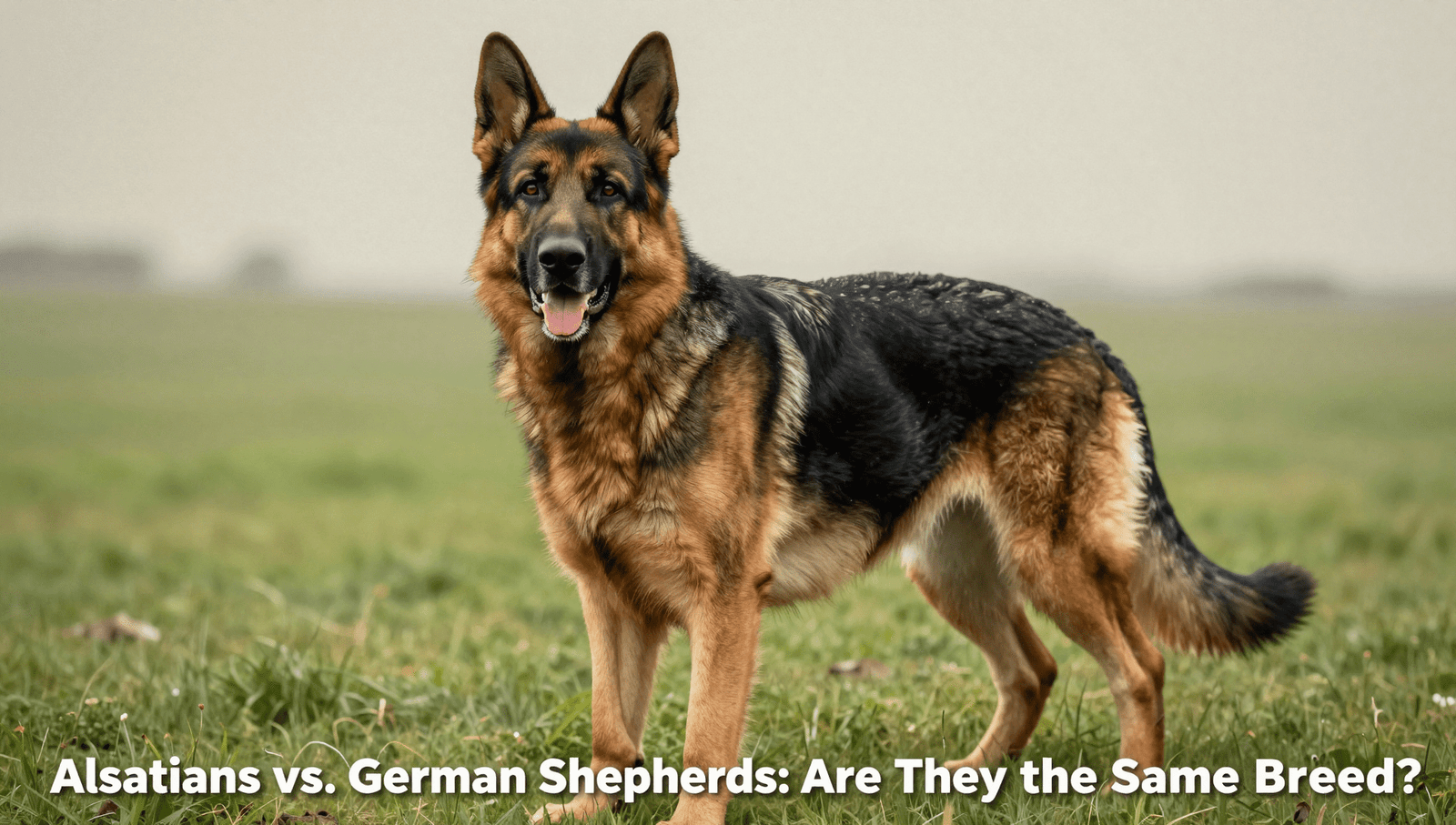
If you put an “Alsatian” and a “German Shepherd” side by side, you wouldn’t be able to tell them apart. Because, well, they’re the same dog.
That said, there are variations within the breed that can cause confusion. German Shepherds come in two main coat types: short-haired and long-haired. The Kennel Club only recognises the short-haired variety for show purposes, but long-haired GSDs are perfectly healthy and make wonderful pets.
Colour variations include:
- Black and tan (the classic look)
- Sable (my personal favourite)
- Black and red
- Bi-colour (mostly black with tan markings)
- Pure black
- Pure white (not recognised by most kennel clubs but beautiful nonetheless)
Some people mistakenly believe that “Alsatians” are the long-haired variety and “German Shepherds” are the short-haired kind. This is completely untrue. Both coat types exist within the same breed, and neither has anything to do with the name.
Another common myth is that Alsatians have lighter colouring or longer snouts. Again, this is simply variation within the breed. Some lines are bred for working ability and may look leaner; others are bred for show and may have a more exaggerated sloping back. But these are differences within the German Shepherd breed, not between two separate breeds.
Health and Lifespan: What Every Owner Should Know
I won’t sugar-coat it: German Shepherds are not the healthiest breed out there. Responsible breeding has improved things, but they’re still prone to several inherited conditions. Knowing what to look for can make a world of difference.
Common health issues include:
- Hip and elbow dysplasia. This is the big one. The breed’s sloping back and active lifestyle put strain on their joints. Reputable breeders screen their dogs for dysplasia, but it’s still a concern. Keeping your dog at a healthy weight and avoiding excessive jumping during puppyhood can help.
- Degenerative myelopathy. A progressive spinal cord disease that affects older dogs. It starts with weakness in the hind legs and can eventually lead to paralysis. There’s no cure, but early detection can improve quality of life.
- Bloat (gastric dilatation-volvulus). This is a life-threatening emergency where the stomach twists on itself. Large, deep-chested breeds like GSDs are especially at risk. Feeding smaller meals throughout the day and avoiding exercise immediately after eating can reduce the risk.
- Pancreatitis. Rich or fatty foods can trigger inflammation of the pancreas. I learned this lesson when Rex helped himself to a chunk of roast beef that fell on the floor. Three days at the vet later, I vowed never to leave food unattended again. 🙈
- Allergies. Skin allergies are common in the breed, often triggered by food or environmental factors. If your dog is constantly scratching, licking their paws, or developing hot spots, a trip to the vet is in order.
Lifespan: Most German Shepherds live between 9 and 13 years. I’ve known some to reach 14 or 15 with excellent care, but that’s on the higher end. Making healthy lifestyle choices — proper diet, regular exercise, and routine vet visits — gives your dog the best chance at a long, happy life.
Training and Socialisation: The Make-or-Break Factor
If there’s one piece of advice I’d shout from the rooftops about Alsatians vs. German Shepherds, it’s this: start training early and be consistent.
These dogs are brilliant, but brilliance without direction can be trouble. A bored, untrained German Shepherd is a menace to your furniture, your garden, and your sanity. I speak from experience.
Training tips that work:
- Start socialisation from day one. Expose your puppy to different people, animals, sounds, and environments. The critical window for socialisation closes around 16 weeks, so don’t waste a single day.
- Use positive reinforcement. German Shepherds respond best to praise, treats, and play. Harsh corrections can damage their trust and lead to fear-based aggression. Reward the behaviour you want to see, and you’ll build a confident, happy dog.
- Keep training sessions short but frequent. Five to ten minutes, three to five times a day, works wonders. Puppies have short attention spans, so quality over quantity is the name of the game.
- Teach impulse control. Exercises like “wait,” “stay,” and “leave it” are invaluable. A dog that can control their impulses is safer and more pleasant to be around.
- Enrol in a puppy class. Group classes provide structured socialisation and professional guidance. Plus, it’s a great way to meet other dog owners and commiserate about the sleepless nights. 😅
- Be consistent with rules. If you don’t want your dog on the sofa, never let them on the sofa. Mixed signals confuse dogs and undermine your training efforts.
Exercise and Mental Stimulation: Keeping Your GSD Happy
Let me put this bluntly: if you’re looking for a low-energy couch potato, a German Shepherd is not the dog for you. These dogs need at least one to two hours of exercise every single day. Rain or shine. Hot or cold. Sick or healthy (well, within reason).
But here’s the thing — physical exercise alone isn’t enough. German Shepherds are working dogs with sharp minds. They need mental stimulation just as much as they need physical activity. A tired dog is a happy dog, and a mentally tired dog is an angel.
Activities that work well:
- Long walks or jogs. Mix up the routes to keep things interesting. Let your dog sniff and explore — it’s mentally enriching for them.
- Fetch and frisbee. Most GSDs love chasing things. Just be careful not to overdo it on hard surfaces, especially with puppies whose joints are still developing.
- Agility training. If you have access to an agility course, your dog will thank you. It combines physical exercise with problem-solving, which is the perfect combination.
- Nose work and scent games. Hide treats around the house and let your dog find them. It taps into their natural instincts and wears them out faster than a run.
- Puzzle toys. Kongs stuffed with peanut butter, treat-dispensing balls, and puzzle boards keep their brains engaged when you’re busy.
- Training for advanced commands or dog sports. Obedience trials, rally, herding trials — the possibilities are endless.
I’ll never forget the day I came home from work to find Rex had somehow opened the kitchen cupboard and helped himself to a bag of pasta. He wasn’t being naughty; he was bored. That was the day I invested in puzzle toys and never looked back. 🧩
Table 3: Exercise Needs by Age
| Age | Daily Exercise | Notes |
|---|---|---|
| Puppy (8-16 weeks) | Short bursts, 5-10 minutes | Focus on socialisation, not endurance |
| Adolescent (4-12 months) | 30-60 minutes | Avoid high-impact exercise until joints mature |
| Adult (1-7 years) | 60-120 minutes | Mix physical and mental activities |
| Senior (8+ years) | 30-60 minutes, lower impact | Adjust based on health and mobility |
Diet and Nutrition: Fueling Your Working Dog
Feeding a German Shepherd isn’t rocket science, but there are some important considerations. This breed has a sensitive digestive system, so what you put in their bowl matters.
General feeding guidelines:
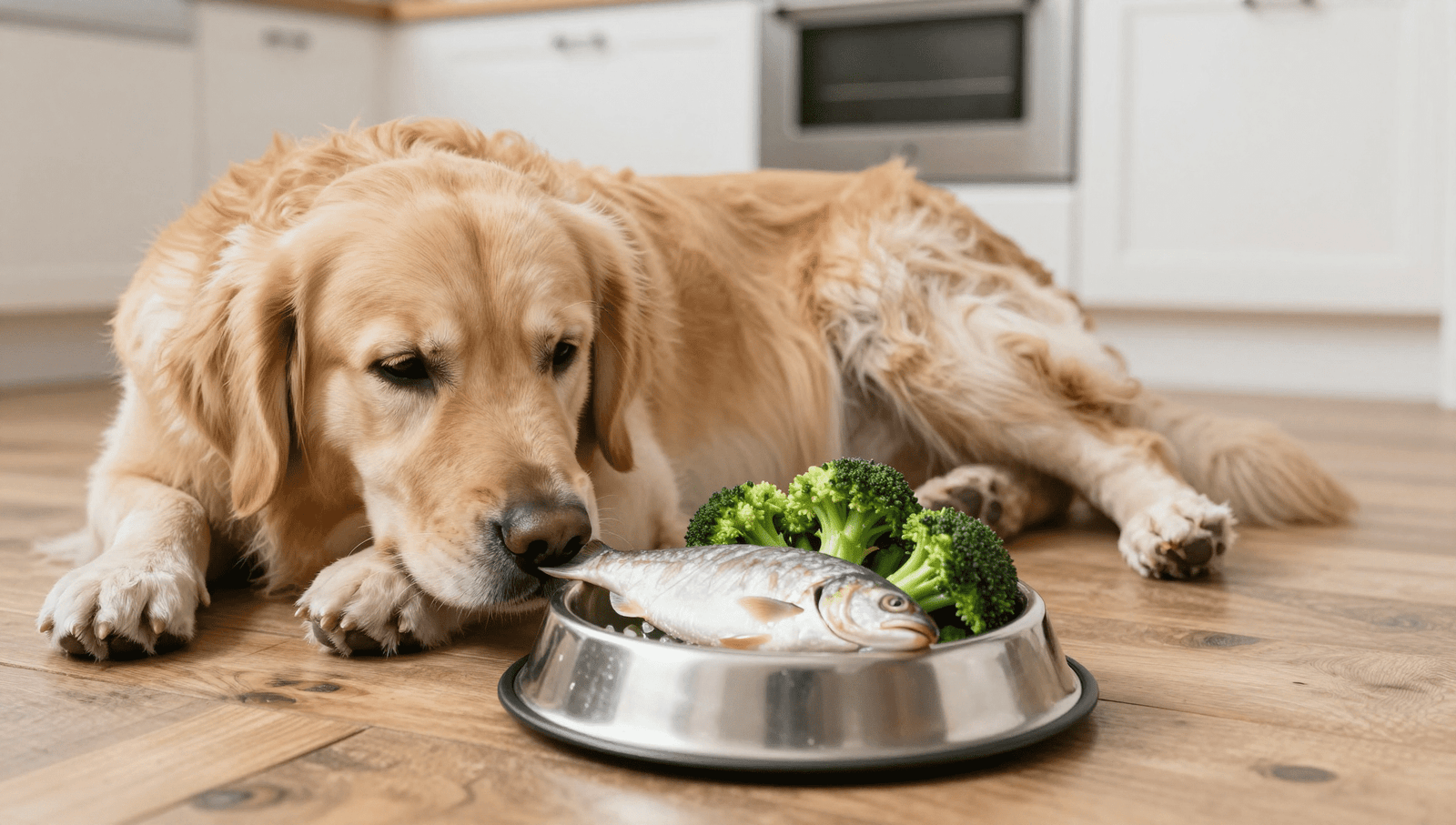
- High-quality protein is essential. Look for a food with meat as the first ingredient. Chicken, lamb, beef, or fish should be the star of the show.
- Avoid fillers. Corn, wheat, and soy are cheap fillers that offer little nutritional value. They can also trigger allergies in sensitive dogs.
- Consider grain-free options. Some GSDs do better on grain-free diets, but recent research has linked grain-free foods to heart issues in some dogs. Talk to your vet before making the switch.
- Divide meals into two or three servings. This reduces the risk of bloat, which is a serious concern for deep-chested breeds.
- Monitor weight carefully. German Shepherds are prone to hip and joint issues, and excess weight puts additional strain on their bodies. You should be able to feel your dog’s ribs without pressing hard.
- Supplements can help. Glucosamine and chondroitin support joint health, while fish oil provides omega-3 fatty acids for skin and coat health. Again, consult your vet first.
I feed my current GSD a mix of high-quality kibble and raw meat, with vegetables and supplements added in. It took some trial and error to find the right balance, but his shiny coat and boundless energy tell me we’ve got it right.
Remember: every dog is an individual. What works for one might not work for another. Pay attention to your dog’s energy levels, coat condition, and stool quality, and adjust accordingly.
Grooming: Keeping That Double Coat in Check
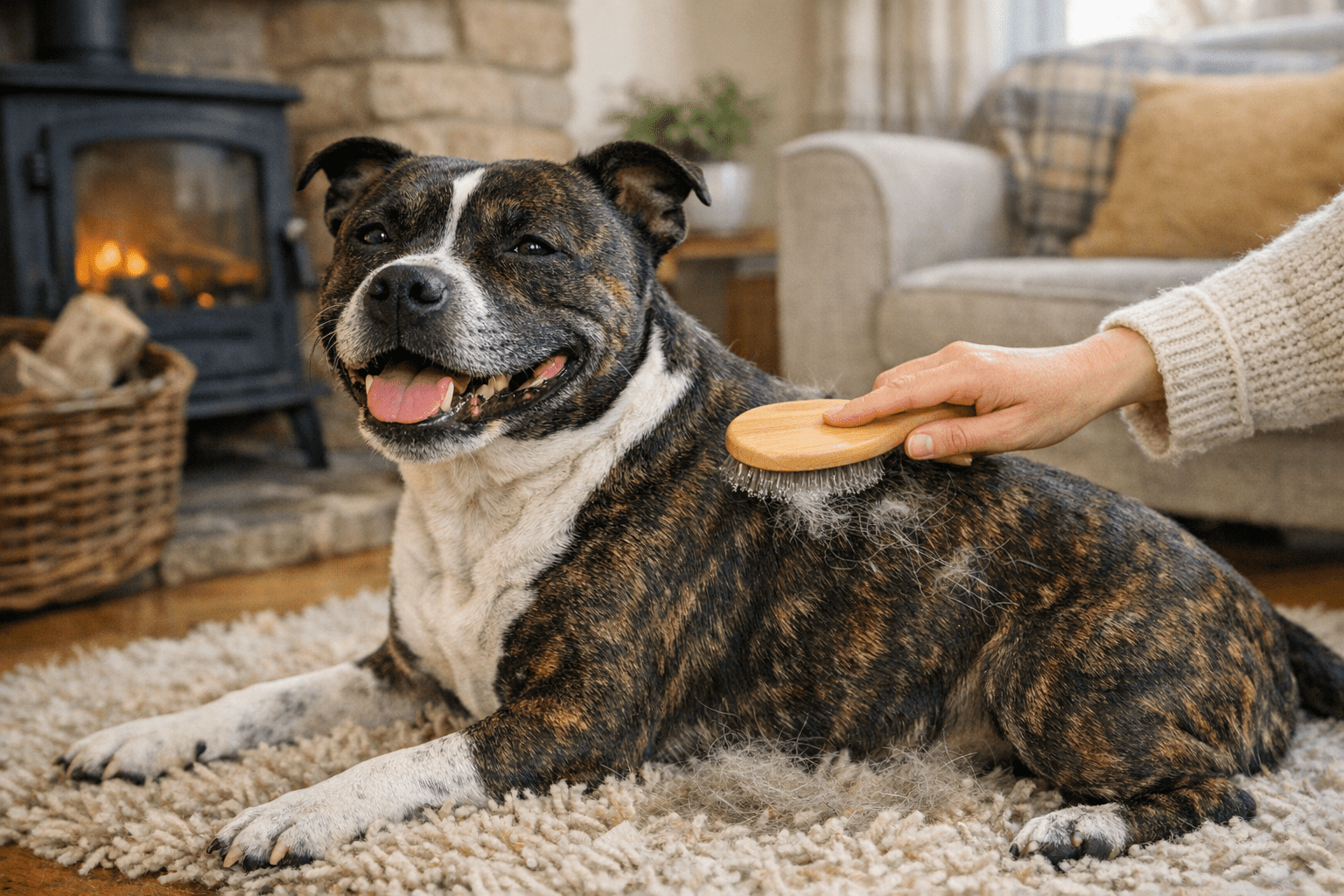
German Shepherds have a double coat — a dense undercoat for insulation and a longer outer coat for protection. This means they shed. A lot. Like, “I could knit a second dog from the fur” levels of shedding.
Grooming routine:
- Brush at least two to three times per week. During shedding season (spring and autumn), daily brushing is recommended. An undercoat rake or de-shedding tool works wonders.
- Bathe every two to three months. More frequent bathing strips the coat of natural oils and can cause skin problems. Unless your dog rolls in something truly horrific (and they will), stick to a reasonable schedule.
- Check ears weekly. German Shepherds can be prone to ear infections, especially if they love swimming (mine does). Look for redness, discharge, or a funny smell.
- Trim nails monthly. If you hear clicking on the floor, it’s nail-trimming time. Long nails can cause discomfort and affect your dog’s gait.
- Brush teeth regularly. Dental health is often overlooked but incredibly important. Aim for two to three times per week, or at least use dental chews.
Pro tip: invest in a good vacuum cleaner. I’m not joking. A robot vacuum was the best purchase I ever made as a GSD owner. 😂
Pros and Cons of Owning a German Shepherd (Alsatian)
Let’s be honest: no breed is perfect. Here’s my honest take on the ups and downs of sharing your life with a GSD.
Pros:
- Unwavering loyalty and devotion
- Highly intelligent and trainable
- Excellent watchdogs and protectors
- Great with children when properly socialised
- Versatile — can excel in almost any dog sport
- Lifelong learning companion
- Beautiful, dignified appearance
Cons:
- High exercise needs (not for couch potatoes)
- Heavy shedding (invest in lint rollers)
- Can be wary of strangers without proper socialisation
- Prone to separation anxiety if left alone too long
- Health issues can be costly
- Strong-willed — not ideal for first-time owners
- Can be vocal (barking, whining, groaning — yes, they groan)
I remember a friend telling me she wanted a German Shepherd because they look so majestic. I laughed and said, “They’re majestic when they’re asleep. The rest of the time, they’re a whirlwind of energy, fur, and opinions.” She got a Labrador instead. Wise choice.
Living with a German Shepherd: Real Talk from a Seasoned Owner
Owning a German Shepherd is a lifestyle, not just a pet choice. These dogs demand your time, attention, and energy. But in return, they give you something priceless: a bond that’s deeper than anything I’ve experienced with any other breed.
Things I wish someone had told me:
- They will follow you everywhere. The bathroom is no longer a private space.
- They have strong opinions and aren’t afraid to voice them. Expect groans, huffs, and dramatic sighs.
- They’re master manipulators. That innocent look? It’s a trap.
- They’re incredibly sensitive to your emotions. If you’re sad, they’ll be sad. If you’re happy, they’ll wag their tail off.
- They never truly grow out of the puppy phase. Rex is eight years old and still acts like a goofball.
Things I’d never change:
- The way he greets me at the door after a long day
- The warmth of him curled up next to me on the sofa
- The feeling of safety knowing he’s watching over the house
- The joy of watching him run full speed in the park
- The way he rests his head on my lap when I’m having a bad day
Conclusion
So there you have it — the truth about Alsatians vs. German Shepherds. They’re the same breed, separated only by a quirk of history and a wave of anti-German sentiment that swept through Britain after World War I. Whether you call them Alsatians, German Shepherds, or German Shepherd Dogs, you’re talking about one of the most remarkable canine companions on earth.
These dogs are intelligent, loyal, hardworking, and deeply affectionate. They’re not the right fit for everyone — they need exercise, training, and a committed owner who understands their needs. But for those who put in the effort, the reward is a bond that words can barely describe.
If you’re considering adding a GSD to your family, my advice is simple: do your research, find a reputable breeder or rescue organisation, and prepare yourself for a life filled with fur, laughter, and unconditional love. You won’t regret it.
Now, if you’ll excuse me, Rex is giving me the “it’s walk time” stare. And trust me, that’s a look you don’t ignore. 🐾
Frequently Asked Questions
Are Alsatians and German Shepherds the same breed?
Yes, absolutely. The Alsatian and the German Shepherd Dog are the exact same breed. The name change happened in Britain after World War I due to anti-German sentiment. The breed was called “Alsatian” from 1919 until 1977, when the Kennel Club officially restored the name German Shepherd Dog. Some older dog clubs and individuals still use “Alsatian” out of tradition.
Why were German Shepherds called Alsatians?
After World War I, there was widespread anti-German feeling in Britain and the Commonwealth. The Kennel Club worried that the public would reject a breed with “German” in its name. They chose “Alsatian Wolf Dog” because some of the first dogs arrived from the Alsace region of France, which borders Germany. The “Wolf Dog” part was soon dropped, but “Alsatian” remained in use until 1977.
Do Alsatians and German Shepherds have different temperaments?
No, they have identical temperaments because they’re the same breed. Any differences you see between individual dogs come from genetics, upbringing, training, and socialisation — not from the name. A well-bred, well-trained German Shepherd is the same as a well-bred, well-trained Alsatian.
Which name should I use for my dog?
In the United States, “German Shepherd Dog” or “German Shepherd” is the standard. In the United Kingdom, both names are understood, but “German Shepherd Dog” is the official Kennel Club name. If you’re in a country where “Alsatian” is still common, you can use either. Most people will know what you mean.
Are long-haired German Shepherds a different breed?
No, long-haired German Shepherds are simply a coat variation within the breed. They’re not a separate breed and they’re not “Alsatians” versus “German Shepherds.” The long-haired gene is recessive, so it appears less frequently, but it’s the same breed. Long-haired GSDs are not typically shown in conformation rings, but they can compete in obedience, agility, and working trials.
How much exercise does a German Shepherd need?
German Shepherds need at least one to two hours of exercise daily. This should include both physical activity (walks, runs, fetch) and mental stimulation (training, puzzle toys, scent games). Without adequate exercise, they can become destructive, anxious, or develop behavioural issues. These are working dogs with high energy levels, and they thrive when given a job to do.