Introduction: When Your Furry Friend Becomes a Gum-Chewer
Let me paint you a picture. There I was, watching my aging Labrador, Max, struggle with his dinner. He’d approach his bowl with the same enthusiasm as always, but something was different. His tongue would swipe at the kibble, missing more than he caught. Food would scatter across the kitchen floor like confetti at a party nobody invited. It was heartbreaking, honestly.
After a visit to the vet, I learned Max had lost most of his teeth due to age-related dental disease. My heart sank. How was my best buddy supposed to eat? That’s when I dove deep into the world of specialized feeding equipment for dogs with no teeth, and let me tell you—it’s a game-changer.
Finding the best dog bowl for dog with no teeth isn’t just about buying any old dish from the pet store. It’s about understanding your dog’s unique needs and finding a feeding solution that works for both of you. Trust me, I learned this the hard way after three failed bowl purchases and countless messes on my kitchen floor. But hey, we live and learn, right? 😊
Why a Specialized Dog Bowl is Essential
The Struggle is Real (and Messy)
Look, I’m going to be honest with you. When your dog loses their teeth, mealtime becomes an entirely different ballgame. Without teeth, your pup relies solely on their tongue and gums to pick up food. Imagine trying to eat soup with only your tongue while balancing on all fours—that’s pretty much what your toothless dog deals with daily.
Standard dog bowls simply weren’t designed for this situation. They’re typically deep, narrow, and made from hard materials that can irritate sensitive gums. I watched Max struggle for weeks before I realized the problem wasn’t him—it was the bowl. He’d spend ten minutes trying to scoop up a single piece of wet food, often giving up in frustration. That’s when I knew something had to change.
A specialized bowl addresses these challenges head-on. It makes food more accessible, reduces frustration, and prevents the mess that comes with desperate eating attempts. More importantly, it ensures your dog feeding accessories designed for toothless pups can prevent malnutrition. When dogs with no teeth might experience if they can’t eat enough. The right bowl transforms mealtime from a struggle into a joy. And honestly, seeing your dog eat happily again? Pure gold. 💛
Beyond the Bowl: Why This Matters
Here’s something most pet parents don’t realize: toothless dogs need more than just soft food. They need a complete feeding system that considers their physical limitations. When I finally switched to a specialized bowl for senior dogs, Max’s eating improved dramatically. He finished his meals faster, spilled less, and seemed genuinely happier.
The connection between proper feeding equipment and your dog’s overall health is more significant than you might think. When dogs with no teeth struggle to eat, they might not consume enough calories, leading to weight loss and nutritional deficiencies. Plus, the frustration of difficult mealtimes can affect their behavior and mood. Your dog deserves better than that peaceful mealtime experience, and the right bowl makes it possible.
Key Features of the Best Dog Bowl for Dog with No Teeth
Shallow Design: Making Food Easy to Reach
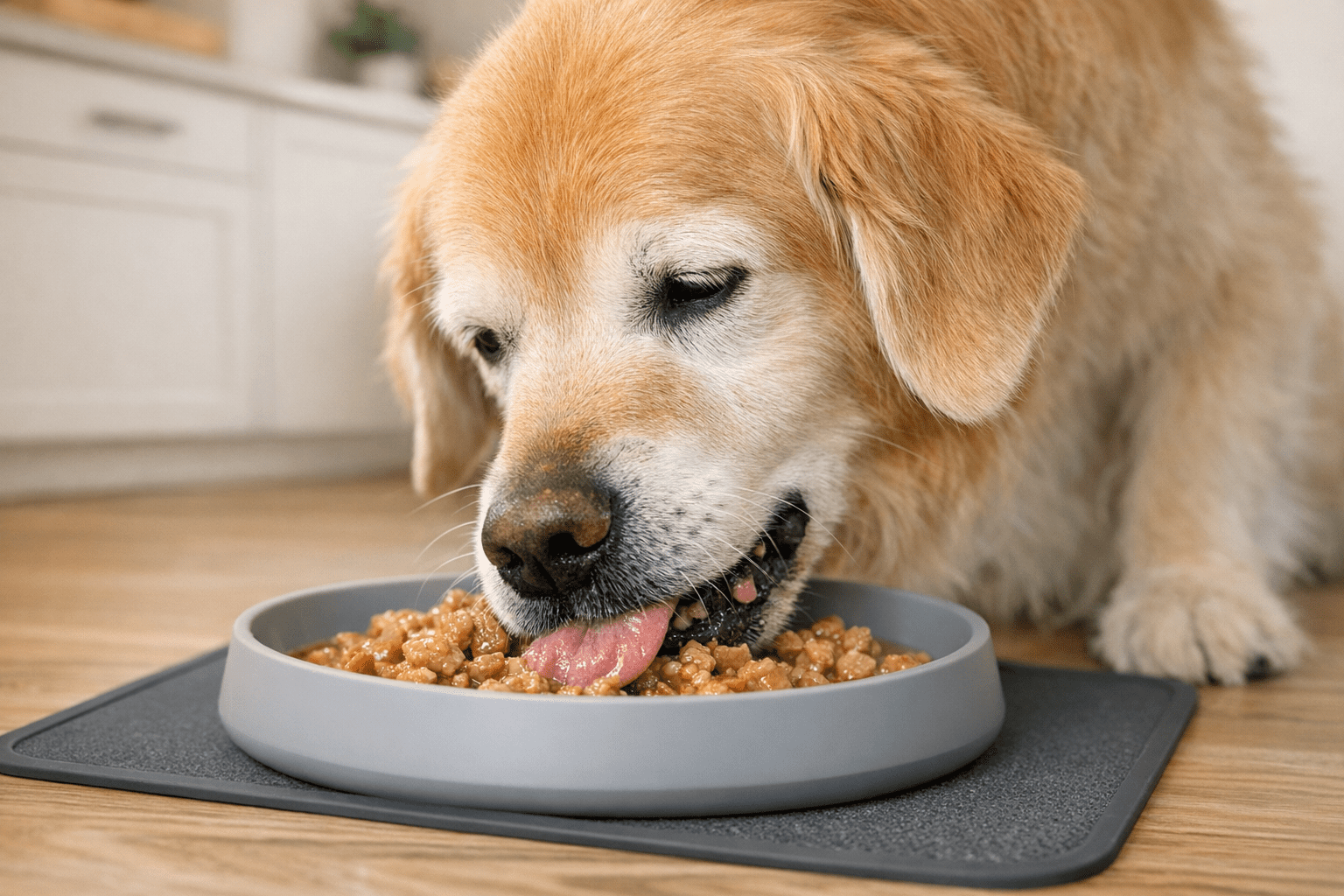
The shallow design feature was an absolute revelation for me. I remember the first time I placed a shallow bowl in front of Max—his eyes lit up! He could actually reach his food without having to jam his entire face into the bowl. It sounds simple, but shallow bowls reduce the distance between your dog’s mouth and the food.
Think about it this way: if you had to eat soup from a tall, narrow container, you’d struggle too. Dogs with no teeth use their tongues like spoons, scooping up food from the bottom. A shallow bowl makes this scooping action natural and effective. I noticed Max could clear his bowl in half the time once I switched to a wide, shallow design.
The ideal shallow bowl is about 1-2 inches deep with a wide diameter—think of it like a dinner plate with slight edges. Your dog’s tongue can sweep across the surface, collecting food efficiently picking up every morsel. No more wasted food, no more frustration. And honestly, watching your pup clean their bowl completely is deeply satisfying. ✨ chef’s kiss ✨
Non-Slip Base: Keeping Things Stable
Oh boy, do I have stories about slippery bowls! Before I discovered non-slip bases, I spent half my mealtime chasing bowls across the kitchen floor. Max would push his bowl forward while trying to eat, resulting in a trail of food leading from the kitchen to the living room. It was like Hansel and Gretel, but with stinky wet dog food.
Non-slip bases are an absolute must for noisy eaters—which is what all toothless dogs technically are. Without teeth to stabilize themselves, these pups often push against their bowls while eating. A bowl that slides around adds frustration to an already challenging task.
Look for bowls with rubber or silicone grips on the bottom rings, or ones made entirely from non-slip materials. Some high-quality non-slip bowls stay put even when your dog is really going for it. Since Max started using his non-slip bowl, I can count on one hand the number of times I’ve had to clean food off the floor. That’s a win in my book! 🏆
Soft or Flexible Material: Gentle on Gums
This feature caught me by surprise. I always assumed all dog bowls were pretty much the same—you put food in, dog eats, you wash it. Wrong! The material matters tremendously for dogs with no teeth.
When I first used a ceramic bowl for Max, I didn’t think much about it. But I noticed he’d sometimes bump his gums against the hard rim and flinch. It broke my heart. Can you imagine eating from a hard, unyielding surface with exposed gums? Ouch!
Silicone and other flexible materials changed everything. These soft bowls are gentle on sensitive gums, reducing the risk of injury and discomfort. Max started eating with more confidence, knowing he wouldn’t hurt himself if he got a little too enthusiastic.
Material options include food-grade silicone, flexible rubber, or even specially designed bowls with padded rims. Some gentle silicone dog bowls come with different firmness levels, letting you choose what works best for your pup. The key is finding something soft enough to be comfortable but sturdy enough to hold its shape during meals.
Wide Rim: Improved Access
The wide rim feature might be my favorite discovery. When I switched to a bowl with a wider rim, Max could rest his chin on the edge while eating—something he couldn’t do with standard bowls. This small change made a huge difference in his comfort.
Think about how your dog eats. They lower their head, open their mouth down to their bowl, and their nose often contacts the edge first. With a narrow rim, they might have to tilt their head at uncomfortable angles to reach food at the center. For dogs with no teeth, who already struggle with food access, this additional awkwardness is unhelpful.
Wide rims allow your dog to position themselves naturally while eating. Their whole face fits comfortably within the bowl’s diameter, and they don’t have to work against the container to reach their food. This is especially important for larger breeds or dogs with broad faces. I’ve watched Max eat with his entire muzzle comfortably inside his wide-rim bowl, and he looks so much more relaxed than he did before.
Types of Dog Bowls for Toothless Dogs
Slow Feeder Bowls: Preventing Gulping
Oh, slow feeder bowls—where were you ten years ago? Okay, so here’s the thing about dogs without teeth: they often try to inhale their food because picking it up takes so much effort. Before I knew about slow-feeder bowls, Max would gulp down his soft food soppy wet food in seconds, only to throw it up immediately. Not fun for anyone involved. 😩
Slow feeder bowls come with ridges, mazes, or obstacles that your dog must work around to reach their food. While this sounds counterintuitive for a dog that already struggles to eat, it’s actually brilliant. The obstacles force your dog to eat at a slower pace, preventing choking and improving digestion.
For toothless dogs, slow feeder bowls designed specifically for wet food are ideal. They have gentler obstacles that don’t require biting or tearing to navigate. Instead, your dog’s tongue guides around the ridges, collecting food along the way. It turns mealtime into a gentle puzzle rather than a desperate gulp festival.
Max now takes about 10-15 minutes to finish his meal—perfect for proper digestion. And I don’t have to worry about him choking or vomiting after eating. Plus, the mental stimulation from working around obstacles is an added bonus! 🧠
Elevated Bowls: Reducing Neck Strain
Remember the days before ergonomic chairs? My back certainly doesn’t forget! Now imagine how your dog feels bending down to eat from floor-level bowls. For dogs with no teeth, who might already be seniors dealing with arthritis or hip problems, this bending can be painful.
Elevated bowls are like dog-sized tables that raise the food to a comfortable height. When I first tried an raised bowl for Max, his posture improved dramatically. Instead of hunching down, he could stand naturally while eating, reducing strain on his neck and shoulders.
The correct height depends on your dog’s size. Ideally, the bowl should be at chest level or slightly below. This allows your dog to eat without bending or stretching. For toothless dogs with mobility issues, this ergonomic improvement can be life-changing.
I found that Max eats more slowly and thoroughly when he’s comfortable. There’s less rushing, less mess, and more enjoyment. Plus, elevated bowls put less pressure on his digestive system, reducing the chance of bloating or discomfort after meals. It’s like upgrading from a cramped economy seat to business class—for dogs! 🛋️
Interactive Bowls: Making Mealtime Fun
Who says eating can’t be fun? Interactive bowls add an element of play to mealtime, which is especially beneficial for dogs who might be frustrated by their eating challenges. These bowls require your dog to work a bit to get their food, but in a way that’s manageable for toothless pups.
Interactive bowls come in different styles—some have hidden compartments, others require your dog to slide pieces around to release food. For dogs with no teeth, simple interactive designs work best. Think of them like those treat-dispensing toys, but gentler and sized properly for wet or soft food.
When I introduced a simple interactive bowl to Max, his entire approach to mealtime changed. He’d spend time nudging pieces around, discovering food in different compartments. It transformed eating from chore to fun activity. Dogs need mental stimulation as much as physical exercise, and interactive bowls provide exactly that.
The best part? Interactive bowls help slow down eating naturally without frustrating your dog. The mental engagement takes their mind off their physical limitations, making mealtime more positive experience overall. Plus, watching your dog figure out puzzle bowl is endlessly entertaining. Just don’t expect them to thank you for the brain workout! 😂
Tips for Transitioning to a New Bowl
The Gradual Introduction Process
Alright, confession time: when I first got Max’s new bowl, I was so excited that I just dumped his food in and expected immediate acceptance. Big mistake. He looked at that strange new container like it was alien spaceship. Would you trust an alien spaceship with your dinner? Probably not.
Transitioning to new feeding equipment requires patience and strategy. Start by placing empty new bowl next to his old bowl during mealtime. Let him sniff investigate it without pressure. After day or two, put a small amount of his favorite treat in the new bowl. He’ll associate the new container with positive experiences.
Gradually increase the amount of food in the new bowl while decreasing the amount in the old one. This slow shift helps your dog adjust without feeling overwhelmed. For some dogs, this process takes a few days; for others, it might take a week or two. Don’t rush—your dog’s comfort comes first.
I learned that Max needed about five days to fully accept his new bowl. Now, he walks straight to it without hesitation. The key was patience and positive reinforcement. Every small success got plenty of praise and maybe a extra treat or two. That’s guilt-free bribery! 🍪
Creating a Positive Association
Here’s a truth bomb: dogs are creatures of habit, and change can be scary. Your toothless dog already deals with physical challenges daily. A new bowl adds environmental change to the mix. Creating positive associations helps smooth the transition.
Start by feeding your dog their absolute favorite meal in the new bowl. Maybe add warm water to enhance the aroma, or include special toppers they love. The goal is for your dog to connect the new bowl with the joy of delicious food.
I used Max’s favorite chicken and rice recipe as his “initiation meal.” The smell alone had him drooling before I even set the bowl down. He was so focused on the food that he didn’t care about the new container. Positive associations like this create powerful learning experiences.
You can also place toys or treats near the new bowl throughout the day, turning it familiar trusted object. Avoid forcing your dog to use the bowl if they seem scared or uncomfortable. Slow and steady wins this race—and saves your kitchen floor from food explosions. 💥
Common Mistakes to Avoid When Choosing a Dog Bowl
Depth and Width Mistakes
Oh, the deep bowl trap—I fell for it hard! When I thought deeper bowls would contain spills better, I actually made things worse for Max. Deep bowls require dogs to insert their entire snout to reach the bottom, which is uncomfortable for toothless pups who need to use their tongues efficiently.
Standard deep bowls force dogs to tilt their heads upward while eating, which can cause discomfort and even digestive issues. For dogs with no teeth, this tension makes an already difficult process nearly impossible. The food settles at the bottom, and your dog can’t scoop it effectively.
Instead, choose wide, shallow bowls that allow your dog’s entire tongue to sweep across food surface. Think about it like eating from a plate versus eating from a vase. Which would be easier? Exactly!
Narrow bowls present similar problems. They restrict movement and force your dog to eat from one small spot. For toothless dogs, this limitation makes mealtime unnecessarily challenging. A bowl that’s at least 2-3 times wider than your dog’s muzzle provides ideal accessibility.
Material and Safety Hazards
Here’s a mistake I hope you never make: choosing a bowl based on looks alone. I once bought a gorgeous ceramic bowl with fun pattern but didn’t consider its hard surface. When Max bumped his gum on the rim, he yelped and avoided the bowl for days. Not my finest moment as a dog parent.
Hard materials like stoneware, metal, or rigid plastic can damage sensitive gums. Your toothless dog’s mouth is more vulnerable than you think—the gums are the primary tool for eating, and any injury can make meal time painful.
Similarly, avoid bowls with sharp edges, rough surfaces, or decorative elements that could chip break. Even small imperfections can cause gum irritation over time. Your dog’s health isn’t worth aesthetic sacrifice.
Instead, prioritize materials like silicone, flexible rubber, or soft plastic designed for sensitive mouths. These materials provide gentle surface that won’t harm your dog’s gums, even with enthusiastic eating. Plus, they’re easier to clean and maintain, reducing bacterial growth—which is especially important for dogs with compromised immune systems. Better safe than sorry, right? 🛡️
Additional Considerations for Your Toothless Dog
Dietary Adjustments for Mouth-No Teeth Dogs
Here’s the reality check: your dog’s bowl choice matters little if today’s food wrong consistency. Dogs without teeth need food that’s easy to pick up and swallow without chewing. I learned Max needed complete diet overhaul after his dental issues emerged.
Moist food works best—wet canned food, fresh cooked meals, or kibble soaked until soft. The ideal texture is like porridge: thick enough to stay on the tongue but not so tongue but soft enough to swallow without chewing. Think baby food texture but with more protein.
Some pet parents mix dry kibble with warm water or broth and let sit for 15-20 minutes before serving. The kibble absorbs liquid and softens significantly, making it accessible for tongue-scooping. Others opt for raw diet or home-cooked meals, which naturally soft and nutritious.
Consult your veterinarian before changing your dog’s diet. They can recommend appropriate food types based on your dog’s weight, activity level, and health conditions. Every dog is different—what works for Max might not work for your pup. But finding the right food texture paired with the right bowl? That’s the winning combination. 🥇
Hydration and Water Bowl Considerations
Water bowls deserve as much attention as food bowls! I initially overlooked Max’s water needs after his dental issues. But watching him struggle to drink from standard deep water bowl was eye-opening.
Dogs with no teeth need easy access to fresh water. A shallow, stable water bowl prevents the same struggles they face with food bowls. Non-slip base, wide rim, and gentle materials apply to water bowls too!
Consider elevated water bowls positioned near food bowls for convenience. Senior or mobility-challenged dogs benefit from having water at comfortable height. I placed Max’s water bowl on stand that matches his food bowl height, making hydration station ergonomic and accessible.
Clean water bowls daily—bacteria grow quickly in moist environments, and toothless dogs are more susceptible to oral infections. Dishwasher-safe bowls make regular cleaning easier, ensuring your dog always has hygienic drinking source. A hydrated dog is healthy dog, and proper hydration supports everything from digestion to joint health.
Regular Veterinary Check-Ups
I cannot stress this enough: regular vet visits are non-optional for dogs with no teeth! Max visits the vet every three months for check-ups. While this sounds frequent, it’s essential for monitoring his health and catching potential issues early.
Your vet can assess whether your dog is maintaining healthy weight, getting proper nutrition, and avoiding complications from tooth loss. They can also recommend diet adjustments, supplement or dietary changes as your dog ages.
During check-ups, ask about your dog’s specific feeding needs. Some toothless dogs develop gum infections or mouth sores that require treatment. Others might need dental cleaning for remaining teeth or professional evaluation of their eating habits.
Weight monitoring is particularly important. Dogs that struggle to eat might lose weight, while those eating too much soft food might gain excess weight. Your vet can provide target weight ranges and diet plans tailored to your dog’s situation.
Conclusion: Wrapping It Up with Love
I stared at that pile of spilled on my floor, then rehab at Max’s hopeful eyes, and realized I knew I had to figure out the best dog bowl for dog no teeth. That journey transformed how I care for my senior pup. The right bowl, paired with appropriate food and thoughtful approach to his needs, made Max’s golden years comfortable and happy.
Your toothless dog deserves the same attention to nutritious comfortable feeding. Whether you choose the shallow silicone bowl, elevated stand, or interactive puzzle dish, prioritize your dog’s unique needs. They rely on you safety comfort nutrition—don’t let something as simple as wrong bowl compromise their quality life.
I’ll be honest: finding perfect bowl takes trial and error. There will be spills, frustrations, and maybe another comment from your vet about your dog’s weight fluctuations. But when you finally see your toothless dog eating happily, cleaning their bowl completly, and wagging their tail during mealtime, you’ll know it’s all worth it.
So here’s to happy eating, clean floors, and well-fed pups! Your dog doesn’t care about fancy bowls or fashionable feeding stations—they care. They just want to eat with dignity comfort. Give them that gift, and you both will enjoy many more wonderful mealtimes together. 🐾💕
Now go ahead and that perfect bowl for your toothless friend—they’re worth it, and so are you. After all, every dog deserves a seat at the table! 🍽️