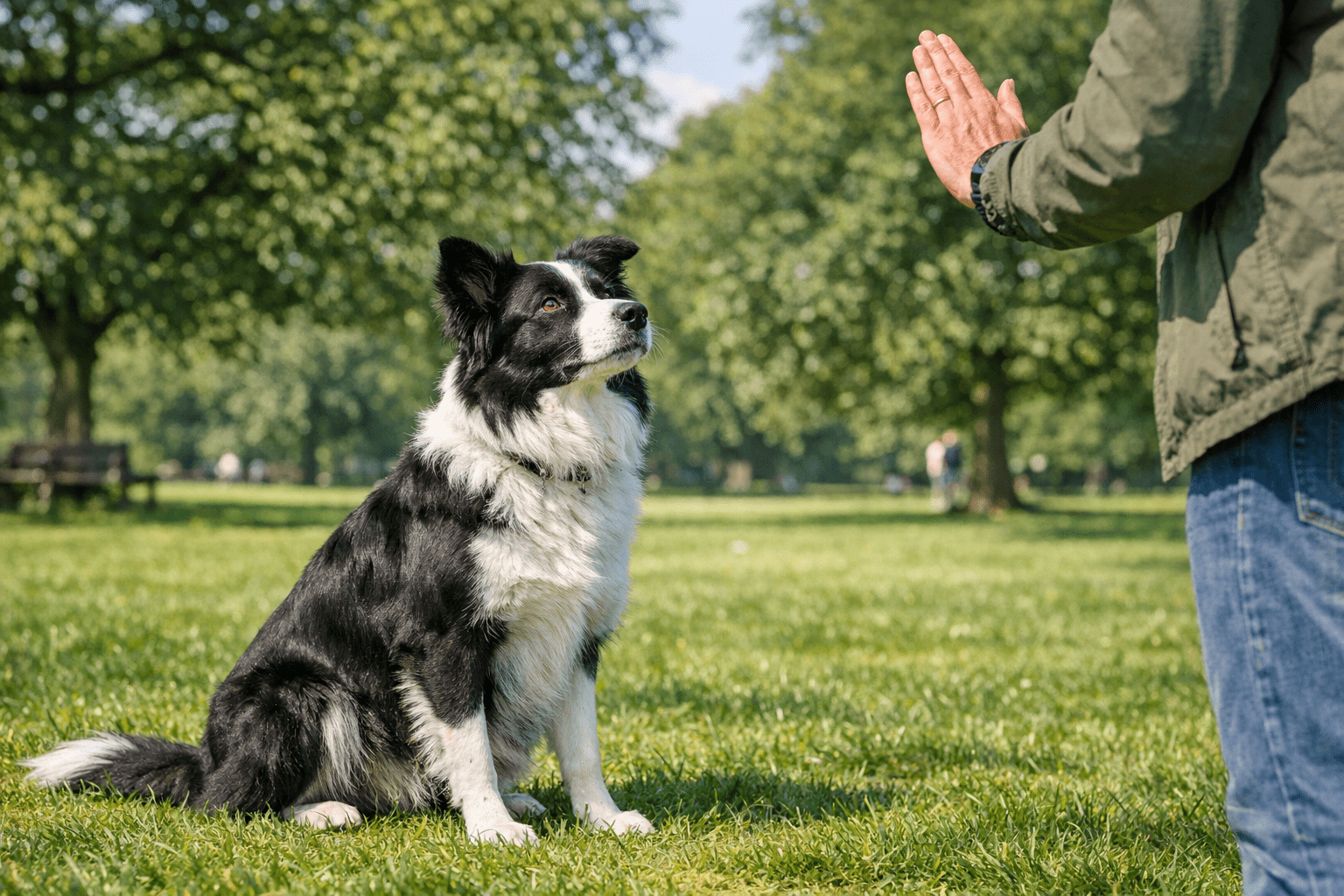
Introduction: Why Border Collies Capture Our Hearts
Let me tell you something — when I first laid eyes on a Border Collie, I knew I was looking at something special. Those intense, intelligent eyes that seem to look right through you. That boundless energy that says “let’s go, what’s next?” And that incredible loyalty that makes you feel like the most important person in the world.
If you’re reading this, you’re probably thinking about bringing one of these remarkable dogs into your life, or maybe you already have. Either way, you’ve made one of the best decisions a dog lover can make. But here’s the thing — Border Collie training for first-time owners isn’t like training your average family dog. These pups are different. In the best possible way, of course.
I’ve spent years working with dogs, and I can tell you honestly that Border Collies are like having a four-legged PhD student living in your house. They’re brilliant, they’re driven, and they’ll absolutely keep you on your toes. But the reward? Oh, it’s worth every single moment of effort.
In this guide, I’m going to walk you through everything you need to know about Border Collie training for first-time owners. We’ll cover their unique personality, how to set up your home, essential commands, common challenges, and yes — even the funny moments that make dog ownership so special. 🐶
Understanding the Border Collie Mindset
Before we dive into the nitty-gritty of training, we need to understand who we’re dealing with. Border Collies aren’t just smart — they’re scary smart. I’m talking about a dog that can learn a new command in under five repetitions. A dog that will figure out how to open doors, escape from crates, and manipulate you into giving extra treats (trust me, I’ve been there).
What Makes Border Collies Tick?
These dogs were bred for one thing: work. Specifically, herding sheep across the rugged landscapes of Scotland and England. That means they have:
- An intense work ethic — they need a job, period
- High problem-solving ability — they’ll find ways to entertain themselves if you don’t
- Sensitivity to their owner — they pick up on your emotions like a psychic
- Strong herding instincts — that means chasing, circling, and occasionally nipping at heels
I remember my first Border Collie, Max. I thought I was prepared. I’d read all the books. Watched all the videos. Then he herded my cat into the bathroom and held her there for two hours. That’s when I realized — this breed doesn’t just need training. They need a lifestyle.
The good news? Border Collie training for first-time owners becomes much easier once you understand their motivation. They want to please you. They want to work with you. They just need clear direction and enough mental stimulation to keep that brilliant brain occupied.
Personality-wise, you’re getting a dog that’s typically friendly, alert, and eager. They’re not usually aggressive, but they can be reserved with strangers until properly socialized. They’re also incredibly loyal — my Max would follow me from room to room, just to make sure I wasn’t getting into trouble without him.
Preparing Your Home and Lifestyle
Alright, let’s get practical. Border Collie training for first-time owners starts before the dog even walks through your door. I learned this the hard way when Max chewed through a brand-new couch cushion in under three minutes. Three. Minutes.
Space Requirements
Border Collies need room to move. I’m not saying you need a farm (though they’d love one), but a tiny apartment? That’s going to be challenging. Here’s what I recommend:
| Living Situation | Is It Suitable? | What You’ll Need |
|---|---|---|
| House with yard | Ideal | Secure fencing at least 5 feet high |
| Apartment | Challenging | Minimum 2-3 walks daily + mental games |
| Suburban home | Good | Regular park visits + puzzle toys |
Essential Supplies Checklist
Before your new family member arrives, stock up on:
- Interactive puzzle toys — treat-dispensing balls, snuffle mats, hide-and-seek games
- Durable chews — Bully sticks, Himalayan chews, Kong toys
- Training treats — small, soft, and irresistible
- A good crate — for safe spaces and travel
- Training collar — modern, humane options work wonders
Creating a Routine
Border Collies thrive on structure. I can’t stress this enough — a predictable routine is the backbone of successful Border Collie training for first-time owners. Set specific times for:
- Morning walk and play
- Midday training session (10-15 minutes)
- Afternoon enrichment activities
- Evening exercise and wind-down time
Trust me, when your dog knows what to expect, they’re calmer, more focused, and way less likely to redecorate your living room with their teeth.
Essential Commands Every Border Collie Should Know
Let’s talk about the building blocks of Border Collie training for first-time owners. These commands aren’t just party tricks — they’re the foundation of a well-behaved dog and a happy household.
The Five Non-Negotiables
Sit — This is your starting point. It establishes you as the leader and gives your dog a default behavior when they’re confused or excited. I always teach “sit” first because it’s simple and sets up success.
Stay — For a breed with herding instincts, “stay” is literally a safety command. Imagine your dog spots a squirrel and takes off. “Stay” could save their life. Practice this in low-distraction environments first, then build up to busier settings.
Come (Recall) — This is the big one. Border Collies love to chase, explore, and investigate. A rock-solid recall means you can give them freedom without losing your mind. I practice recall with high-value treats (chicken, cheese, hot dogs) and make it the most exciting game in the world.
Leave It — Ever seen a Border Collie eyeing a dropped medication, a dead bird, or a chocolate bar? Yeah, “leave it” prevents disaster. Start with a treat in your closed hand, reward when they ignore it, and gradually increase difficulty.
Heel — Walking calmly on a leash is non-negotiable. Border Collies have crazy energy, but they need to learn to walk politely. I use a combination of stopping when they pull, rewarding when they’re beside me, and keeping sessions short.
My Training Philosophy
Here’s what I’ve learned from years of working with this breed — Border Collie training for first-time owners works best when you make it fun. These dogs live for engagement. If training feels like a chore to you, it’ll feel like a chore to them. But if you approach it like a game? Magic happens.
I use positive reinforcement almost exclusively. That means treats, praise, toys, and play. I rarely use punishment because Border Collies are sensitive — they shut down if you’re harsh. Instead, I redirect unwanted behaviors and reward what I want to see more of.
Common Training Challenges and Solutions
Let’s be real — Border Collie training for first-time owners isn’t always smooth sailing. There will be moments you want to pull your hair out. I’ve had plenty of those moments myself.
The High-Energy Problem
Challenge: Your dog bounces off walls, can’t settle, and seems to have unlimited energy.
Solution: The answer isn’t always more exercise. In fact, over-exercising a Border Collie can make them fitter and able to handle more, creating a vicious cycle. Instead, focus on:
- Mental stimulation through training and puzzles
- Structured rest time in a crate or quiet space
- Teaching “settle” and rewarding calm behavior
Herding Instincts
Challenge: Your dog chases cars, bikes, children, or other animals.
Solution: This is hardwired, but manageable. Redirect their herding drive into acceptable activities like:
- Herding balls (giant exercise balls specifically for dogs)
- Agility training
- Nose work games
- Flyball or disc dog sports
Separation Anxiety
Challenge: Your dog can’t be left alone without howling, destroying things, or having accidents.
Solution: This is common with such people-oriented dogs. Start with:
- Very short departures (30 seconds to 1 minute)
- Desensitization to departure cues (picking up keys, putting on shoes)
- Crate training as a safe space
- Calm departures and arrivals (no big fuss)
Sensitivity Issues
Challenge: Your dog seems anxious, reactive, or shuts down during training.
Solution: Border Collies feel everything. I’ve seen dogs sulk for hours after a harsh word. Build confidence through:
- Gentle, patient training methods
- Success-based exercises (easy wins)
- Positive reinforcement only
- Plenty of socialization in controlled environments
Nutrition and Health for Active Border Collies
You can’t talk about Border Collie training for first-time owners without addressing their physical needs. These dogs are athletes, and they need fuel to match.
What to Feed Your Border Collie
I’ve tried dozens of dog foods over the years, and here’s what I’ve found works best for this breed:
| Food Type | Benefits | Considerations |
|---|---|---|
| High-quality kibble | Convenient, balanced | Look for 25-30% protein |
| Raw diet | Mimics natural eating | Needs careful balance |
| Grain-free formulas | Good for allergies | Not necessary for all dogs |
| Wet food | Enticing for picky eaters | More expensive, less shelf-stable |
My personal recommendation: A high-quality kibble with real meat as the first ingredient, supplemented with freeze-dried raw toppers for variety. I also add glucosamine supplements because Border Collies are prone to hip dysplasia.
Exercise Requirements
This isn’t just about health — it’s about sanity. A tired Border Collie is a good Border Collie. I aim for:
- Minimum 1-2 hours daily exercise — running, fetch, hiking, swimming
- Mental exercise every day — training sessions, puzzle toys, nose work
- A mix of activities — don’t let them become a fetch addict (yes, that’s a thing)
Common Health Issues
Border Collies are generally healthy, but they have some breed-specific concerns:
- Hip dysplasia — affects mobility, can be managed with weight control
- Collie eye anomaly — genetic eye condition, screening is essential
- Epilepsy — seizures can be controlled with medication
- Allergies — skin issues, food sensitivities
Regular vet check-ups are non-negotiable. I visit my vet twice a year for a wellness exam and keep up with vaccinations, heartworm prevention, and flea/tick control.
Grooming and Daily Care
Border Collies have a double coat that sheds — and I mean sheds. You’ll find fur on everything you own. But proper grooming makes a huge difference.
The Grooming Routine
- Brushing: 2-3 times per week (daily during shedding season)
- Bathing: Every 6-8 weeks or when dirty
- Nail trims: Every 2-3 weeks
- Ear cleaning: Weekly check
- Teeth brushing: Ideally daily, minimum 3 times per week
Dealing with the Shedding
I won’t sugarcoat it — the shedding is real. Invest in:
- A good vacuum (I use a Dyson Animal)
- Lint rollers for clothes
- Furniture covers
- Regular professional grooming during heavy shed periods
But here’s the upside — all that fluff means endless entertainment for kids (and adults who admit they’re kids). My nephew makes “fur monsters” out of my Border Collie’s shed undercoat. It’s weirdly adorable.
Socialization: The Secret to a Balanced Dog
Border Collie training for first-time owners absolutely must include socialization. I cannot emphasize this enough. A poorly socialized Border Collie can become fearful, reactive, or anxious — and that’s a recipe for behavior problems.
The Socialization Window
Puppies have a critical socialization period between 3-16 weeks. During this time, expose them to:
- Different people (men, women, children, people with hats, people with glasses)
- Various dogs (different sizes, ages, temperaments)
- New environments (parks, streets, car rides, vet clinics)
- Different sounds (vacuum cleaners, traffic, thunder, children playing)
- Handling (paws, ears, mouth, tail — for vet visits)
Continuing Socialization
Socialization isn’t just for puppies. Adult Border Collies need ongoing exposure to stay well-adjusted. I take mine to:
- Dog-friendly cafes
- Group training classes
- Dog parks (carefully, after they have solid recall)
- Friends’ houses with different setups
The goal is a dog that’s confident, curious, and calm in new situations. A well-socialized Border Collie is a joy to take anywhere.
Training Tools: What Actually Works
Let’s talk about Border Collie training for first-time owners and the tools that make a difference. I’ve tried every gadget on the market, and here’s my honest assessment.
Tools I Love
- Clicker — precise marking of desired behaviors
- Long line (30-50 feet) — for recall practice in open spaces
- Treat pouch — keeps hands free and treats accessible
- Training collar with vibration option — modern, humane communication tool
Tools to Avoid
- Prong collars — unnecessary and potentially harmful
- Shock collars set too high — can damage the bond
- Retractable leashes — dangerous for recall training
- Harsh correction tools — Border Collies are too sensitive
The Right Tool for the Job
I use a modern training collar with vibration and tone settings for distance work. When used correctly, it provides clear communication without pain. But I always pair it with positive reinforcement — the collar is a cue, not a correction.
Border Collie Training for First-Time Owners: My Complete System
This is what I’ve been building toward — the actual system I use for Border Collie training for first-time owners. It’s simple but effective.
Week 1-2: Foundation Building
- Establish routine (feeding, walking, sleeping times)
- Begin crate training
- Teach “sit” and “look at me”
- Start socialization (low-stress environments)
Week 3-4: Basic Commands
- Add “down,” “stay,” and “come” with distractions
- Practice in different locations
- Begin leash training
- Introduce puzzle toys
Month 2-3: Advanced Basics
- Solidify recall with duration and distance
- Add “leave it” and “drop it”
- Introduce “heel” for walks
- Begin trick training (fun and bonding)
Month 3-6: Real-World Practice
- Practice in pet stores, parks, friend’s houses
- Proof commands with distractions
- Continue socialization with new experiences
- Consider group training classes
Month 6-12: Advanced Skills
- Off-leash reliability in safe areas
- Advanced tricks or dog sports
- Continued mental stimulation
- Ongoing socialization
Beyond One Year
- Lifelong learning (Border Collies never stop wanting to learn)
- Maintenance of skills
- New challenges and activities
- Deepening your bond
Pros and Cons of Border Collie Ownership
Let’s be honest — no breed is perfect. Here’s my unfiltered take on the ups and downs of Border Collie training for first-time owners.
Pros ✅
- Unmatched intelligence — they learn almost anything
- Intense loyalty — they bond deeply with their people
- Versatility — they excel in obedience, agility, herding, and more
- Low grooming maintenance (compared to many breeds)
- Excellent watchdogs — alert without being aggressive
- Endless entertainment — their antics will keep you laughing
Cons ❌
- High exercise needs — they’re not couch potatoes
- Mental stimulation required — boredom leads to destruction
- Herding instincts — can cause issues with children or other pets
- Sensitivity — harsh training methods damage the relationship
- Separation anxiety — they don’t do well alone all day
- Shedding — prepare for fur on everything
- Not ideal for sedentary owners — they need an active lifestyle
Frequently Asked Questions
How much exercise does a Border Collie really need?
Border Collies need at least 1-2 hours of vigorous exercise daily, plus mental stimulation. This breaks down into a morning run or play session, midday training, evening activity, and enrichment throughout the day. A tired Border Collie is a happy Border Collie.
Are Border Collies good with children?
Border Collies can be excellent with children when properly socialized, but their herding instincts may cause them to chase or nip at running kids. Supervision is essential, especially with young children. I always teach children how to interact respectfully with dogs.
How long does it take to fully train a Border Collie?
Basic obedience typically takes 3-6 months with consistent practice, but Border Collies are lifelong learners. Advanced skills and reliable off-leash behavior may take 1-2 years. The key is consistent, daily training sessions.
Can Border Collies live in apartments?
It’s challenging but possible if you’re committed to meeting their exercise and mental stimulation needs. You’ll need 3-4 daily walks, active play sessions, and plenty of puzzle toys. I generally recommend a house with a yard for first-time owners.
What’s the best training method for Border Collies?
Positive reinforcement with a clicker or marker word works best. These dogs are sensitive and eager to please. I use high-value treats, praise, and play as rewards. Avoid harsh corrections — they can damage your bond and cause fear.
How do I stop my Border Collie from herding my children?
Redirect the behavior into acceptable activities. Teach a “settle” cue, provide appropriate outlets like fetch or agility, and supervise interactions. Never punish the herding instinct — it’s natural. Instead, give them an acceptable way to express it.
Conclusion: Your Journey Begins Now
Border Collie training for first-time owners isn’t always easy, but it’s absolutely rewarding. These dogs will challenge you, frustrate you, and exhaust you — and then they’ll look at you with those soulful eyes, and you’ll forgive everything.
I started this journey years ago with a fluffy puppy who chewed my shoes and herded my cat. Today, I have a loyal companion who joins me on hikes, helps me train other dogs, and knows exactly how to make me smile on bad days. The bond we’ve built through consistent, patient, loving training is something I wouldn’t trade for anything.
If you’re ready to put in the work, a Border Collie will reward you with loyalty, intelligence, and love that knows no bounds. Start with the basics. Be consistent. Make training fun. And remember — every moment you invest in your dog builds a stronger, deeper connection that lasts a lifetime.
Now go give your Border Collie a belly rub and start training. You’ve got this! 🐾✨