1. Understanding the Border Collie Mind
When I first started Border Collie training, I realised very quickly that this breed doesn’t think like most dogs. They’re incredibly sharp—honestly, sometimes I feel like my Border Collie is training me instead 😅.
To understand training a Border Collie, I had to accept that they get bored easily. They notice everything—tone of voice, patterns, even small changes in routine. For example, if I accidentally rewarded jumping once, guess what? It became a daily habit.
Border Collies are:
- Problem solvers
- Quick learners
- Highly observant
So when it comes to Border Collie training techniques, repetition alone isn’t enough. I need to keep things fun and varied. If I don’t, they’ll lose interest and find something else to do—like rearranging my socks 🧦.
Related Posts



Understanding their mindset made a huge difference. Once I started thinking like them (or trying to!), Border Collie obedience training became much smoother and far more enjoyable.
2. Why Border Collie Training Is Essential
From my experience, Border Collie training isn’t optional—it’s absolutely necessary. Without it, things can get chaotic very quickly 😄.
These dogs have endless energy and strong instincts. If I don’t guide them, they’ll happily create their own rules. For example, chasing bikes or herding visitors isn’t unusual without proper training a Border Collie routine.
That’s why Border Collie obedience training is so important. It helps with:
- Control
- Safety
- Behaviour
I’ve noticed that a well-trained Border Collie is much calmer and easier to live with. Without training, they can become:
- Overexcited
- Frustrated
- Difficult to manage
So when people ask me if Border Collie training techniques really matter, I always say yes. It’s not just about commands—it’s about structure and communication.
Training turns all that energy into something positive instead of overwhelming.
3. When to Start Training
If you ask me, the best time for Border Collie training is as early as possible. Puppies are like little sponges—they soak up everything!
When I started Border Collie puppy training, I kept things simple and fun. Short sessions worked best—about 5 to 10 minutes. Any longer, and my dog would suddenly decide the table leg looked more interesting 😂.
The earlier you start:
- The easier habits form
- The quicker they learn
- The fewer bad behaviours develop
That said, it’s never too late. Even older dogs respond well to training a Border Collie, thanks to their intelligence.
For example, I’ve seen adult Border Collies learn new tricks in just a few sessions.
Consistency is key. With regular practice and patience, Border Collie obedience training becomes much easier—no matter the age.
4. Basic Commands Every Border Collie Should Learn
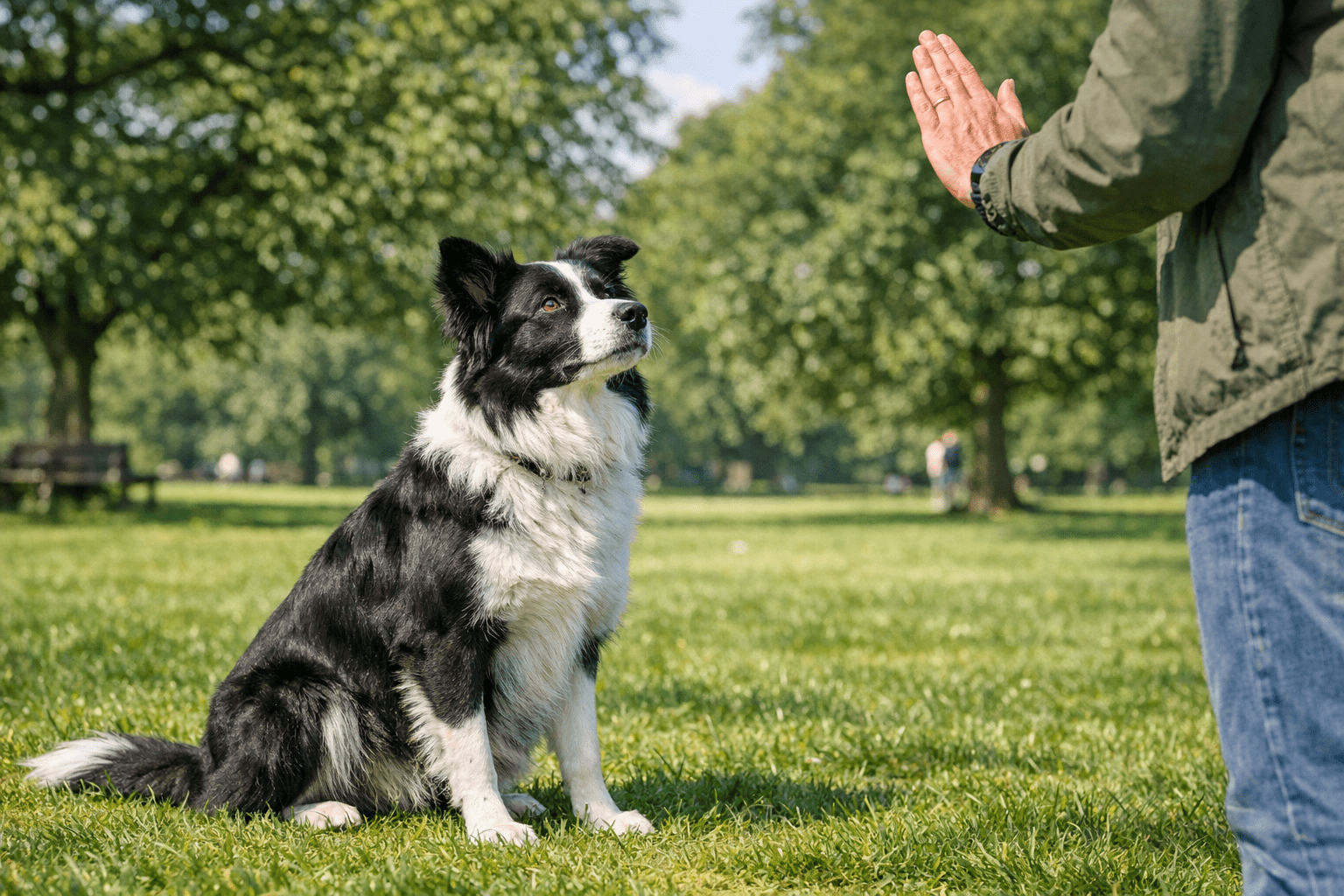
When I began Border Collie training, I focused on basic commands first. These are the foundation for everything else.
The essentials include:
- Sit
- Stay
- Come
- Down
- Leave it
In my experience, teaching these through Border Collie obedience training makes daily life much easier.
For example, “come” has saved me more than once when my dog spotted a squirrel 🐿️. Without it, I’d probably still be chasing him!
Because they’re so quick to learn, training a Border Collie can be fast—but only if I stay consistent. Mixed signals just confuse them.
I always reward success straight away. That’s one of the most effective Border Collie training techniques I’ve used.
Once the basics are mastered, everything else becomes easier. It’s like building a strong base before adding more skills.
5. Positive Reinforcement Techniques
When it comes to Border Collie training, positive reinforcement is the best method I’ve found.
This means rewarding behaviour with:
- Treats 🍖
- Praise
- Toys
In training a Border Collie, rewards motivate them to repeat good behaviour. For example, when teaching “sit”, I give a treat immediately—and they quickly understand what I want.
Using positive methods in Border Collie obedience training builds trust. Harsh discipline, on the other hand, can make them anxious.
One thing I’ve noticed is how much they love praise. A simple “good boy!” works wonders 😊.
The key to successful Border Collie training techniques is consistency. Reward good behaviour every time, especially at the beginning.
With the right approach, learning becomes enjoyable for both of us—and results come much faster.
6. Managing Energy and Mental Stimulation
If I had to pick the biggest challenge in Border Collie training, it would definitely be their energy levels ⚡.
These dogs don’t just need walks—they need proper activity. Without it, training a Border Collie becomes much harder.
I’ve found that combining physical and mental exercise works best:
- Long walks
- Fetch games
- Puzzle toys
For example, after a good run, my dog is far more focused during Border Collie obedience training. Before that? Forget it—he’s too busy bouncing around 😄.
Mental stimulation is just as important as exercise. A bored Border Collie will find its own entertainment—and it might involve chewing something important!
So when using Border Collie training techniques, I always make sure they’ve had enough activity first.
A tired dog is calmer, happier, and much easier to train.
7. Common Training Challenges
Even with the best Border Collie training, challenges are bound to pop up.
One common issue I’ve faced is distraction. At home, my dog listens perfectly. At the park? Suddenly, squirrels are more important than me 🐿️.
This is normal in training a Border Collie. They’re highly aware of their surroundings.
Other challenges include:
- Overexcitement
- Herding instincts
- Selective listening
When working through these, patience is key. I gradually introduce distractions during Border Collie obedience training.
For example, I might practise commands in a quiet park before moving to busier areas.
Using consistent Border Collie training techniques helps reinforce behaviour.
I’ve learned not to take it personally—they’re not being stubborn, just curious and energetic. With time, things improve.
8. Socialisation Training
Socialisation is a huge part of Border Collie training, and something I didn’t fully appreciate at first.
It involves exposing your dog to:
- People
- Other dogs
- New environments
Without it, training a Border Collie can become much harder. They might become nervous or reactive.
For example, I noticed my dog barked at strangers until I started regular park visits. Over time, he became much calmer.
Good Border Collie obedience training includes socialisation because it builds confidence.
I like to introduce new experiences gradually, so it feels safe rather than overwhelming.
Using proper Border Collie training techniques, I’ve seen huge improvements in behaviour.
A well-socialised Border Collie is more relaxed and easier to manage in everyday situations.
9. Advanced Training and Activities
Once basics are covered, Border Collie training becomes really exciting.
These dogs thrive on advanced challenges like:
- Agility
- Flyball
- Trick training
In training a Border Collie, I’ve found they love having a job. It gives them purpose.
For example, teaching tricks like “spin” or “fetch specific toys” keeps their brain busy. I once taught my dog to find his lead—it saved me loads of time! 😄
Advanced Border Collie obedience training keeps them mentally engaged and physically active.
Using varied Border Collie training techniques prevents boredom and keeps things fun.
This stage is where their intelligence really shines. They learn quickly and enjoy the challenge.
Honestly, it’s one of the most rewarding parts of training.
10. Final Thoughts and Training Tips
After everything, I can confidently say Border Collie training is one of the most rewarding experiences—but it does require effort.
My key lessons from training a Border Collie are:
- Stay consistent
- Use positive reinforcement
- Keep sessions short
- Provide enough exercise
For example, I always train after a walk, when my dog is calmer. It makes Border Collie obedience training much smoother.
The best Border Collie training techniques focus on patience and understanding. These dogs aren’t difficult—they’re just clever and energetic.
At times it can feel overwhelming, but it’s also incredibly rewarding.
In the end, Border Collie training isn’t just about teaching commands—it’s about building trust and communication.
And once that bond is there, you’ll have an amazing, loyal, and very clever companion 🐾😄