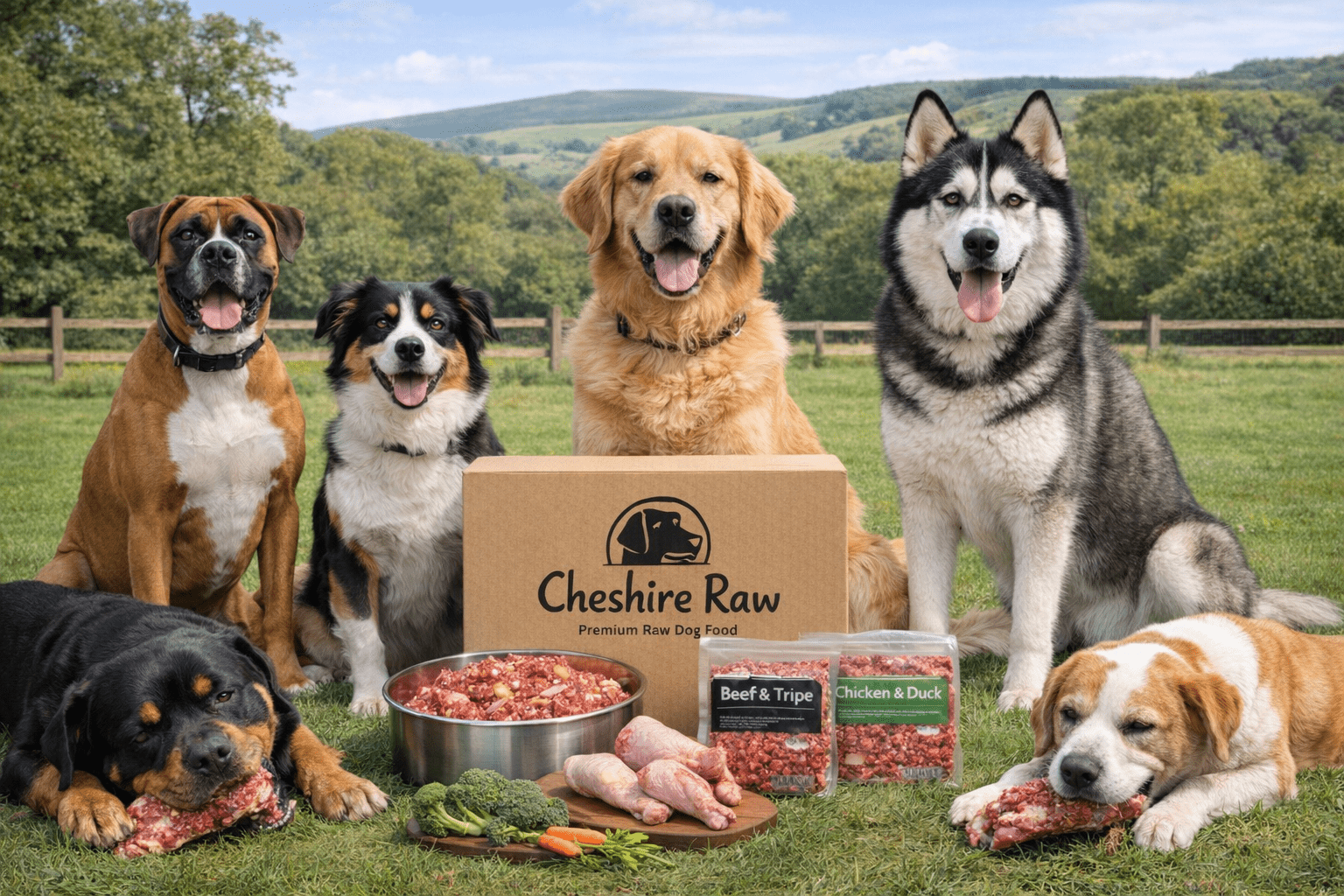
1) Introduction: Why “Cheshire Raw Dog Food” Is Trending 🐶🥩
When I first heard about Cheshire raw dog food, I thought…
“Are people really feeding their dogs raw meat? Like… straight up butcher vibes? 😅”
But then I kept hearing about it—at the park, online, even from friends with dogs. Everyone seemed to say the same things:
- “Better coat ✨”
- “More energy ⚡”
- “Less smelly poo 💩 (honestly, sold 😂)”
So of course… I got curious.
Living in Cheshire actually makes it easier too. There are local shops (like ones in Crewe) that sell raw food and even deliver it—so I don’t have to carry frozen meat like I’m heading to a BBQ party 😄 [cheshirera…ogfood.com]
But then reality hit… raw food isn’t just “throw meat in a bowl and done.” It needs proper handling because it can carry bacteria, so hygiene matters a lot. [food.gov.uk], [gov.uk]
So yeah… curiosity pulled me in—but now I’m learning what it actually involves 🐶
2) What Is Raw Dog Food? 🥩🐶
So after all that curiosity, I had to ask myself:
“What exactly counts as raw dog food?” 🤔
At first, I thought it was just:
“Give dog meat… job done” 😂
But nope—it’s a bit more than that.
🥩 The simple version
Raw dog food usually means:
- raw meat 🍗
- organs (like liver… not gonna lie, looks weird 😅)
- sometimes bones
- and sometimes extras like veggies
Basically, food that hasn’t been cooked or processed.
🤯 My first surprise
I learned there are two types:
- ✅ Complete raw food → ready to feed
- ⚠️ Complementary → I’d have to mix stuff myself
And honestly…
I can barely cook for myself properly, I’m not becoming a dog chef 😂
So I’d stick with complete meals—way easier.
⚠️ The important bit
Because it’s raw, it can carry bacteria.
So I have to treat it like raw chicken:
- wash hands 🧼
- clean surfaces
- don’t make my sandwich on the same spot 😅
🧠 My takeaway
It’s not just:
“Feed meat = healthy dog”
It’s more like: 👉 real food + proper handling = safe feeding
Basically…
raw feeding is simple in idea… but needs a bit of care in real life 👍🐶
3) Why Do People Choose Raw Dog Food? 🤔🐶
After figuring out what raw food is, my next thought was:
“Okay… but why are so many people switching to it?”
🐶 1. It feels more “natural”
A lot of people (including me at first) think:
“Dogs used to eat raw food in the wild… so this makes sense, right?”
It feels less processed compared to kibble, which looks like little brown cereal 😅
So raw feeding gives that: 👉 “real food” vibe 🍗
✨ 2. People notice changes
This is what really pulled me in.
I kept hearing things like:
- shinier coat ✨
- more energy ⚡
- smaller, less smelly poop 💩 (again… huge bonus 😂)
And honestly… if your dog’s poop improves, you notice it immediately 😄
🐕 3. Some try it for health issues
I also noticed people switch to raw when their dog has:
- sensitive stomach
- allergies
- picky eating
It’s kind of like:
“Nothing else worked… let’s try this!”
⚠️ 4. But here’s the reality check
After digging deeper, I learned:
👉 These benefits are usually based on personal experiences
👉 They’re not guaranteed for every dog
Even experts say a balanced diet (raw or not) can give good results [pdsa.org.uk]
😂 My honest reaction
Me at first:
“This sounds amazing!” 🥳
Me after research:
“Okay… it might help… not magically fix everything 😅”
🧠 My takeaway
So now I see it like this:
- ✅ Raw feeding can work well
- ❌ It’s not a miracle solution
- ⚠️ It depends on the dog
🐶 Final thought
People choose raw because it sounds better and feels right…
But for me, it’s about: 👉 understanding it properly before jumping in
Basically:
Curiosity brings you in… research keeps you grounded 😂🐶
4) The Big Debate: Is Raw Actually Better? 🤷♂️🐶
At this point, I was fully interested… but also confused 😅
Because everywhere I looked, people were saying:
“Raw changed my dog’s life!” 🥳
But then I saw experts saying:
“It’s not that simple…” 🤔
So I had to figure out what’s real.
😄 What people say (the exciting part)
I kept hearing:
- shinier coat ✨
- more energy ⚡
- less smelly poo 💩 (again… a big win 😂)
And honestly, that sounds amazing.
🤓 What I learned after digging deeper
Then I found out something important:
👉 These benefits are mostly based on personal experiences
👉 They are not guaranteed for every dog
Even vets say a balanced diet (raw or not) can give similar results [pdsa.org.uk]
⚠️ The part people don’t talk about
Raw food isn’t cooked…
which means it can carry harmful bacteria like Salmonella or E. coli [food.gov.uk]
So while I was thinking:
“This sounds healthy!”
I also had to think:
“Okay… now I need to be extra careful in the kitchen 😅”
😂 My honest reaction
Me before research:
“Raw = automatically better!”
Me after:
“Raw might be good… if I do it properly” 😄
🧠 My takeaway
- ✅ Raw feeding can work
- ❌ It’s not a magic solution
- ⚠️ It needs care and hygiene
Basically:
It’s not about hype… it’s about doing it right 👍🐶
5) Safety First: What I Need to Watch Out For ⚠️🐶
Alright… this is the part where I stopped and thought:
“Okay… this is serious now.” 😅
Because raw feeding isn’t just about benefits—it also comes with real risks if I’m not careful.
🦠 1. Bacteria is the main thing
This was my biggest “oh…” moment.
Raw dog food can carry bacteria like:
- Salmonella
- E. coli
- Campylobacter
These are the same things I worry about when handling raw chicken in the kitchen. [food.gov.uk], [gov.uk]
😬 Real example
Imagine this:
- I touch raw dog food
- Then I touch my sandwich 🥪
Yeah… bad idea 😂
That’s called cross-contamination, and it’s one of the biggest risks.
📊 2. It actually happens
This isn’t just a “maybe.”
A UK survey found:
- 35% of raw pet food had harmful bacteria
- 29% didn’t meet safety standards [food.gov.uk]
That definitely made me take it more seriously.
🏡 3. It affects the whole house
Even if my dog is fine, they can still:
- carry bacteria
- spread it through saliva or poo
So it’s not just about feeding—it’s about keeping the house safe too 😅
😂 My reality check
Me at first:
“This looks healthy!” 🥰
Me after learning this:
“Okay… this is like handling raw meat daily now 😅🧼”
👍 My simple takeaway
- ✅ Raw feeding is possible
- ⚠️ But it needs proper hygiene
- ❌ No shortcuts
Basically:
Feed smart… clean better… and don’t take risks 😄🐶
6) Who Should Be More Careful With Raw Feeding ⚠️🐶
At this point, I had to stop and think:
“Okay… this isn’t just about my dog… it’s about my whole house 😅”
👶 1. Homes with young kids
If I had a small child running around, I’d definitely be extra careful.
Because let’s be honest:
- kids touch everything
- and then touch their face or mouth 🤦♂️
Handling raw food around them can increase the risk of bacteria spreading. [gov.uk]
👵 2. Older people
If someone older lives at home, I’d think twice too.
Their immune system might not be as strong, so bacteria from raw food could affect them more. [food.gov.uk]
🤒 3. Anyone unwell
If someone in the house is:
- recovering from illness
- or has a weaker immune system
👉 raw feeding needs extra care (or maybe avoiding altogether)
😅 My realisation
Me before:
“It’s just dog food…”
Me after:
“Okay… this is like handling raw meat every day now 🧼😂”
🧠 My takeaway
It’s not just: 👉 “Is this good for my dog?”
It’s also: 👉 “Is this safe for my home?”
🐶 Final thought
Raw feeding can work…
👉 but only if it fits my dog AND my situation
Basically:
Right home + right care = safer choice 👍🐶
7) Is Raw Dog Food Regulated in the UK? 🇬🇧🐶
At this point, I started wondering:
“Okay… surely this isn’t just random meat being sold, right?” 😅
✅ 1. Yes, there are rules
The good news is:
👉 raw dog food is regulated in the UK
Companies have to follow rules and get approval before selling it. So it’s not like someone is just packing meat in their garage freezer and selling it online 😂 [gov.uk]
🥩 2. Where does the meat come from?
I learned that raw pet food usually comes from: 👉 animal by-products (ABPs)
That means:
- parts of animals that were checked and safe
- but not used for human food
So it’s not “bad meat”… just different cuts or parts. [gov.uk]
⚠️ 3. But here’s the important part
Even though it’s regulated…
👉 it is still raw
Which means:
- bacteria can still be present
- nothing has been cooked to kill it
So I still need to handle it carefully at home. [gov.uk]
🍗 Simple example
It’s like buying raw chicken from a supermarket:
- ✅ it passed checks
- ❌ but I wouldn’t eat it raw
- ⚠️ I’d still wash everything after
Same idea here.
😂 My realisation
Me before:
“If it’s sold, it must be 100% safe”
Me after:
“It’s regulated… but I still need to be careful 😅”
🧠 My takeaway
- ✅ there are proper UK rules
- ✅ suppliers must follow them
- ⚠️ but hygiene is still my responsibility
Basically:
Rules help—but I’m still the one keeping things safe at home 🧼🐶👍
8) Choosing Raw Dog Food in Cheshire 🛒🐶
At this stage, I thought:
“Okay… where do I actually get this stuff from?” 😅
🏪 1. Local shops = easy life
One thing I like about Cheshire is: 👉 there are local raw food shops around
For example, places in Crewe sell raw food and even offer delivery. So I can either:
- go to the shop 🏃♂️
- or sit at home and order like a boss 🛋️😂 [cheshirera…ogfood.com]
🥩 2. I keep it simple (very important 😄)
When I see all the options, I get confused fast…
So I made a rule: 👉 stick to “complete” raw food
Why? Because:
- it’s ready to feed ✅
- I don’t have to mix anything ❌
- less chance of messing up 😬
👀 3. I check basic things
Now when I pick food, I just ask:
- Is it clearly labelled? ✅
- Is it frozen properly? 🧊
- Does it look clean and well packed?
Simple stuff—but it matters.
😂 My shopping reality
Me walking in:
“I’ll just grab dog food”
Me 5 minutes later:
staring at 10 types of raw meat like I’m on MasterChef 🍗😂
🧠 My takeaway
I don’t need to overcomplicate it.
Just: 👉 pick a trusted local shop
👉 go for complete meals
👉 keep it simple
🐶 Final thought
If buying the food feels easy,
👉 I’m way more likely to stick with it
Basically:
Simple choices = less stress = happier me and dog 😄🐶
9) Where I Can Buy Raw Dog Food Locally 🏪🐶
So after all this research, my next question was obvious:
“Where do I actually buy this stuff near me?” 😅
📍 1. Local shops make it easy
Living in Cheshire is actually a big advantage.
There are places (like in Crewe) where I can:
- walk in and see everything 👀
- ask questions (because I still have a lot 😂)
- or even get delivery 🚚 [cheshirera…ogfood.com]
That makes the whole idea of raw feeding feel much more doable.
🛒 2. My simple buying strategy
When I go shopping, I keep things really simple:
👉 Look for complete raw meals
👉 Avoid anything confusing 😅
Because honestly…
the more complicated it looks, the more likely I’ll mess it up 😂
🥶 3. Frozen food is the norm
One thing I noticed: 👉 most raw food comes frozen
So it’s like:
“Congrats, your freezer is now your dog’s pantry” 😂
😂 My real-life thought
Me walking in:
“I’ll just grab something quick”
Me 10 minutes later:
staring at 15 types of raw meat like I’m picking dinner for myself 😅🍗
🧠 My takeaway
- ✅ local shops = convenient
- ✅ complete meals = easiest
- ✅ frozen food = normal
🐶 Final thought
If it’s easy to buy,
👉 I’ll actually stick to it
Basically:
Keep shopping simple… and everything else becomes easier 😄🐶
10) Types of Raw Dog Food (And Why I Got Confused 😅🐶)
So when I finally went shopping, I thought:
“I’ll just pick up raw dog food and leave”
Yeah… that didn’t happen 😂
🥩 1. Mince (the basic one)
This is the one I see everywhere:
- frozen blocks or tubs
- easy to store
- easy to serve
Basically:
defrost → scoop → done ✅
🍔 2. Nuggets / patties
These are like little pre-made portions.
👉 Super convenient because I don’t have to measure anything
Perfect for lazy days (which is… most days 😂)
✅ 3. Complete meals (my favourite)
This is the easiest option for me.
👉 everything is already balanced
👉 no mixing needed
So I don’t accidentally turn my dog’s meal into a science experiment 😅
⚠️ 4. DIY raw (scary level 😬)
This is where I’d have to:
- mix meat
- add organs
- balance everything myself
And honestly…
I can barely meal prep for myself… no chance 😂
🧠 My takeaway
Too many options at first = confusion 😅
So I keep it simple: 👉 complete meals = easiest life
🐶 Final thought
If it feels easy, I’ll stick with it.
If it feels complicated… I’m already stressed 😂
11) What Does “80:10:10” Mean? 🤔🥩
Alright… this one really confused me at first 😅
I kept seeing labels like:
“80:10:10 raw dog food”
And I was like…
“Is this a math problem or dog food?” 😂
📊 1. The simple meaning
It’s actually just a ratio:
- 80% meat 🍗
- 10% bone 🍖
- 10% organs (like liver) 😬
So it tells me what’s inside the food.
🧠 2. My first thought
I saw it and thought:
“Nice… looks balanced ✅”
But then I realised something important…
⚠️ 3. It’s not always fully balanced
Just because it says 80:10:10, it doesn’t always mean: 👉 it has everything my dog needs
Dogs also need:
- vitamins
- minerals
- other nutrients
So I still need to check if it says: 👉 “complete” dog food
😂 Real-life moment
Me at the shop:
“80:10:10 sounds smart… I’ll take it!”
Me later:
“Wait… is this actually complete or not? 😅”
🧠 My simple rule
Now I just follow this:
- ✅ 80:10:10 + labelled complete = good
- ⚠️ 80:10:10 only = not enough on its own
🐶 Final thought
It looks complicated…
but it’s actually simple once I get it.
Basically:
Nice numbers don’t mean everything—always read the label 😂👍🐶
12) How Do I Know It’s Balanced? 🧠🐶
At this point, I had a serious thought:
“What if I accidentally feed my dog the wrong thing?” 😅
🥩 1. Meat alone isn’t enough
At first, I thought:
“Meat = healthy = done ✅”
But nope… dogs need more than just meat.
They also need:
- vitamins
- minerals
- the right mix of nutrients
If this is missing, it can cause problems over time.
✅ 2. My easy solution
I decided not to overcomplicate things.
👉 I just look for “complete” raw dog food
That means:
- everything is already balanced
- I don’t need to add anything
- less chance of messing it up 😅
⚠️ 3. DIY = risky for beginners
I briefly thought:
“Maybe I can mix things myself…”
Then I realised:
“Yeah… I’ll 100% get something wrong 😂”
Even experts warn homemade diets can be unbalanced if not done properly [pdsa.org.uk]
😂 My honest moment
Me before:
“I’ll figure it out”
Me after:
“Nope… I’m buying complete food and keeping life simple 😂”
🧠 My takeaway
- ✅ Complete food = safe option
- ⚠️ DIY = only if I really know what I’m doing
🐶 Final thought
I keep it simple:
👉 If it says complete, I trust it
Basically:
Less guessing = healthier dog = less stress for me 😄🐶👍
13) How I Switch My Dog to Raw Food (Without Drama 😅🐶)
When I first thought about switching to raw, I was like:
“Let’s just start tomorrow!”
But then I realised…
👉 that’s a great way to upset my dog’s stomach 💩😂
⏳ 1. I don’t rush it
Dogs get used to their food.
So going from:
kibble → raw overnight
can cause:
- upset stomach
- loose poop
- confused dog like “What is this?! 😅”
So I take it slow.
🔄 2. My simple plan
I’d switch step by step:
- Day 1–2 → mostly old food + a little raw
- Day 3–4 → half and half
- Day 5–7 → mostly raw
- Then → fully raw ✅
Nice and smooth. No chaos.
👀 3. I keep watching
I pay attention to:
- energy ⚡
- appetite 🍽️
- poop (yes… again 😂💩)
If something looks off, I slow down.
🍗 4. Keep it simple
I don’t mix 5 different meats straight away 😅
👉 start with one protein
👉 let my dog adjust
👉 then add variety later
😂 My reality check
Me on day 1:
“This is easy!” 😎
Me on day 3:
staring at poop like a scientist 🔬💩😂
🧠 My takeaway
- ✅ go slow
- ✅ keep it simple
- ✅ watch my dog
🐶 Final thought
If I do it properly:
👉 happy dog ✅
👉 no mess ✅
Basically:
Slow switch = smooth life 😄🐶👍
14) How Much Should I Feed? 🍽️🐶
After finally getting the hang of raw food, I had another big question:
“How much do I actually give my dog?” 😅
🐕 1. Every dog is different
I quickly realised there’s no one answer.
It depends on:
- size 🐶
- age
- activity level (lazy sofa potato vs zoomies expert 😂)
So two dogs can eat totally different amounts.
📊 2. I follow the label first
The easiest thing I do:
👉 follow the feeding guide on the pack
Especially with complete raw food, it’s already designed to help me get it right.
👀 3. Then I watch my dog
This is the real trick.
I look at:
- weight ⚖️
- energy ⚡
- overall look
If my dog starts looking like:
🐻 (a bit chubby 😂)
👉 I reduce food
If it’s more like:
🦴 (too skinny 😅)
👉 I increase it
💩 4. Yes… poop check again 😂
I can’t escape this one.
Good poop = good sign ✅
Weird poop = adjust food ❌
😂 My honest moment
Me at the start:
“Let me calculate everything perfectly…” 🤓
Me now:
“Feed… watch… adjust… simple 😂”
🧠 My takeaway
- ✅ start with the guide
- ✅ adjust based on my dog
- ✅ don’t overthink
🐶 Final thought
My dog won’t read the feeding chart…
👉 but their body will tell me everything I need to know 😄
15) How I Store Raw Dog Food 🧊🐶
This is the part I didn’t think about at all… until my freezer turned into chaos 😅
🧊 1. Freezer = main storage
Raw dog food always stays in the freezer until I need it.
👉 That keeps it safe and fresh
So basically:
my freezer = my dog’s pantry now 😂
😂 My first mistake
Me on day 1:
“Just put everything in, it’s fine”
Me later:
“Why is everything frozen into one giant block?! 😭”
📦 2. I try to stay organised
Now I:
- keep different meats separate
- stack things neatly
- keep what I need soon at the front
Otherwise I’m digging around like:
“Where did the chicken go?!” 🧊😂
🧼 3. Keep it separate from my food
This is important.
👉 I try not to mix raw dog food with my own food
Because:
- it reduces contamination
- and just feels safer
📅 4. Plan a bit ahead
Instead of rushing, I: 👉 move food to the fridge the night before
So I’m not standing there at dinner time like:
“Umm… frozen brick again? 😅”
🧠 My takeaway
- ✅ keep it frozen
- ✅ stay organised
- ✅ keep it separate
🐶 Final thought
If my freezer is organised:
👉 feeding is easy
If my freezer is messy:
👉 everything becomes a struggle 😂
16) How I Defrost Raw Dog Food 🧊➡️🐶
This part sounds super simple…
but trust me, I messed it up at the start 😅
🕒 1. I plan ahead (very important)
Big lesson: 👉 don’t wait until feeding time
So now I just:
- take food from freezer
- put it in the fridge overnight
Easy. No stress.
😂 My first mistake
Me before:
“I’ll just leave it on the counter… it’ll defrost faster!”
Yeah… not a good idea ❌
⚠️ 2. No countertop defrosting
Leaving raw food out:
- increases bacteria risk
- not safe
So I stick to: 👉 fridge only ✅
🧼 3. Keep it separate
When it’s defrosting, I make sure:
- it’s in a container
- not touching my food
Because I definitely don’t want:
raw meat juice on my yogurt 😭😂
⏱️ 4. Use it quickly
Once defrosted: 👉 I use it within a day
👉 and never refreeze
😂 My routine now
- freeze 🧊
- fridge overnight 🧊
- serve 🍽️
- clean 🧼
🧠 My takeaway
Simple rule: 👉 plan it, keep it clean, don’t rush it
Basically:
a little planning = no mess + happy dog 😄🐶
17) Final Thoughts: Should I Switch to Raw? 🤔🐶
So after everything I’ve learned, I had to ask myself:
“Am I actually going to do this… or just keep reading forever?” 😂
✅ What I like about raw feeding
- feels more natural 🥩
- simple ingredients
- lots of people report good results (coat, energy, etc.)
And honestly…
“Less smelly poop” still sounds like a massive win 😂💩
⚠️ What makes me think twice
- hygiene is a big deal 🧼
- risk of bacteria
- I have to be consistent every day
So it’s not something I can be lazy about.
😂 My honest conclusion
Me at the start:
“Raw feeding sounds amazing!”
Me now:
“Okay… it can be good… but only if I do it properly” 😅
🧠 My final takeaway
For me, it comes down to this:
👉 If I want simple → maybe stick to kibble
👉 If I’m ready for effort → raw could work
🐶 Final thought
There’s no “perfect” diet.
👉 The best choice is what works for
my dog + my lifestyle
Basically:
Happy dog + manageable routine = right decision 😄🐶👍
18) My Final Simple Advice (If You’re Just Starting) 🐶👍
So after going through all this, I asked myself:
“If I had to explain this to someone in 30 seconds… what would I say?” 😄
✅ 1. Keep it simple
Don’t overcomplicate things.
Start with:
- complete raw food ✅
- easy to use
- less chance of mistakes
Because trust me… the options can get confusing fast 😂
🕒 2. Take it slow
Don’t rush the switch.
👉 go step by step
👉 watch your dog
👉 adjust if needed
No need to act like a dog nutrition expert on day one 😅
🧼 3. Be clean (very important)
This is non-negotiable.
Treat it like raw chicken:
- wash hands
- clean surfaces
- keep things tidy
Basically:
clean kitchen = happy life 😂
😂 My honest advice
Don’t try to be perfect.
Me at the start:
“I need to get everything right!”
Me now:
“Do the basics right… and relax 😄”
🐶 Final thought
If it works for your dog and your lifestyle:
👉 great ✅
If not:
👉 that’s fine too 👍
Basically:
Keep it simple, stay clean, don’t stress… your dog will thank you 🐶😄
19) Quick Pros & Cons (My Honest Summary) ⚖️🐶
After all this, I needed something simple in my head…
So I broke it down like this 👇
✅ Pros (why I’d consider raw)
- Feels more natural 🥩
- Simple ingredients
- Some dogs seem to do really well
- Less smelly poop 💩 (still a top benefit 😂)
⚠️ Cons (what makes me think twice)
- Hygiene is a big deal 🧼
- Risk of bacteria
- Needs planning (defrosting, storage, etc.)
- Can feel confusing at the start 😅
😂 My honest balance
Me thinking now:
“It’s not amazing… it’s not terrible… it just depends”
🧠 My final takeaway
👉 Raw feeding is not magic
👉 It’s not bad either
👉 It’s just another option
🐶 Final thought
If I keep it simple and do it properly:
👉 it can work well
If I try shortcuts:
👉 I’ll probably regret it 😅
Basically:
Do it right or don’t stress doing it at all 👍🐶😄
20) My Final Verdict (Super Simple 😄🐶)
After everything I’ve learned, tested in my head, and slightly overthought 😂… here’s my final take:
🤔 Would I try raw feeding?
👉 Yes… but only if I keep it simple
Not the complicated version. Not the “mix everything yourself and hope for the best” version 😅
✅ How I’d actually do it
- stick to complete raw food
- follow basic hygiene 🧼
- keep a routine
- not panic about being perfect
Basically:
“Do the basics right and don’t overthink it” 👍
⚠️ When I wouldn’t do it
If:
- I don’t have time ⏳
- I can’t stay consistent
- or my home situation makes it risky
👉 then I’d happily stick to regular dog food
(No guilt… my dog will still love me 😂🐶)
😂 My honest conclusion
Me at the start:
“Raw feeding is the best thing ever!”
Me now:
“It’s good… if it suits my life” 😄
🐶 Final final thought
There’s no perfect diet.
👉 The best choice is: what keeps my dog healthy + what I can manage easily
Basically:
Happy dog + stress-free routine = I’m doing it right 😄🐶✅
21) If I Had to Start Again (My 3-Step Plan) 🚀🐶
After everything, I thought:
“If I had to start from zero again, what would I actually do?” 😄
✅ Step 1: Keep it super simple
I wouldn’t try to be clever.
👉 Just buy complete raw dog food
👉 from a local shop or delivery
No mixing, no guessing, no “let me try 5 things at once” 😂
🐶 Step 2: Switch slowly
I wouldn’t rush it.
👉 start small
👉 mix with current food
👉 give my dog time to adjust
Because I really don’t want:
surprise messy situations around the house 💩😅
🧼 Step 3: Stay clean (non-negotiable!)
I’d treat it like raw chicken:
- wash hands
- clean surfaces
- keep things separate
Basically:
feed dog ✔️ clean kitchen ✔️ stay safe ✔️
😂 My simple mindset
Instead of:
“I need to do everything perfectly”
I’d think:
“Just do the basics right” 👍
🐶 Final thought
If I keep it:
- simple ✅
- clean ✅
- consistent ✅
👉 raw feeding becomes easy
Basically:
Start small, don’t overthink, and let your dog guide you 😄🐶
22) One Thing I Wish I Knew Earlier 😅🐶
If I’m being honest… there’s one thing I wish someone told me at the start:
👉 You don’t need to do everything perfectly
😂 My mistake
At the beginning, I was like:
“I need to learn everything, compare everything, choose the best option…”
And honestly… it just made things confusing 😵💫
🧠 What I realised later
Most of it comes down to simple basics:
- ✅ choose complete raw food
- ✅ keep things clean 🧼
- ✅ watch how my dog reacts
That’s it.
Everything else? 👉 I learned as I went 😄
🐶 Real example
Instead of stressing like:
“Is this the perfect ratio? The perfect brand?!”
Now I just think:
“Is my dog happy? healthy? eating well?”
If yes → I’m doing fine ✅
😄 Honestly… dogs make it simple
Dogs don’t care about:
- fancy labels
- complicated plans
- or perfect calculations
They just care about: 👉 food in the bowl 😂
🐶 Final thought
Looking back, I’d tell myself:
“Relax… start simple… you’ll figure it out”
Basically:
Don’t aim for perfect—aim for practical 😄🐶👍
23) The Only Rule I Follow Now 😄🐶
After all the research, confusion, overthinking, and “what am I doing?” moments 😂… I ended up with one simple rule:
👉 Keep it easy to follow
🧠 What that means for me
Instead of worrying about:
- perfect ratios 📊
- fancy plans
- trying to do everything at once
I just stick to:
- ✅ complete raw food
- ✅ basic hygiene 🧼
- ✅ simple routine
😂 My mindset now
Before:
“Is this the best possible way?” 🤯
Now:
“Is this easy enough for me to do every day?” 😄
Because if it’s not easy… 👉 I won’t stick to it
🐶 Real example
If feeding starts to feel like:
a science project 🧪
👉 I’ve gone too far
If it feels like:
defrost → serve → clean ✅
👉 I’m doing it right
👍 My final takeaway
I don’t need to be perfect.
I just need to be:
- consistent ✅
- sensible ✅
- realistic ✅
🐶 Final-final thought
At the end of the day:
👉 my dog doesn’t care about my research
They just care about:
food showing up in the bowl on time 😂🐶
Basically:
If it’s simple and works—you’ve already won 👍😄
24) The Bottom Line (No Confusion, Just Simple 😄🐶)
After everything I’ve learned, I boiled it down to this:
👉 Raw feeding is not complicated… we just make it complicated 😂
🧠 What really matters
I don’t need:
- fancy plans ❌
- complicated ratios ❌
- hours of research every day ❌
I just need:
- ✅ good quality food
- ✅ basic hygiene 🧼
- ✅ a simple routine
🐶 My final thinking
Instead of asking:
“Is raw feeding perfect?”
I now ask:
“Can I do this easily every day?”
Because if I can’t maintain it… 👉 it’s not the right choice for me
😂 Real-life truth
Dogs don’t care about:
- trends
- brands
- feeding theories
They just care about:
“Is my food here yet?” 😂🐶
👍 My ultimate takeaway
- Keep it simple ✅
- Stay consistent ✅
- Don’t stress ✅
🐶 Final FINAL thought
If my dog is:
- healthy ✅
- happy ✅
- eating well ✅
👉 then I’m already doing things right 😄
Basically:
Simple feeding + happy dog = mission accomplished 👍🐶