1. Introduction to Dachshund Exercise Needs
When I first wondered how far can a dachshund walk, I honestly assumed the answer would be “not very far” because of those tiny legs 😄. But I was totally wrong! Dachshunds actually have a good amount of energy and love exploring. Understanding dachshund exercise needs helped me avoid both over-exercising and under-exercising my pup.
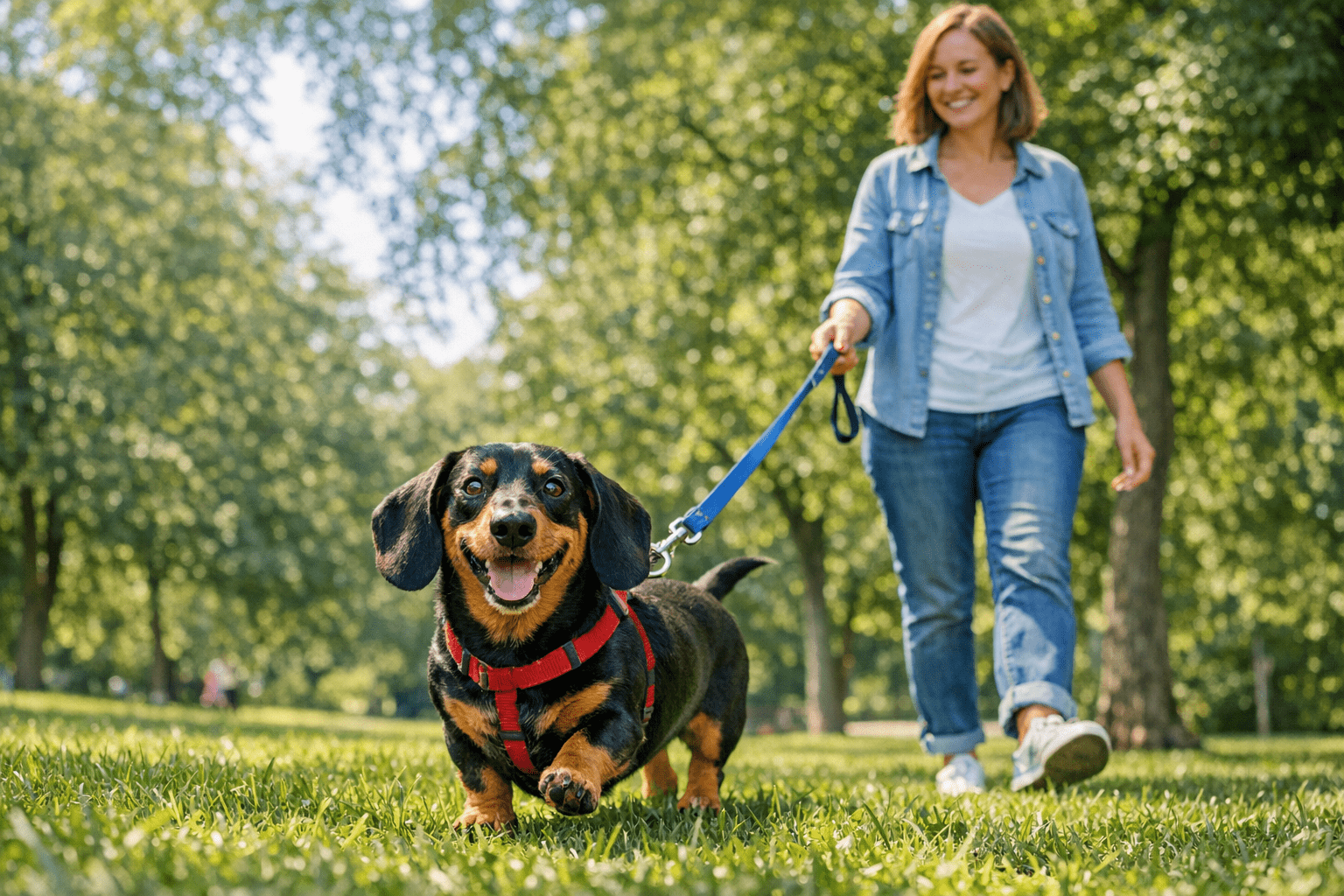
My dog gets super excited when I grab the leash—it’s like I just said “treats!” 😂. They love sniffing everything, chasing smells, and checking every corner like a detective 🕵️♂️.
However, I also learned that balance is important. Too little exercise leads to boredom and barking, while too much can strain their long back.
Now I aim for consistent daily walks combined with playtime. It keeps my Dachshund healthy, active, and much happier (and honestly, it helps me too 🐾).
2. Average Walking Distance for Dachshunds
From my experience, the average distance falls under dachshund walking distance of about 1–2 miles per day. But I quickly learned that this also depends on the dog’s personality and energy levels.
My Dachshund can walk happily for about 30–40 minutes before slowing down. But sometimes they act like a marathon runner—until suddenly… they don’t 😅.
This also relates to small dog exercise limits, which vary from dog to dog. Standard Dachshunds can usually walk farther than mini ones.
I once tried pushing a slightly longer route, and my dog literally stopped mid-walk and stared at me like, “Nice joke, carry me now” 😂.
That’s when I realized—watch the dog, not the distance. Every Dachshund has its own comfort zone, and respecting that makes walks more enjoyable.
3. Factors That Affect Walking Distance
Not every Dachshund has the same stamina, and I learned that quickly. Several factors affecting dog exercise can change how far they can walk.
Things like age, weight, fitness level, and even weather play a role. For example, my dog refuses to walk far in hot weather ☀️—fair enough, I don’t blame them!
This also connects to dog stamina levels, which improve with regular activity. If my dog skips walks for a few days, I notice they tire more quickly afterward.
Terrain matters too. Flat paths are easy, but hills? Instant drama 😄.
Understanding these factors helped me plan better walks. Instead of pushing a fixed distance, I adjust based on conditions—and my dog’s mood.
4. Age and Its Impact on Walking Ability
Age makes a huge difference in how far a Dachshund can walk. This is part of puppy vs adult dog exercise differences.
When my dog was a puppy, walks were short—around 10 minutes at a time. Puppies have energy bursts but tire quickly.
As an adult, my Dachshund became more active and could handle longer walks. This stage is ideal for building senior dog activity levels later in life.
Now as my dog gets older, I notice slower movement and shorter stamina. I’ve learned to reduce the walk length and keep things relaxed.
It’s all about adapting. Puppies need gentle training, adults need structured exercise, and seniors need comfort.
Adjusting based on age keeps my dog safe—and avoids unnecessary strain 🐾.
5. Health Considerations (Back & Joint Issues)
One thing I always keep in mind is dachshund back problems. Their long spine makes them prone to issues.
Conditions like IVDD fall under dog spinal health, and over-exercising can increase risks. That’s why I avoid intense activities like jumping or climbing stairs.
I once let my dog run up and down the stairs too much—big mistake 😅. They became stiff afterward, and I immediately changed my approach.
Now I stick to gentle, flat walks. Slow and steady is best.
If I notice any signs like limping or hesitation, I stop immediately.
Protecting their back is more important than completing a long walk. Health always comes first.
6. Signs Your Dachshund Is Tired
Learning my dog’s limits was a game-changer. Recognizing dog fatigue signs helps prevent overexertion.
Common signs include slowing down, heavy panting, or stopping completely. This is part of understanding tired dog behavior.
I remember one walk where my Dachshund simply sat down and refused to move 😄. That was a clear “we’re done” signal.
Now I watch closely during every walk. If I see early signs, I turn back instead of pushing further.
Dogs don’t speak, but their body language says everything.
Pay attention—it saves both you and your dog from unnecessary stress 🐾.
7. Ideal Daily Exercise Routine
I found that creating a routine works best. This falls under daily dog exercise routine.
Instead of one long walk, I split it into two shorter ones—morning and evening. This supports healthy balanced dog activity.
My Dachshund also enjoys playtime indoors. Toys, fetch, and puzzles keep them engaged 🧩.
Consistency is key. When we skip activity, I notice more restlessness and barking.
So now I stick to a routine, and it keeps both of us happy.
Short walks + playtime = perfect balance 😄.
8. Indoor vs Outdoor Activity Balance
Not every day is perfect for outdoor walks—especially when it rains ☔ and my Dachshund pretends the ground is lava 😂.
That’s where indoor dog exercise ideas come in handy.
I use toys, hide-and-seek, and short training sessions. This supports dog mental stimulation activities and keeps them busy.
Outdoor walks are still important for fresh air and exploration. But indoor play fills the gap on difficult days.
Balancing both types of exercise made a huge difference for me.
Now, rain or shine, my Dachshund stays active—and entertained 🐾.
9. Tips to Safely Increase Walking Distance
If I want my Dachshund to walk longer, I follow safe dog walking tips.
I increase distance gradually—just a few minutes at a time. This helps build dog endurance training safely.
I also carry water and choose cooler times of the day for walks 💧.
One mistake I made early was increasing distance too quickly—my dog got tired fast. Lesson learned 😅.
Now I move at their pace. Progress is slow, but steady.
It’s better to build stamina over time than risk injury.
10. Final Verdict: How Far Should a Dachshund Walk?
From everything I’ve learned, most Dachshunds can comfortably walk around 1–2 miles a day. But this depends on age, health, and energy levels. This fits into a proper dachshund exercise guide.
Some days my dog is full of energy, and other days they prefer shorter walks—and that’s okay.
The key is flexibility and observation. I focus on my dog’s comfort rather than a fixed goal.
At the end of the day, exercise should be enjoyable, not exhausting.
So if you’re still wondering how far can a dachshund walk, the answer is simple—just as far as your happy, tail-wagging pup is comfortable going 🐶🐾.