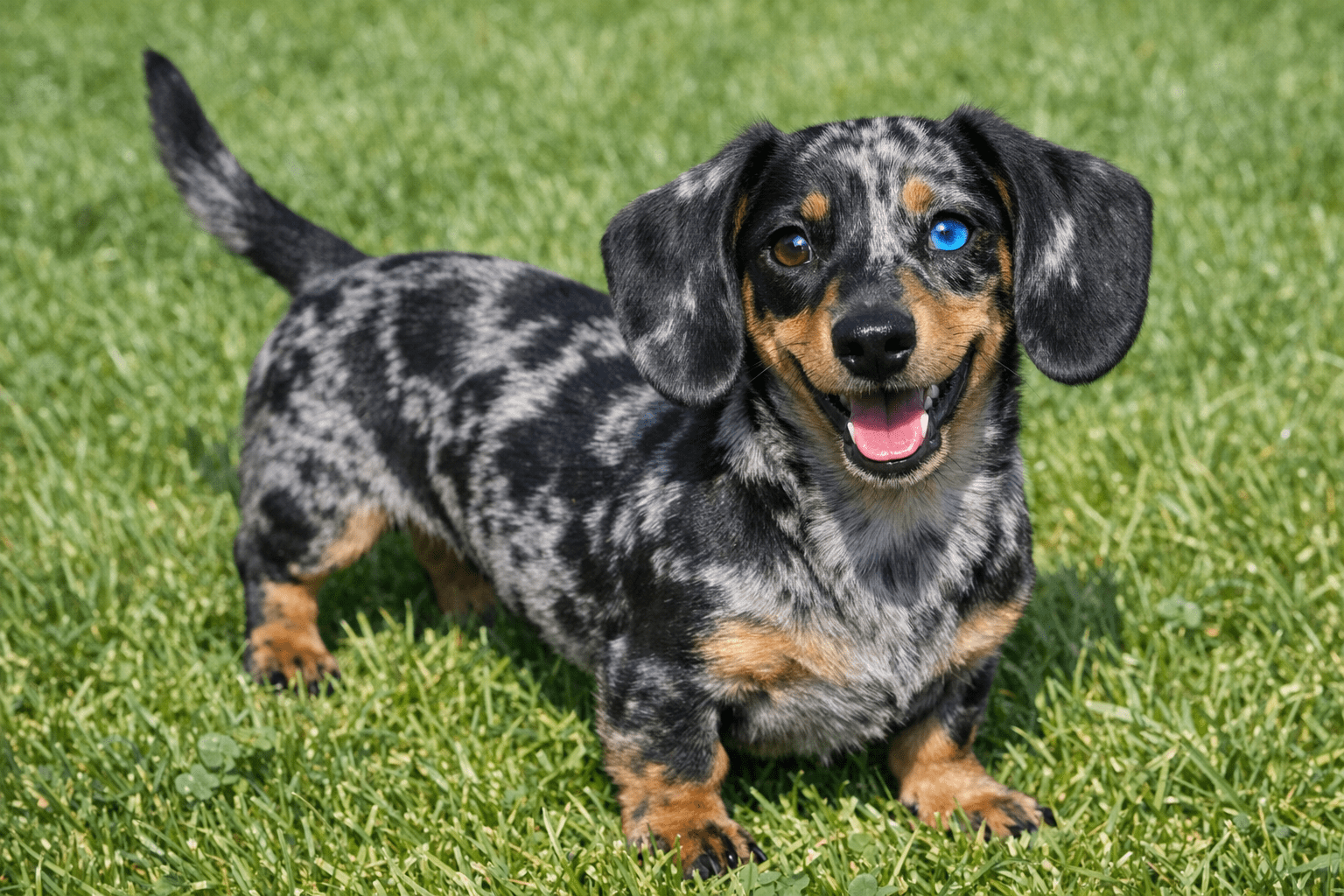
I’ll never forget the day a frantic client brought me her eight-week-old dapple dachshund puppy. His coat was a stunning mosaic of silver-gray patches against rich chocolate brown — absolutely gorgeous. But something was wrong. He wasn’t responding to sounds. When I clapped my hands behind his head, there was no reaction. That puppy was deaf.
“We paid a premium for his rare coloring,” she told me, tears in her eyes. “The breeder said he was special.”
He was special. But not in the way the breeder meant. This is when I started digging deeper into the world of dapple dachshunds, and what I uncovered shocked me. Dapple Dachshund breeding has a dark side that too many breeders gloss over, and it’s time dog owners knew the truth.
What Is a Dapple Dachshund, Really?
A dapple dachshund isn’t a separate breed — it’s a color pattern. The term describes dachshunds whose coat color is lightened in irregularly formed patches, creating that beautiful marbled effect we all admire. These dogs have existed for over a century, appearing in the earliest pedigree books of the German Dachshund Club, founded in 1888.
The Science Behind the Spots
Here’s where it gets fascinating. That marbling effect isn’t random luck — it’s genetics at work. The responsible gene is called the “merle” gene, referred to as “M.” Every dog carries two copies of this gene location, one from each parent. The possible combinations are:
- mm — No dapple pattern, solid coat
- Mm — Dapple pattern visible
- MM — Double merle, serious health risks
The merle variant (M) is dominant over the non-merle variant (m). This means if a dog inherits even one M gene, it will show some degree of dappling.
Why “Rare” Doesn’t Mean “Better”
I’ve seen breeders charge double or triple for dapple puppies, marketing them as “rare” and “exclusive.” Let me be clear: reputable breeders will never claim their dachshunds’ colors are rare, nor will they overcharge based on color alone. If a breeder is pushing the “rare” angle, that’s your first red flag.
The Merle Gene: A Double-Edged Sword
The merle gene doesn’t just affect coat color. It impacts pigment formation and storage processes throughout the body, including in the eyes and ears. This connection explains why dapple dachshunds sometimes have blue or partially blue eyes — so-called “glass eyes” or “fish eyes.”
How the M Gene Works
According to current research, the M gene can have different lengths of “branches” at the gene location. Longer branches cause stronger lightening effects. But here’s the crucial point: not all M variants are created equal. Some shorter variants don’t cause visible lightening at all. These are called cryptic merles — dogs that carry the gene but show no dapple pattern.
The Critical Difference Between Mm and MM
This is the most important distinction in dapple breeding:
- Mm dogs (one M, one m): These are healthy dapple dachshunds. Studies show no increased risk of vision or hearing problems compared to solid-colored dogs.
- MM dogs (two M copies): These double merles face significantly higher risks of facial and hearing impairments, including deafness and blindness.
⚠️ Expert Warning: According to the German Dachshund Club (DTK), mating two dapple dachshunds is strictly prohibited because 25% of their offspring will statistically carry the dangerous MM combination.
The Shocking Mistake Too Many Breeders Make
Despite these known risks, I’ve encountered breeders who still mate dapple to dapple. They justify it by saying they want “more dapples in the litter.” This is gambling at the expense of puppy health.
Why Mating Two Dapples Is Dangerous
When two Mm parents are crossed, the math is unforgiving:
- 25% chance of MM (high-risk puppies)
- 50% chance of Mm (healthy dapples)
- 25% chance of mm (solid color)
A Statistical Nightmare for Puppy Health
Here’s what most people don’t understand about probability: statistics don’t guarantee individual outcomes. A breeder might produce five puppies from two dapple parents and get zero MM puppies. That doesn’t prove it’s safe. The next litter could have all five as MM. As the article from Botzensteiners rightly states, “a probability of only 5% of dropping dead tomorrow is 100% crap when it happens.”
Responsible breeders only mate dapple dachshunds with non-dapple partners. This produces only Mm and mm offspring — zero risk of double merle.
Can You Spot a Hidden Dapple?
This is where things get tricky, and where many breeders (even experienced ones) make mistakes.
The Red Dachshund Problem
Red dachshunds without black pigmentation (those with red noses instead of black) can carry the merle gene while appearing solid red. The lightening effect is nearly invisible on their coat color. You could be looking at a cryptic merle and have no idea.
Why DNA Testing Is Now Essential
The DTK now requires genetic testing for any dachshund being mated to a dapple. This prevents accidental dapple-to-dapple matings. But here’s my concern: if you’re breeding two solid-colored dogs, neither gets tested. What if both are cryptic merles? You’d never know until puppies with health problems appear.
💡 Practical Tip: If you’re considering breeding any dachshund, invest in merle testing. It costs around €50-100 and could prevent a litter of suffering puppies.
The DTK Controversy: Helpful or Harmful?
The DTK’s 2013 regulation requiring genetic testing before mating with a dapple was well-intentioned. But as an investigative journalist, I see unintended consequences.
New Regulations Explained
The rule makes sense on paper: test every potential breeding partner to avoid accidental dapple-to-dapple matings. But in practice, it creates barriers.
The Unintended Consequences for Genetic Diversity
Dog owners who might have bred their non-dapple dog with a dapple now hesitate due to testing costs. This reduces the gene pool, especially for rabbit and miniature dachshunds, which already have alarmingly narrow genetic diversity.
Certified canine behavior specialists and breeders I’ve interviewed worry about this. “We’re solving one problem while creating another,” one breeder told me. “Fewer dapple-involved breedings means less genetic variety overall.”
The Dilute Disaster: Blue and Isabella Dachshunds
Let me be blunt: do not buy “blue” or “isabella” dachshunds. These dilute colors are highly undesirable according to the UK Dachshund Breed Standard.
What CDA Means for Your Dog
Color Dilution Alopecia (CDA) is a hereditary condition affecting dogs with dilute colors (d/d gene combination). Symptoms include:
- Severe itching
- Hair loss and thinning coat
- Skin eczema and infections
- Poorly healing wounds
The UK Dachshund Health Information Library explicitly warns against breeding these colors. CDA is much more common in breeds where the dilute allele has been newly introduced, like dachshunds.
Why Reputable Breeders Avoid These Colors
You won’t find blue or isabella puppies at DTK-affiliated breeders. The breeders offering these “rare” colors are often operating outside responsible breeding networks. They’re prioritizing profit over health.
How to Choose a Responsible Dapple Breeder
After years in this field, I’ve developed a checklist for prospective dapple owners.
Red Flags to Watch For
⚠️ Charging extra for dapple coloring ⚠️ Claiming colors are “rare” or “exclusive” ⚠️ Mating two dapple dogs together ⚠️ No genetic testing available ⚠️ Can’t provide health clearances for parents ⚠️ Breeding blue or isabella colors
Questions Every Buyer Should Ask
- “Can I see the parents’ genetic test results for merle?”
- “Have you ever bred dapple to dapple?”
- “What health testing do you do beyond basic vet checks?”
- “Can I see the puppy’s littermates and mother?”
- “What guarantees do you offer for genetic health?”
Practical Tips for Dapple Dachshund Owners
If you already have or are getting a dapple dachshund, here’s how to ensure their health and happiness.
Health Monitoring Basics
- Hearing test: Have your vet perform a BAER test (brainstem auditory evoked response) within the first few weeks. Early detection matters.
- Vision check: Regular eye exams can catch problems early.
- Skin monitoring: Watch for unusual hair loss or itching, especially if your dog has dilute coloring.
Training and Socialization Advice
Dapple dachshunds need the same training as any dachshund:
- Positive reinforcement training works best — these dogs are sensitive and intelligent
- Early socialization prevents fear-based behaviors
- Manage their environment — they’re bred to dig and chase
- Respect their stubborn streak with patience, not punishment
“A dapple dachshund who feels safe and understood will bond with you for life. They’re not fragile — they just need the right start.” — Experienced dachshund breeder
The Bottom Line: Beauty Without Sacrifice
After years of investigating dapple dachshund breeding, here’s my honest take:
Dapple dachshunds can be perfectly healthy dogs — if they’re bred responsibly. The key is:
- Never buy from breeders who mate dapple to dapple
- Always ask for genetic testing documentation
- Avoid dilute colors (blue, isabella) entirely
- Insist on health guarantees
The most beautiful dapple dachshund is one that can hear your voice, see your face, and live a full, healthy life. Don’t let irresponsible breeders profit from shortcuts that cost puppies their wellbeing.
If you’re considering adding a dapple dachshund to your family, do your homework. Ask the hard questions. And remember: a responsible breeder will welcome your questions, not avoid them.
Your future best friend deserves nothing less. 🐾
Have you had experience with dapple dachshunds? Share your story in the comments below — your insights might help another family make the right choice.