Introduction: Why I Cared Enough to Dig Deep
Let me be straight with you — I love my dogs. And I mean really love them. When I brought home my first German Shepherd, I figured a bag of supermarket kibble would do the trick. Two years later, after a nasty bout of skin allergies, constant ear infections, and a vet bill that made my eyes water, I realised I was clueless about what is the best food for a German Shepherd.
Sound familiar? You’re not alone. 🐾
German Shepherds are magnificent animals — loyal, intelligent, and absolutely gorgeous. But they come with a unique set of nutritional needs that most generic dog foods completely ignore. After spending over a decade researching canine nutrition, cooking meals from scratch, and eventually transitioning my dogs to a raw diet, I’ve learned a thing or two.
In this guide, I’m going to share everything I know. No fluff, no marketing spin — just honest, practical advice for UK dog owners who want their Shepherds to thrive, not just survive.
Why Your German Shepherd Isn’t Just ‘Any Dog’
Here’s something most pet shops won’t tell you: your German Shepherd’s digestive system is fundamentally different from other breeds.
According to canine nutritionist William D. Cusick, German Shepherds have a significantly shorter colon compared to other dogs of the same body weight. That means food whizzes through their system faster. If you’re feeding them the wrong stuff, their bodies simply don’t have enough time to absorb the nutrients.
Think of it like this — imagine trying to drink a milkshake through a straw that’s half the normal length. You’d get less of the good stuff before it’s gone, right? Same principle applies to your Shepherd’s dinner bowl.
What does this mean for you?
- High-fibre foods are essential — they slow digestion and improve nutrient absorption
- Low-quality fillers are a disaster — they pass through without giving anything back
- Breed-specific nutrition isn’t a gimmick — it’s biology
I learned this the hard way with my first Shepherd, Max. He was on a premium ‘all-breed’ kibble that everyone raved about. His coat was dull, his energy was inconsistent, and he never seemed satisfied after meals. The moment I switched to a breed-appropriate diet, the transformation was incredible. Within three weeks, his coat was glossy, his eyes were bright, and his tail wouldn’t stop wagging.
What is the Best Food for a German Shepherd? My Simple Breakdown
Alright, let’s get to the meat of the matter — what is the best food for a German Shepherd?
After feeding six German Shepherds over fifteen years, here’s what I’ve landed on:
The Ideal Diet Profile
| Component | Recommendation | Why It Matters |
|---|---|---|
| Protein source | Beef, chicken, lamb | Matches ancestral diet |
| Vegetables | Cabbage, carrots, broccoli | Provides essential fibre |
| Grains | Whole wheat, oats (in moderation) | Slows digestion |
| Fats | Animal fats, fish oil (limited) | Skin and coat health |
| Avoid | Fish as primary protein, soy, rice | Incompatible with breed history |
The German Shepherd breed originated in the Alsatian region of Germany, where their natural diet consisted of beef, wheat, and leafy greens like cabbage and alfalfa. That’s not ancient history — it’s written into their DNA.
My personal recommendation: A diet based around high-quality beef, cabbage-family vegetables, and some whole grains. Fish, soy, and rice are the worst offenders for this breed.
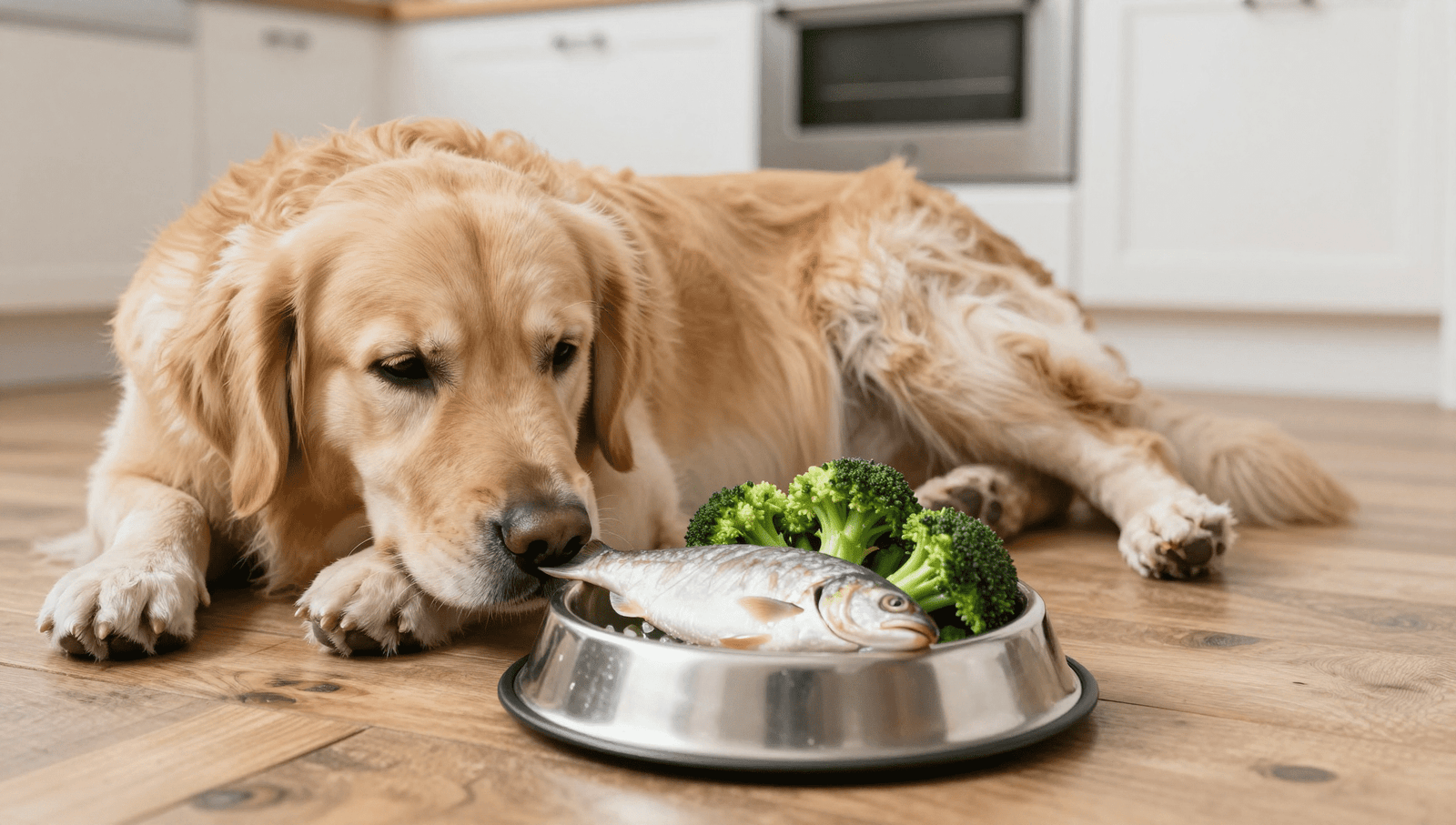
Quick story: My German Shepherd Sylvester was on a fish-based kibble for six months (I was trying to be ‘healthy’). He developed constant itching and loose stools. The moment I switched him to beef-based food, the issues vanished within a week. Coincidence? I don’t think so.
Kibble vs Raw vs Home-Cooked: Which Wins?
This is the million-pound question every UK dog owner asks. Let me break down the pros and cons based on my experience.
Premium Kibble
Pros:
- Convenient — just pour and serve
- Long shelf life
- Balanced nutrition if you choose the right brand
- Affordable (most options)
Cons:
- High carbohydrate content (often 50%+)
- Contains fillers like brewer’s yeast, tapioca starch
- Low moisture — can contribute to urinary issues
- Heat processing destroys natural enzymes
Raw Feeding
Pros:
- Most natural for dogs
- High moisture content
- Supports dental health
- Better stool quality (smaller, firmer)
Cons:
- Requires careful meal planning
- Higher risk of bacterial contamination initially
- More expensive
- Needs freezer space
Home-Cooked
Pros:
- Total control over ingredients
- Can be breed-specific
- Dogs absolutely love it
- Cost-effective ($40/week in my experience)
Cons:
- Time-consuming (2 hours per batch)
- Risk of nutritional imbalance without proper recipe
- Shorter shelf life
My verdict: I started with home-cooked, then moved to raw. Both are excellent. If you’re just starting, high-quality kibble is fine — but look for breed-specific formulas. In the UK, brands like Pooch & Mutt, Forthglade, and Harringtons offer decent options, though none are perfect.
How to Read a Dog Food Label Like a Pro
Dog food companies don’t make it easy for us. They throw around fancy terms like ‘grain-free’, ‘holistic’, and ‘natural’ without any legal definition. Here’s how to cut through the marketing nonsense.
The Ingredient List Hack
Ingredients are listed by weight. The first five ingredients tell you 90% of what you need to know.
Good sign:
- A named meat (beef, chicken, lamb) is first
- Meat meal is second or third
- Vegetables appear early
- Fats are named (chicken fat, not ‘animal fat’)
Red flags:
- Corn or wheat is in the top three
- ‘Meat and animal derivatives’ (mystery meat)
- Artificial colours and preservatives
- Sugar or sweeteners
UK Legal Requirements
Under UK law, dog food must list:
- Protein content
- Fat content
- Fibre content
- Ash content
But here’s the trick — these are minimums and maximums, not exact amounts. A food claiming ‘25% protein’ might have 25.1% or 35% — neither is wrong on the label.
My advice: Don’t obsess over the guaranteed analysis. Look at the ingredient quality instead. A food with 20% protein from real beef is far better than one with 30% protein from grain by-products.
The Best Food for a German Shepherd Puppy
Puppies have different needs than adults. Your German Shepherd pup grows rapidly — sometimes gaining 2-3 kg per week. Get the diet wrong, and you’re setting them up for joint problems later.
Puppy-Specific Requirements
| Nutrient | Why Important | Best Sources |
|---|---|---|
| Calcium & Phosphorus | Bone development | Cheese, broccoli, cabbage |
| DHA | Brain development | Fish oil (small amounts) |
| High-quality protein | Muscle growth | Beef, chicken |
| Controlled calories | Prevents rapid growth | Measure portions carefully |
Warning: German Shepherd puppies are prone to hip and elbow dysplasia. Feeding a diet too high in calcium or calories can accelerate growth plates, worsening genetic predispositions.
My practical tips for puppy feeding:
- Feed 3-4 small meals daily (not 2 large ones)
- Use a slow feeder bowl to prevent gulping
- Avoid puppy foods with calcium above 1.5% dry matter
- Transition to adult food around 12-14 months
I remember when my puppy Luna was four months old, gobbling her food so fast she’d vomit it right back up. A $15 slow feeder bowl solved it overnight. Sometimes the simplest fixes work best.
Common Feeding Mistakes UK Owners Make
I’ve made every mistake in the book. Let me save you the trouble.
Mistake #1: Following Vet Advice Blindly
I know, this sounds controversial. But most vets receive minimal training in nutrition — often a single module during their degree. Many sell prescription diets that aren’t breed-specific.
What I do: Consult a canine nutritionist for major dietary changes. In the UK, organisations like the Canine Nutritionist UK or Raw Fed and Nerdy offer excellent services.
Mistake #2: Assuming ‘Grain-Free’ is Healthier
Grain-free diets became trendy, but for German Shepherds? Bad idea. Remember — they need fibre to slow digestion. Many grain-free foods replace grains with legumes like peas and lentils, which can be linked to dilated cardiomyopathy (DCM).
My advice: Whole grains like oats and wheat are fine for most Shepherds. Don’t fear the grain.
Mistake #3: Feeding One Brand Forever
Dogs can develop sensitivities to foods they eat for years. Rotating between 2-3 high-quality brands keeps their gut microbiome diverse and prevents pickiness.
Current rotation for my dogs:
- Morning: Raw beef mince with blended veggies
- Lunch: High-quality kibble (Pooch & Mutt)
- Evening: Home-cooked chicken and rice (for sensitive tummies)
Supplements I Actually Use (And Ones to Skip)
The supplement market is a minefield. Here’s what’s worth your money.
Essential Supplements
| Supplement | Why I Use It | Source |
|---|---|---|
| Omega-3 fatty acids | Skin, coat, joint health | Krill oil (small dose) |
| Probiotics | Gut health | Natural yoghurt or supplement |
| Glucosamine & Chondroitin | Joint protection | Especially for older dogs |
| Vitamin E | Antioxidant | Broccoli, or supplement |
Supplements to Skip
- Multivitamins (most dogs get everything from food)
- Glandular supplements (unproven benefits)
- Detox products (dogs have livers and kidneys for that)
Personal favourite: I add a teaspoon of sardine oil (high in omega-3s) and a dollop of plain Greek yoghurt to my Shepherds’ dinners. Their coats are glossy year-round, and they never have digestive issues.
Cost Comparison: What Budget Do You Need?
Let’s talk money. Feeding a German Shepherd properly isn’t cheap, but it’s cheaper than vet bills.
| Feeding Method | Weekly Cost (UK) | Time Required | Quality |
|---|---|---|---|
| Budget kibble | £10-15 | 5 mins/day | Poor |
| Premium kibble | £25-35 | 5 mins/day | Good |
| Home-cooked | £30-40 | 2 hours/week | Excellent |
| Complete raw | £40-60 | 30 mins/week | Excellent |
| DIY raw | £35-50 | 3 hours/week | Best (with knowledge) |
My advice: Feed the best you can afford, and do better when you can. Even switching from budget kibble to premium kibble makes a massive difference.
Simple German Shepherd Feeding Schedule
Here’s the routine that works for my six Shepherds:
Morning (6:30 AM):
- Breakfast meal (raw or kibble)
- Fresh water
Midday (12:00 PM):
- Small training treats or dental chew
- Water always available
Evening (5:00 PM):
- Main meal (larger portion)
- Added supplements
Night (9:00 PM):
- Bedtime snack (if needed for weight maintenance)
- Last water top-up
Important: German Shepherds are prone to bloat (GDV). Never feed within an hour of exercise, and split meals into two portions rather than one large one.
FAQ: Your Most Pressing Questions Answered
Is grain-free food better for German Shepherds?
Not necessarily. German Shepherds have a short colon and need fibre to slow digestion. Whole grains like oats and wheat provide that fibre. Grain-free diets often replace grains with legumes, which can be problematic. I feed my Shepherds foods containing whole grains, and they thrive.
How much should I feed my German Shepherd per day?
It depends on age, weight, and activity level. Generally, an adult German Shepherd (30-40 kg) needs 800-1200g of wet food or 400-600g of dry food daily, split into two meals. Check the feeding guide on your specific food and adjust based on your dog’s body condition.
Can German Shepherds eat eggs?
Yes, cooked eggs are excellent. I give my dogs scrambled eggs once a week as a treat. Raw egg whites contain avidin, which can interfere with biotin absorption, so always cook them. The yolk is packed with nutrients.
Why is my German Shepherd always hungry?
German Shepherds are naturally food-motivated, but constant hunger can indicate several issues: poor-quality food (not enough nutrients), parasites, or medical conditions like diabetes or Cushing’s disease. If your dog is always hungry despite eating a quality diet, see your vet.
Should I add water to my dog’s kibble?
Yes, I recommend it. Adding water to kibble increases moisture content, helps digestion, reduces the risk of choking, and makes your dog feel fuller. I add about 100ml of warm water to each meal during winter and cold water during summer.
Is raw feeding safe for German Shepherd puppies?
Raw feeding can be safe for puppies, but it requires careful planning to ensure proper calcium:phosphorus ratios for bone development. I wouldn’t recommend DIY raw for puppies without guidance from a canine nutritionist. If you want to raw feed a puppy, use a commercially prepared complete raw food.
Conclusion: Feed Smart, Love Hard
So, what is the best food for a German Shepherd? After years of trial and error, here’s my honest answer: there’s no single ‘best’ food, but there are definitely better and worse choices.
The best food for your German Shepherd is one that:
- Is breed-appropriate (beef, cabbage-family veggies, whole grains)
- Has high-quality ingredients (named meats, no fillers)
- Matches your budget and lifestyle
- Keeps your dog’s coat glossy, energy consistent, and stool firm
Start with premium kibble if you’re new. Upgrade to home-cooked or raw when you’re ready. And always, always listen to your dog — their body will tell you if something’s working.
My Shepherds have never been healthier since I stopped trusting generic advice and started researching breed-specific nutrition. Yes, it takes effort. Yes, it costs more. But when your best friend is bouncing through their golden years with a glossy coat and a wagging tail, you’ll know it was worth every penny.
Your turn: Got a German Shepherd feeding question I didn’t cover? Drop it in the comments below. I read every single one. 🐾
Remember: Healthy dog, happy owner. Feed smart, love hard, and your Shepherd will thank you every single day.