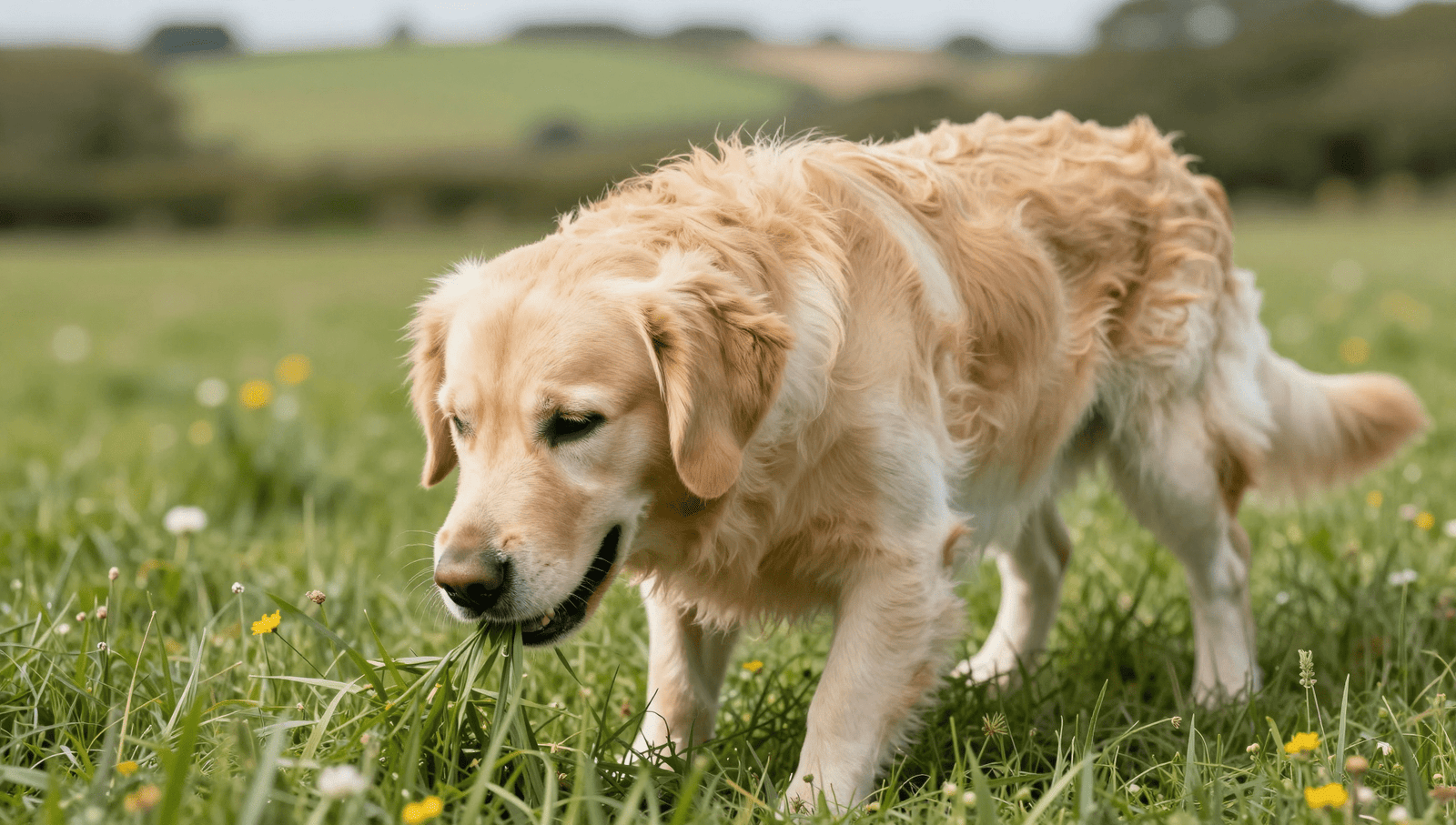
If you’ve ever been out walking your dog on a crisp morning through a British park and watched them suddenly lunge at a patch of grass like it’s a gourmet meal, you’re not alone. I’ve been there countless times — standing on a dewy field in the Lake District, lead in one hand, confused expression on my face, wondering why on earth my otherwise sensible Labrador decided that today’s snack would be lawn clippings. 🐶
The question why dogs eat grass is one of the most common queries I hear from fellow dog owners, and honestly, it puzzled me for years too. Is it a sign of illness? A nutritional deficiency? Are they just being weird? As it turns out, the answer is far more nuanced — and far less alarming — than most people think.
In this comprehensive guide, I’ll walk you through everything I’ve learned from vets, behaviourists, and years of hands-on experience. We’ll explore the science behind grass-eating, bust a few myths, cover the real safety risks, and arm you with practical tips to manage the behaviour if needed. So grab a cuppa, settle in, and let’s get to the root of this grassy mystery. ☕🌿
What Exactly Is Grass-Eating Behaviour?
Before we dive into the reasons, let’s define what we’re actually talking about. When we say a dog “eats grass,” we’re referring to the act of a dog deliberately biting, chewing, and swallowing grass blades during walks, garden time, or off-lead play. It’s technically classified under pica — the consumption of non-food items — though most vets agree that occasional grass eating is entirely normal dog behaviour.
Related Posts

Research published in veterinary journals confirms that grass-eating is remarkably common. One study found that nearly 79% of dogs have eaten grass at some point, and the majority showed no signs of illness before or after doing so. That’s a huge number, and it tells us something important: this isn’t some niche quirk. It’s mainstream canine behaviour.
I remember the first time my Springer Spaniel puppy, Pip, started chomping on the lawn. I panicked, called the vet, and was gently reassured that it was perfectly normal. Puppies, much like human toddlers, explore the world through their mouths. Pip wasn’t ill — she was just curious, and frankly, the grass probably smelled interesting after the rain.
It’s also worth noting that grass-eating isn’t limited to dogs with “behaviour problems.” Well-fed, well-exercised, mentally stimulated dogs still eat grass. So let’s stop treating it as inherently pathological and start understanding the real reasons behind it.
The Top Reasons Why Dogs Eat Grass
So, why do dogs eat grass? After years of reading research, speaking with UK-based veterinary behaviourists, and observing my own dogs, I’ve identified seven key reasons. Let’s break them down:
1. Instinctive Behaviour from Ancestral Wolves Scientists believe grass-eating may be an inherited trait. Wild canids — wolves, foxes, and coyotes — regularly consume plant material. Studies show that 2–10% of a wolf’s stomach contents can be plant matter. Our domestic dogs may simply be following ancient instincts hardwired into their DNA.
2. Dietary Fibre Deficiency One fascinating case study documented an 11-year-old Miniature Poodle who ate grass and plants for seven years, vomiting afterwards. When switched to a high-fibre commercial diet, the behaviour stopped completely. This suggests some dogs eat grass to supplement missing roughage.
3. Boredom or Under-Stimulation A bored dog is a destructive dog — and sometimes, a grass-eating dog. If your dog lacks mental enrichment, they may turn to grass simply because there’s nothing else to do. I’ve noticed this particularly on long car journeys when we stop at service stations — my dogs will frantically eat grass purely out of pent-up energy.
4. Curiosity and Exploration Especially in puppies, grass is just another texture to taste. Dogs experience the world primarily through scent and taste, and freshly cut grass has a strong, appealing aroma.
5. Attention-Seeking Behaviour Some clever dogs learn that eating grass gets a reaction. If you rush over, talk to them, or offer a treat to redirect, you’ve just reinforced the behaviour. Dogs are brilliant at learning what works.
6. Nausea or Gastrointestinal Discomfort Contrary to popular belief (more on this shortly), some dogs may eat grass when they feel slightly queasy. The rough texture could theoretically help induce vomiting, though research doesn’t strongly support this.
7. Taste and Texture Preference Some dogs simply enjoy it. My old Border Collie used to selectively pick the tender new shoots in spring, almost as if she had a preference for “baby greens.” 🌱
Do Dogs Eat Grass to Make Themselves Sick?
This is perhaps the most persistent myth in dog ownership. The theory goes that dogs eat grass deliberately to vomit when they feel unwell. But here’s the thing — the research doesn’t back this up.
In a landmark study, researchers surveyed two groups — veterinary students and pet owners — about their dogs’ grass-eating habits. The results were striking:
| Finding | Percentage |
|---|---|
| Dogs who ate grass regularly | ~79% |
| Dogs who vomited after eating grass | Less than 25% |
| Dogs who showed signs of illness before eating grass | Only 8% |
That means the vast majority of dogs who eat grass don’t vomit, and most weren’t unwell beforehand. This effectively debunks the “self-medication” theory for most cases.
Now, I’ll be honest — I’ve personally seen one of my dogs eat grass and then vomit shortly after. But correlation isn’t causation. She may have already felt nauseous (hence the grass-eating), rather than the grass causing the vomiting. Veterinary experts largely agree with this interpretation.
So the next time someone at the dog park tells you your pup is “self-medicating,” you can politely share the science. They’re probably just enjoying a snack. 😄
Is It Safe for Dogs to Eat Grass?
In most cases, yes — but with important caveats. The grass itself isn’t toxic, but what’s on the grass can be genuinely dangerous.
Pesticides and Herbicides
If your garden or local park has been treated with lawn chemicals, your dog could ingest toxic residues. In the UK, many councils use glyphosate-based herbicides in public spaces. Symptoms of pesticide ingestion include:
- Excessive drooling
- Vomiting
- Diarrhoea
- Lethargy
- Tremors (in severe cases)
Always check if a treated area has signage and avoid letting your dog graze there.
Parasites and Bacterial Contamination
Grass in public areas can be contaminated with faecal matter from other animals. This poses a risk of:
- Parvovirus (especially dangerous for unvaccinated puppies)
- Intestinal parasites (roundworms, hookworms, giardia)
- Bacterial infections (salmonella, E. coli)
Regular flea, tick, and worming treatments — ideally through your vet rather than over-the-counter products — are essential for UK dog owners.
Intestinal Blockage
In rare cases, consuming large quantities of grass can form a mass in the digestive tract, particularly if it clumps with other indigestible material. This can cause a gastrointestinal obstruction, which is a veterinary emergency.
| Risk | Severity | Prevention |
|---|---|---|
| Pesticide ingestion | High | Avoid treated areas |
| Parasites | Moderate | Regular worming |
| Intestinal blockage | Low-Moderate | Limit grass intake |
| Choking | Low | Supervise your dog |
How Diet and Nutrition Play a Role
Your dog’s diet could be directly influencing their grass-eating habit. If your dog is frequently eating grass, it’s worth examining what’s in their bowl.
Dogs are omnivores by nature — despite what some raw-feeding advocates claim. They’ve evolved alongside humans for thousands of years and have developed the ability to digest carbohydrates. However, grass is largely indigestible for dogs. It passes through their intestinal tract without providing meaningful nutrition.
If your dog’s food is low in fibre, they may instinctively seek out roughage. I recommend looking for dog foods that list whole vegetables, brown rice, or beet pulp in the ingredients. UK brands like Burns, James Wellbeloved, and Lily’s Kitchen tend to offer well-balanced formulas with adequate fibre content.
Here’s a quick comparison of dietary approaches:
| Diet Type | Fibre Content | Impact on Grass Eating |
|---|---|---|
| High-quality kibble | Moderate-High | May reduce grass eating |
| Raw diet (BARF) | Variable | May or may not help |
| Wet/canned food | Usually lower | Could increase grass eating |
| Home-cooked | Depends on recipe | Must ensure balanced nutrition |
I always tell fellow dog owners: speak to your vet before making dietary changes. A simple fibre boost — like adding a tablespoon of cooked pumpkin or sweet potato — might be all your dog needs.
When Should You Worry and See a Vet?
Whilst grass-eating is usually harmless, there are times when it warrants professional attention. Here are the red flags I always tell people to watch for:
See your vet if your dog:
- Eats grass obsessively or compulsively, to the point where it interferes with walks or daily life
- Vomits frequently after eating grass (more than occasionally)
- Shows signs of illness: lethargy, loss of weight, diarrhoea, blood in stool
- Eats grass treated with known pesticides or chemicals
- Displays anxiety-related repetitive behaviours alongside grass-eating
In my experience, the difference between “normal grass snacking” and “concerning behaviour” is frequency and context. A dog who nibbles a few blades during a sunny afternoon walk? Totally normal. A dog who frantically devours grass every single time they go outside and then vomits bile? That’s worth a vet visit.
Your vet may recommend:
- A dietary review and potential fibre supplementation
- Fecal testing for parasites
- Blood work to rule out underlying conditions
- A referral to a veterinary behaviourist if anxiety is suspected
Don’t be embarrassed to ask — vets hear this question constantly, and they’d rather you check than worry in silence.
How to Stop Your Dog From Eating Grass
If you’ve decided you’d prefer your dog not eat grass (or at least reduce the habit), here are proven strategies I’ve used successfully:
Training and Redirection
The most effective approach is positive reinforcement training. Every time your dog moves towards grass:
- Calmly interrupt — use a cheerful “this way!” or a hand target
- Redirect to an alternative behaviour (sit, touch, look at me)
- Reward generously with a high-value treat
Never punish your dog for eating grass. It doesn’t work and can damage your relationship.
Environmental Management
- Keep your dog on a lead in areas where grass has been treated
- Walk your dog after meals when they’re less likely to graze
- Offer grass-eating opportunities later in the day (research shows it’s less frequent then)
Mental Enrichment
A mentally tired dog is far less likely to eat grass out of boredom. Try:
- Snuffle mats and puzzle feeders
- Kong toys stuffed with frozen peanut butter
- Scent work games in the garden
- Training sessions — even 10 minutes of trick training makes a difference
Grow Your Own Safe Grass
Some UK dog owners plant pet-safe wheatgrass or oat grass in pots at home. This gives your dog a controlled, chemical-free option if they genuinely enjoy the taste. It’s a brilliant compromise — your dog gets their green fix, and you get peace of mind. 🌾
Breed-Specific Tendencies and Puppies
Certain breeds seem more inclined to eat grass than others. In my experience, retrievers, spaniels, and terriers are among the most enthusiastic grazers. This likely relates to their strong oral drive and natural curiosity.
Puppies are particularly prone to grass-eating as part of normal exploration. Much like human babies who put everything in their mouths, puppies investigate the world through taste. This usually decreases as they mature — typically by around 12–18 months of age.
However, if a puppy is eating grass excessively, it’s worth ruling out:
- Nutritional deficiencies (especially if on a homemade diet)
- Teething discomfort
- Parasites (common in young puppies)
One thing I’ve learned over the years is that no two dogs are the same. My current Cocker Spaniel has zero interest in grass, whilst my previous Collie treated every lawn like an all-you-can-eat buffet. Understanding your individual dog’s tendencies is key to managing the behaviour effectively.
Frequently Asked Questions
Is it normal for dogs to eat grass every day?
Occasional grass-eating is perfectly normal, but daily consumption could indicate a dietary deficiency, boredom, or an underlying health issue. If your dog eats grass every single day, I’d recommend a vet check-up to rule out anything medical, and a review of their diet to ensure they’re getting adequate fibre.
Can eating grass make my dog seriously ill?
The grass itself is unlikely to cause serious harm. However, grass treated with pesticides, contaminated with parasites, or consumed in very large quantities can pose real risks. Always supervise your dog outdoors and ensure they’re up to date on worming treatments.
Should I let my puppy eat grass?
A few nibbles here and there are fine — puppies explore with their mouths, and it’s a natural part of development. However, discourage excessive grass-eating, especially in areas where you’re unsure about chemical treatments or contamination. Keep puppy worming schedules up to date.
Does grass provide any nutritional value to dogs?
Not really. Grass is mostly fibre and water, and it passes through a dog’s digestive system largely undigested. If your dog is seeking fibre, a better option is adding cooked pumpkin, sweet potato, or switching to a higher-fibre commercial dog food.
Why does my dog eat grass and then vomit?
Whilst it’s a common observation, research suggests most dogs don’t eat grass specifically to vomit. Your dog may have already felt nauseous (causing them to eat grass), and vomiting followed as a symptom of the underlying discomfort rather than a result of the grass itself. Frequent vomiting warrants a vet visit.
Are certain dog breeds more likely to eat grass?
There’s no definitive scientific evidence linking specific breeds to grass-eating, but anecdotal experience suggests that breeds with strong oral drives — such as Labradors, Golden Retrievers, Spaniels, and Terriers — may be more inclined. Individual personality and environment play a bigger role than breed alone.
Conclusion
Understanding why dogs eat grass doesn’t have to be a source of anxiety. For the vast majority of dogs, it’s a perfectly normal, instinctive behaviour rooted in their evolutionary history. Whether driven by curiosity, a need for fibre, boredom, or simply because they enjoy the taste, grass-eating is rarely a cause for alarm.
That said, it’s important to stay vigilant. Ensure your dog’s diet is nutritionally complete, keep them protected with regular parasite prevention, avoid chemically treated areas, and watch for any signs that the behaviour is becoming compulsive or is accompanied by illness.
As with most things in dog ownership, context is everything. A happy, healthy dog who occasionally nibbles on the lawn? Perfectly fine. A dog who frantically devours grass and vomits daily? Time for a vet visit.
My best advice? Don’t overthink it, do stay informed, and always trust your gut — if something feels off, your vet is just a phone call away. After all, being a great dog owner isn’t about having all the answers. It’s about asking the right questions. 🐾💛
Disclaimer: This article is for informational purposes only and does not replace professional veterinary advice. Always consult your vet for concerns about your dog’s health or behaviour.