We’ve all been there. You walk into the living room to find your favourite pair of trainers have been turned into a chew toy, or the corner of your brand-new rug has become a digging site. 🐶 It’s enough to make you want to pull your hair out! But before you lose your cool, have you ever considered using your dog’s superpower against them? No, not their speed or their ability to look cute when they’re in trouble—I’m talking about their nose.
If you have ever wondered what smells do dogs hate, you are holding the key to a powerful, humane training tool. Dogs experience the world through their noses first and their eyes second. Their sense of smell is estimated to be between 10,000 and 100,000 times more acute than ours. This means a scent that is merely “pleasant” or “strong” to us can be absolutely overwhelming—and sometimes repulsive—to them.
Understanding what smells do dogs hate isn’t about being mean to your furry best friend; it’s about setting boundaries safely. By leveraging scents that dogs naturally avoid, you can protect your belongings, keep them out of dangerous areas of the garden, and even assist with house training. In this guide, we will dive deep into the world of canine olfaction, explore the scents that send them running for the hills, and crucially, explain how to use them safely without causing harm. Let’s get sniffing!
The Science Behind the Snout
Before we jump into the list of smells, it helps to understand why dogs react so differently to odours than we do. Humans are visual creatures; we rely on what we see. Dogs, however, are macrosmatic, meaning they are built to smell. A dog’s nose contains up to 300 million olfactory receptors, compared to about 6 million in humans. Furthermore, the part of a dog’s brain devoted to analysing smells is, proportionally speaking, 40 times greater than ours.
Related Posts



I remember watching my Labrador, Max, sniff a patch of grass for a solid five minutes once. To me, it was just grass. To him, it was a newspaper reading the morning headlines—who was there, what they ate, and where they went next! 🧐
This extreme sensitivity means that scents are processed with high intensity. What we consider a mild citrus tang is, to a dog, a face-scrunching assault on their senses. This biological advantage is why scent training works so well—they literally can’t ignore it. However, it also means we must be incredibly careful with the products we use in our homes. Their respiratory tract is delicate, and what is safe for humans is not always safe for our canine companions.
What Smells Do Dogs Hate? The Top List
Now that we understand the hardware they’re working with, let’s look at the software—or rather, the smells that make their noses twitch in displeasure. While every dog is an individual with unique preferences (my old Beagle actually liked the smell of wet sheep, go figure 🤢), there are several scent categories that are almost universally disliked by the canine population.
Citrus Scents (Lemon & Orange)
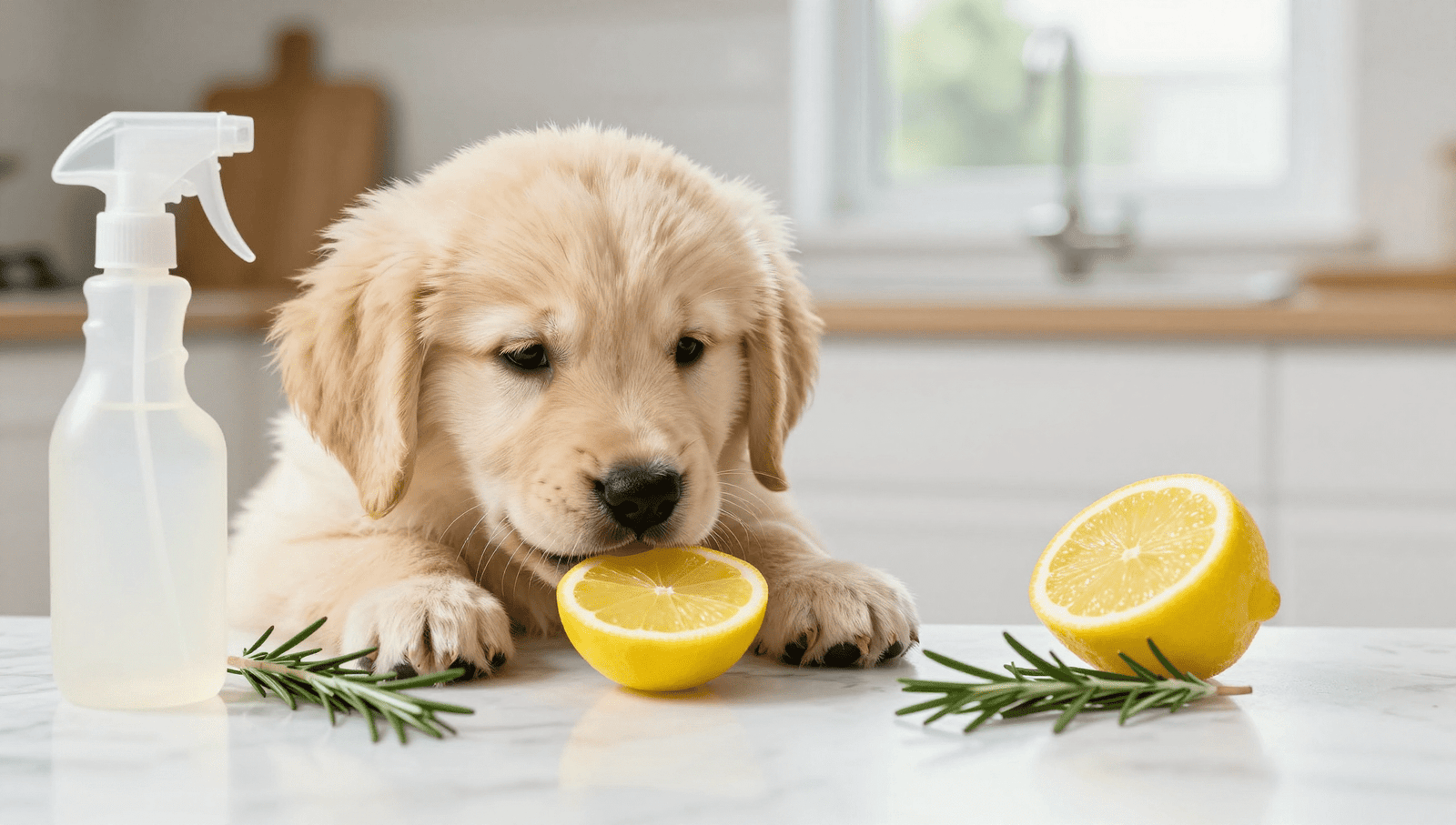
If you’ve ever peeled an orange near a dog, you might have noticed them backing away or sneezing. This isn’t a coincidence. Citrus fruits like lemons, limes, oranges, and grapefruits contain citric acid and strong essential oils in their peels.
To us, citrus smells clean, fresh, and zesty. To a dog, it is sharp and irritating. The high acidity can irritate their nasal passages. This is actually great news for gardeners! If you want to stop your dog from digging up your flower beds, scattering some lemon or orange peels around the perimeter is a cheap, eco-friendly deterrent. However, while the smell is a deterrent, do not let your dog eat large amounts of citrus fruit, as it can cause gastrointestinal upset.
Vinegar and Acidic Odours
Vinegar is the holy grail of cleaning for dog owners, primarily because of its smell. The pungent, acrid odour of white vinegar or apple cider vinegar is highly offensive to dogs. It’s so strong that it overwhelms their sensitive noses, effectively “blinding” their sense of smell temporarily in that area.
I’ve used diluted vinegar spray to stop my puppy from chewing on table legs. One quick spritz on the wood (away from the dog’s face), and he turned his nose up and trotted off to find a toy instead. It’s a brilliant, non-toxic way to mark “no-go zones” in your house. Just be careful using it on surfaces; while safe for fabrics and most woods, the acid can damage stone or marble over time.
Spicy Smells (Chili & Peppers)
This one requires a massive safety warning. 🚨 Dogs hate the smell of chili peppers and cayenne because of capsaicin. Capsaicin is the active component that makes peppers hot. While dogs can’t “taste” spice the way we do (they lack the specific taste buds for it), they certainly feel it.
The smell alone is irritating, but if they sniff it too closely or get it on their paws and lick it off, it can cause burning sensations in their mouth, throat, and stomach. Never sprinkle loose chili powder to deter a dog. If they kick it up and inhale it, it can cause severe respiratory distress and pain. If you use spicy scents, they must be in oil form on a cotton wool ball, placed well out of reach, so the dog smells it but cannot touch or ingest it.
Strong Herbs and Spices
While we love a bit of cinnamon in our coffee, dogs tend to find strong spices and herbs overwhelming. Common offenders include:
- Ground mustard: Has a very sharp, nose-tingling smell.
- Nutmeg: Smells strong but is also highly toxic to dogs if ingested.
- Rosemary & Rue: These herbs have strong, woody, bitter scents that dogs often avoid.
Using fresh herbs in the garden is a safer alternative to spices. Planting a border of rosemary or lavender (though some dogs like lavender, so test it first) can act as a living fence for your dog.
Household Hazards: Smells to Avoid
While we are discussing what smells do dogs hate, we must pivot to the smells that dogs should hate, but which can actually cause them serious harm. As a responsible owner, you need to know the difference between a “deterrent” and a “poison.”
There are several household items that have strong, repulsive odours that dogs will naturally back away from, but if they get curious (as puppies often do), the results can be fatal.
Essential Oils: The rise of essential oil diffusers has led to a spike in pet poisonings. Dogs process oils differently than humans. Highly toxic oils include:
- Tea Tree (Melaleuca)
- Pennyroyal
- Wintergreen
- Pine oils
- Ylang Ylang
Even inhaling these in a poorly ventilated room can cause changes in behaviour, drooling, or respiratory failure. If you use a diffuser, always ensure your dog can leave the room and the door is open.
Chemicals:
- Mothballs: The smell is terrible, but the naphthalene inside is poisonous.
- Nail Polish & Remover: The acetone fumes are noxious.
- Cleaning Products: Bleach and ammonia-based cleaners might smell “clean” to us, but to a dog, they are chemical warfare.
If you are training your dog using scent deterrents, stick to natural items like citrus, vinegar, or specific dog-repellent sprays approved by veterinarians.
Using Scent for Dog Training & Behaviour
So, how do we take this knowledge and apply it to real-life dog care? Using smells that dogs hate is a fantastic tool for behaviour modification, provided it is done humanely.
1. House Training (Potty Training): If your dog has a favourite spot on the carpet they keep returning to, clean the area thoroughly with an enzymatic cleaner first (to remove their own scent markers), then wipe the area with a cloth dampened with a vinegar and water solution. The smell will discourage them from squatting there again.
2. Stopping Chewing: Dogs, especially teething puppies, explore with their mouths. If your dog is targeting the legs of your antique dining table, wiping them down with lemon juice or a citrus spray can save your furniture. You can buy commercial “anti-chew” sprays, but often a DIY citrus mix works just as well.
3. Garden Boundaries: Do you have a specific flower bed you want to protect? You don’t need an electric fence. A simple border of orange peels or a light spraying of diluted vinegar (be careful not to kill your plants!) can keep curious noses away.
Comparison: DIY vs. Commercial Deterrents
| Feature | DIY Solutions (Citrus/Vinegar) | Commercial Sprays |
|---|---|---|
| Cost | Very Low (pennies) | Moderate (£5 – £15) |
| Effectiveness | Moderate (needs frequent reapplication) | High (often formulated to last longer) |
| Safety | High (if used correctly) | Variable (must check for toxic ingredients) |
| Scent | Strong human smell initially | Often odourless to humans but pungent to dogs |
| Application | Spraying, peels, cotton wool | Aerosol, trigger spray |
Safe Application: Do’s and Don’ts
Using scent as a deterrent is an art, not a science. If you get it wrong, you might just annoy your dog without changing the behaviour, or worse, hurt them. Here are my golden rules for applying scents:
Do’s:
- Do use cotton wool balls: Soak a cotton ball in lemon juice or vinegar and place it in a small container (like a yoghurt pot with holes poked in the lid) near the area you want to protect. This keeps the liquid contained.
- Do test small areas: Citrus and vinegar can discolour fabrics or damage varnished wood. Always spot-test your cleaning solution.
- Do praise positive behaviour: Scent is a deterrent, not a teacher. When your dog turns away from the smelly area, praise them and reward them for choosing a different spot.
Don’ts:
- Don’t spray the dog: This is the cardinal sin of dog training. Spraying a dog in the face with vinegar or lemon juice is cruel and can damage their eyes and mucous membranes.
- Don’t use loose powders: Never sprinkle chili powder or mustard powder on the floor. It can get into the dog’s eyes or lungs, causing severe injury.
- Don’t rely on scent alone: If your dog is bored, anxious, or under-exercised, no amount of lemon peel will stop them from being destructive. Address the root cause of the behaviour.
When to See a Vet Regarding Smell
Sometimes, a dog’s reaction to smells—or lack thereof—can indicate a health issue. While we focus on what smells do dogs hate, it’s also important to monitor how they smell the world.
Anosmia (Loss of Smell): If your dog suddenly stops reacting to smells they used to hate (or love), they might have a nasal infection, nasal blockage (like a grass seed), or a more serious condition. Dogs rely on smell for their appetite; a dog that can’t smell often won’t eat.
Reverse Sneezing: If your dog makes a honking sound and sucks air in rapidly, this is a reverse sneeze. It can be triggered by strong irritants in the air (perfume, dust, pollen). If this happens frequently when you use certain cleaning products, those smells are too strong for your pet’s respiratory system and you should stop using them immediately.
Obsessive Sniffing: If your dog is obsessively sniffing one spot on the carpet or furniture, don’t just assume they are smelling a spill. This can be a sign of neurological issues or, more commonly, they might have detected pests like mice or mould that you haven’t seen yet. Trust their nose!
FAQs
What is the best homemade dog repellent?
A simple mixture of white vinegar and water (50/50 ratio) in a spray bottle is widely considered the most effective homemade repellent. It is safe for most surfaces when used in moderation and the smell is incredibly potent to dogs, deterring them from chewing or urinating in treated areas. Always ensure the room is well ventilated.
Do dogs hate the smell of peppermint?
Generally, yes. While humans find peppermint refreshing, most dogs find the menthol component overwhelming and irritating to their nose. However, be extremely careful with peppermint essential oils, which are concentrated and can be toxic to dogs if ingested or absorbed through the skin. Fresh mint leaves in the garden are a safer option.
Why does my dog roll in smelly things?
This is an instinctive behaviour inherited from their wolf ancestors. Wolves roll in strong scents (like carrion) to mask their own smell, helping them sneak up on prey. Your dog rolling in fox poo or mud is basically trying to put on “cologne” to impress his mates at the dog park. It’s gross, but perfectly natural! 🤮
Is citrus smell bad for dogs?
The smell itself is not “bad” or dangerous in low concentrations, but it is highly unpleasant for them. It acts as a natural irritant to their sensitive noses. However, you should avoid using concentrated citrus essential oils in diffusers, as inhaling the oil droplets can lead to respiratory issues. Fresh peels or juice are generally safe.
Can I use scents to stop my dog from barking?
Scent deterrents are rarely effective for stopping barking. Barking is usually a response to external stimuli (people at the door, boredom, anxiety) rather than a smell. To stop barking, you need to address the cause through training, exercise, or desensitisation, rather than trying to mask it with a smell.
Do coffee grounds repel dogs?
Coffee grounds have a very strong, bitter smell. While some dogs may find it off-putting, many are actually attracted to the scent (and the taste). More importantly, caffeine is toxic to dogs. If they eat the grounds, it can lead to serious heart and nervous system issues. It is best to avoid using coffee grounds as a deterrent.
Conclusion
So, what smells do dogs hate? From the sharp tang of citrus to the acrid sting of vinegar, dogs have a long list of scents that make their powerful noses wrinkle. Understanding these aversions gives you a fantastic, humane tool in your dog training arsenal. Whether you are trying to protect your sofa from a teething puppy or stop your dog from digging up your prize-winning roses, a little bit of scent can go a long way.
However, always remember that a dog’s nose is incredibly sensitive. What is a mild deterrent to us can be a sensory overload for them. Never spray scents directly on your dog, and always avoid toxic chemicals and concentrated essential oils. Use nature’s offerings—citrus peels and herbs—wisely.
At the end of the day, we want our homes to smell nice to us, but we also want our dogs to feel safe and comfortable. By striking the right balance, you can maintain a happy home, a well-behaved dog, and a pair of shoes that actually survive more than a week. Good luck! 🐾😊