1. Introduction to Dachshund Potty Training
When I first learned how to potty train a dachshund dog, I quickly realized it’s a mix of patience, routine, and a little bit of humor 😄. These tiny long-bodied pups are adorable, but they can also be quite stubborn. That’s why dachshund potty training needs a clear plan and consistency from day one.
I always remind myself that my Dachshund isn’t being difficult on purpose—well, maybe just a little 😅—but mostly they’re just learning. I keep things simple: same routine, same tone, same expectations. I celebrate small wins, like when they sniff near the door or even think about going outside.
The key is staying calm. Trust me, accidents will happen. A lot. But if I stay consistent and positive, my pup learns faster. And honestly, the journey becomes fun when I stop expecting perfection and just enjoy the process 🐾.
Read more Why Are Dachshunds Hard to Potty Train?
2. Understanding Dachshund Behavior
I quickly noticed that my Dachshund has a strong personality. They are clever but also love doing things their own way. This is why understanding dachshund behavior is essential for successful housebreaking a dachshund.
For example, my puppy would sniff the same corner repeatedly. That’s because Dachshunds rely heavily on scent 👃. Once a spot smells familiar, they return to it like it’s their personal bathroom. I learned to clean thoroughly and redirect quickly.
Another thing I noticed is their stubborn side. Sometimes my dog just looks at me like, “Nope, not going outside today!” 😂 When this happens, I stay patient and avoid getting frustrated.
Their small size also means a small bladder. So I remind myself: more breaks, fewer accidents. Once I started seeing things from their perspective, training became much easier and way less stressful.
Read more Dachshund Potty Training Tips for Easy Success 🐶
3. When to Start Potty Training
I started puppy potty training as soon as I brought my Dachshund home at 8 weeks old. Honestly, the earlier I began, the better the results. Young puppies are like little sponges—they soak in routines quickly 🧽.
At the start, I didn’t expect perfection. Instead, I focused on building habits. For example, every morning, I took my pup outside immediately. Even if nothing happened, I praised the effort. That helped build a strong routine for early dog training.
I also made sure to supervise constantly. If my puppy wandered off alone, I knew trouble was coming 😅. So I kept them in sight or used a small play area.
Starting early gave me a head start. It didn’t mean fewer accidents right away, but it created a consistent structure. And that structure eventually turned into success.
Read more How to Potty Train a Dachshund in Apartment
4. Preparing for Successful Training
Before diving in, I made sure I had everything ready for effective house training supplies setup. Trust me, preparation makes life easier!
I gathered essentials like a crate, treats, cleaning spray, and even puppy pads. Having the right dog training essentials helped me stay consistent and confident.
I also picked a specific potty spot outside. Every time I took my Dachshund there, they began associating the smell with going potty 🌿. This made a huge difference over time.
Another thing I set up was a daily routine. Feeding at the same time each day helped regulate bathroom habits. For example, I noticed my pup usually needed to go about 15 minutes after eating. That became part of our schedule ⏰.
Honestly, once I got organized, training felt less chaotic and more like a simple daily habit.
5. Crate Training for Potty Success
I’ll admit, I was unsure about crate training a dachshund at first. But once I tried it, I saw how effective it was for dog crate training overall.
Dogs naturally avoid soiling their sleeping area. So when my Dachshund stayed in a crate that fit just right, it encouraged holding their bladder.
I made the crate cozy with a soft blanket and a toy 🧸. I wanted it to feel like a safe space, not a punishment zone. And I never forced my pup inside. Instead, I used treats to make it positive.
At first, I kept crate time short. Then I slowly increased it. Every time I let my pup out, I took them straight outside.
This method reduced accidents and helped build control. Plus, it gave me a break too—because yes, constant supervision is exhausting 😅.
6. Establishing a Potty Schedule
A consistent puppy potty schedule changed everything for me. Once I followed a routine, accidents dropped significantly 📉.
I took my Dachshund out at key times:
- First thing in the morning
- After meals
- After naps
- Before bed
This structured dog bathroom routine helped my pup understand when and where to go.
I also learned timing is everything. For example, if my puppy started sniffing in circles, I knew it was go-time 🚨. So I quickly rushed outside.
At night, I reduced water before bedtime and made one last potty trip. This helped avoid midnight accidents (and saved my carpet 😄).
Once we stuck to the schedule, things became predictable—and much easier.
7. Positive Reinforcement Techniques
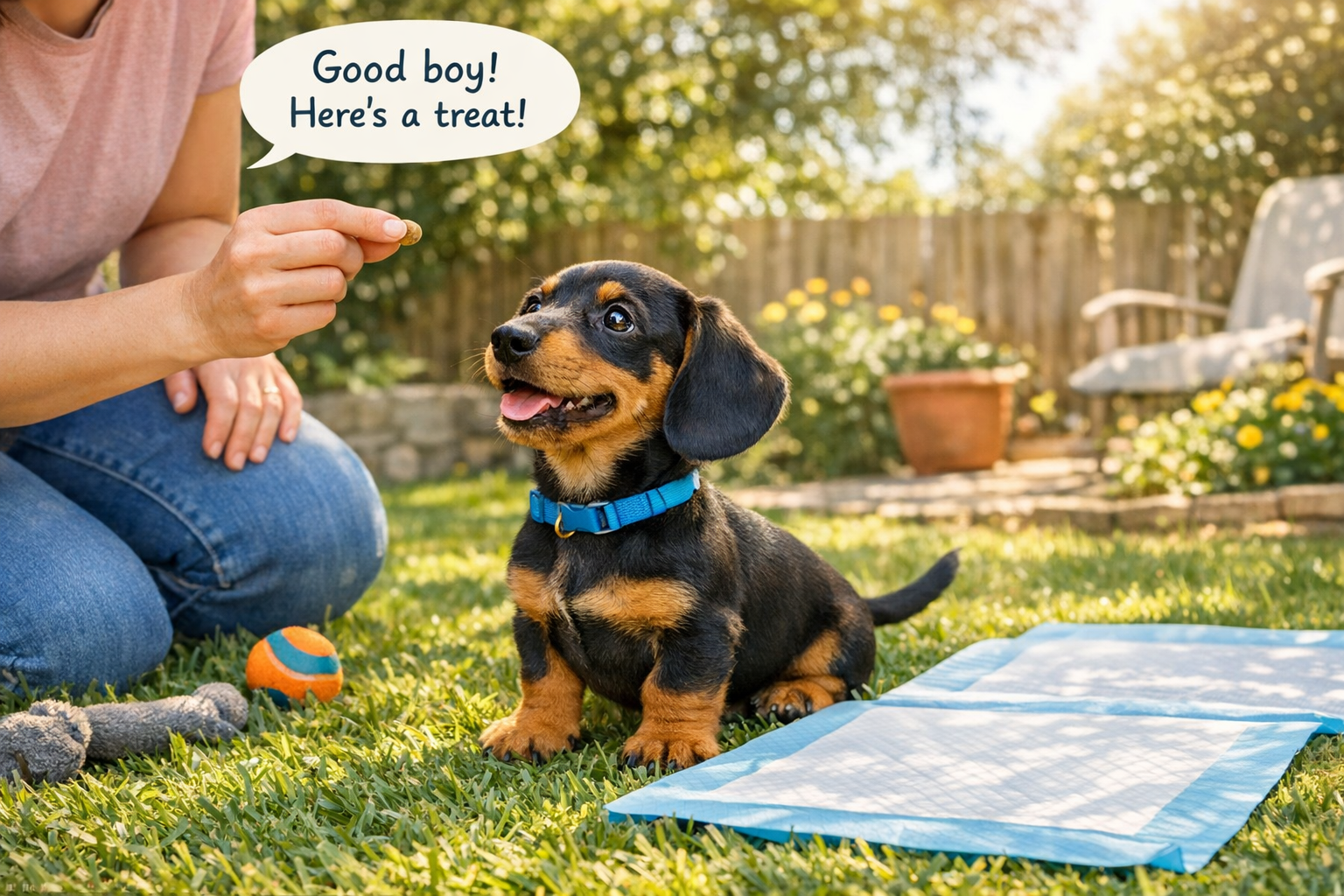
I learned very quickly that positive reinforcement dog training works best. Every time my Dachshund went potty outside, I cheered like they won a gold medal 🥇😂.
I used small treats and lots of praise. This built a strong connection between good behavior and rewards. It’s the core of reward-based training.
Timing matters. I rewarded immediately after they finished—not minutes later. That way, my pup knew exactly what they were being praised for.
I avoided punishment completely. When accidents happened, I just cleaned up and moved on. No yelling. No drama.
Over time, my Dachshund started choosing the right behavior because it felt rewarding. And honestly, it made training feel like a fun game rather than a stressful task.
8. Common Challenges and Solutions
Oh yes, I faced plenty of potty training problems 😅. Accidents, stubborn refusals, and even “protest peeing” (yes, it’s a thing!).
When accidents happened indoors, I used enzyme cleaners. This removed smells and prevented repeat behavior—an important part of dog accident solutions.
Sometimes my Dachshund refused to go outside. Instead of rushing back in, I waited patiently. Eventually, nature won 🌱.
Bad weather was another issue. Rain? My puppy acted like it was lava ☔🔥. I solved this by creating a covered potty area.
Every challenge taught me something new. I learned to adjust instead of getting frustrated—and that made all the difference.
9. Indoor vs Outdoor Training Methods
At first, I used puppy pads as part of my indoor potty training plan. They were helpful, especially when I couldn’t go outside immediately.
But my long-term goal was outdoor training. So I gradually transitioned using a puppy pad training transition method. I moved the pad closer to the door each day. Then eventually outside.
This helped my Dachshund connect indoor habits with outdoor behavior.
I noticed that full outdoor training reduced confusion. My pup understood clearly: outside equals potty 🌳.
Both methods have their place, depending on lifestyle. For me, combining them at first and then transitioning worked perfectly.
10. Long-Term Maintenance and Tips
Even after success, I kept following my routine. Consistency is key in long-term dog training.
I watched for signs of regression. If accidents happened again, I simply returned to basics. That’s part of maintaining dachshund training consistency.
As my dog grew, I slowly increased time between potty breaks. But I didn’t rush it. Every dog learns at their own pace 🐕.
Now my Dachshund signals when they need to go—sometimes dramatically 😄. And I always respond quickly to keep the habit strong.
Looking back, learning how to potty train a dachshund dog required patience, but it truly paid off. With consistency, positivity, and a bit of humor, I turned chaos into a reliable routine—and gained a happier pup along the way 🐾