I’m going to share my personal experience with Dachshund Potty Training Tips, because honestly… I learned most of it the hard way 😅. When I brought my Dachshund home, I expected a smooth training journey. Instead, I got tiny indoor “surprises” and a dog who looked proud of them. But over time, I figured out what works—and what definitely does not.
1. Understanding Dachshund Behavior 🐾
When I first started, I didn’t realise how important Dachshund personality traits are in training. These dogs are independent and a bit stubborn. Mine would look straight at me and still walk away when I called him to go outside 😂.
This happens because of their independent dog breed nature. They were bred to hunt alone, so listening isn’t always their first instinct.
For example, I tried calling him multiple times, but he ignored me—until I brought a treat. Suddenly, he “understood English” 😆.
I learned that understanding their mindset helps a lot. They aren’t being bad—they’re just being themselves.
Once I accepted this, I stopped getting frustrated and started working smarter.
Read more How to Potty Train a Dachshund Dog Fast Guide
2. Why Potty Training is Challenging 😬
Let me be honest: potty training a Dachshund is not easy. One big reason is their small dog bladder size. They simply can’t hold it for long.
Another issue is their stubborn dog behavior. Even when my dog knew where to go, he sometimes chose convenience instead—like my carpet 🙃.
Weather made things worse. Because of weather-sensitive dogs, mine refused to step outside in rain. He’d rather have an accident than get wet!
I remember one rainy day when I stood outside waiting, and he just sat inside judging me 😂.
These challenges don’t mean failure—they just mean we need more patience and better planning.
3. Setting Up the Right Training Environment 🏡
Creating the right setup changed everything for me. I realised my house was too open, which led to frequent accidents.
Using house training environment control, I limited his access with baby gates. This helped me monitor him better.
I also chose one outdoor spot for potty breaks. This builds dog routine habits, which are super important.
At one point, he kept going to the same indoor corner. That’s when I learned about dog scent memory.
After using a proper enzymatic cleaner, he stopped returning there. Lesson learned!
A clean, controlled environment made training so much smoother.
Why Potty Training Spray for Dogs Saved My Carpets (Honest Review)
4. Creating a Consistent Routine ⏰
Consistency saved me. Honestly, without a schedule, things were chaos 😅.
With dog potty schedule training, I took him out at the same times every day:
- Morning
- After food
- After naps
This built strong puppy routine habits. Over time, he started expecting these breaks.
One day, I was late—and guess what? Accident. That taught me how important timing is.
Now I treat routine like a daily rule, not an option. It makes life easier for both of us.
5. Crate Training Done Right 🐕
I was unsure about crates at first, but crate training for dogs really helped.
Dogs naturally avoid dirtying their sleeping area—this is part of dog instinct behavior.
When I used the crate correctly (not too big), my Dachshund held his bladder longer.
For example, I noticed fewer accidents when I used the crate during short breaks.
But I made one mistake: leaving him too long 😬. That caused stress.
So I adjusted—short, controlled use only. Now the crate is his safe space, not punishment.
6. Positive Reinforcement Techniques 🎉
This was a game-changer. Using positive reinforcement dog training, I rewarded every success.
When he went outside:
- I praised him
- I gave treats
- I acted overly excited 😂
This builds strong reward-based learning behavior.
One time, I forgot to reward immediately—and he got confused. Timing matters!
I also used a phrase like “go potty” to help him understand.
Treats became my superpower. Suddenly, training felt much easier.
7. Handling Accidents Properly 🚫
At first, I got frustrated during accidents. But I learned that anger doesn’t work.
Using dog training discipline methods, I stayed calm instead.
If I caught him mid-accident, I gently interrupted and took him outside.
Punishing him affected his dog emotional response, making things worse.
Once, I raised my voice—and he started hiding before accidents 😔. That was my wake-up call.
Now I focus on cleaning and moving forward. Much better results!
8. Indoor vs Outdoor Training Options 🏠
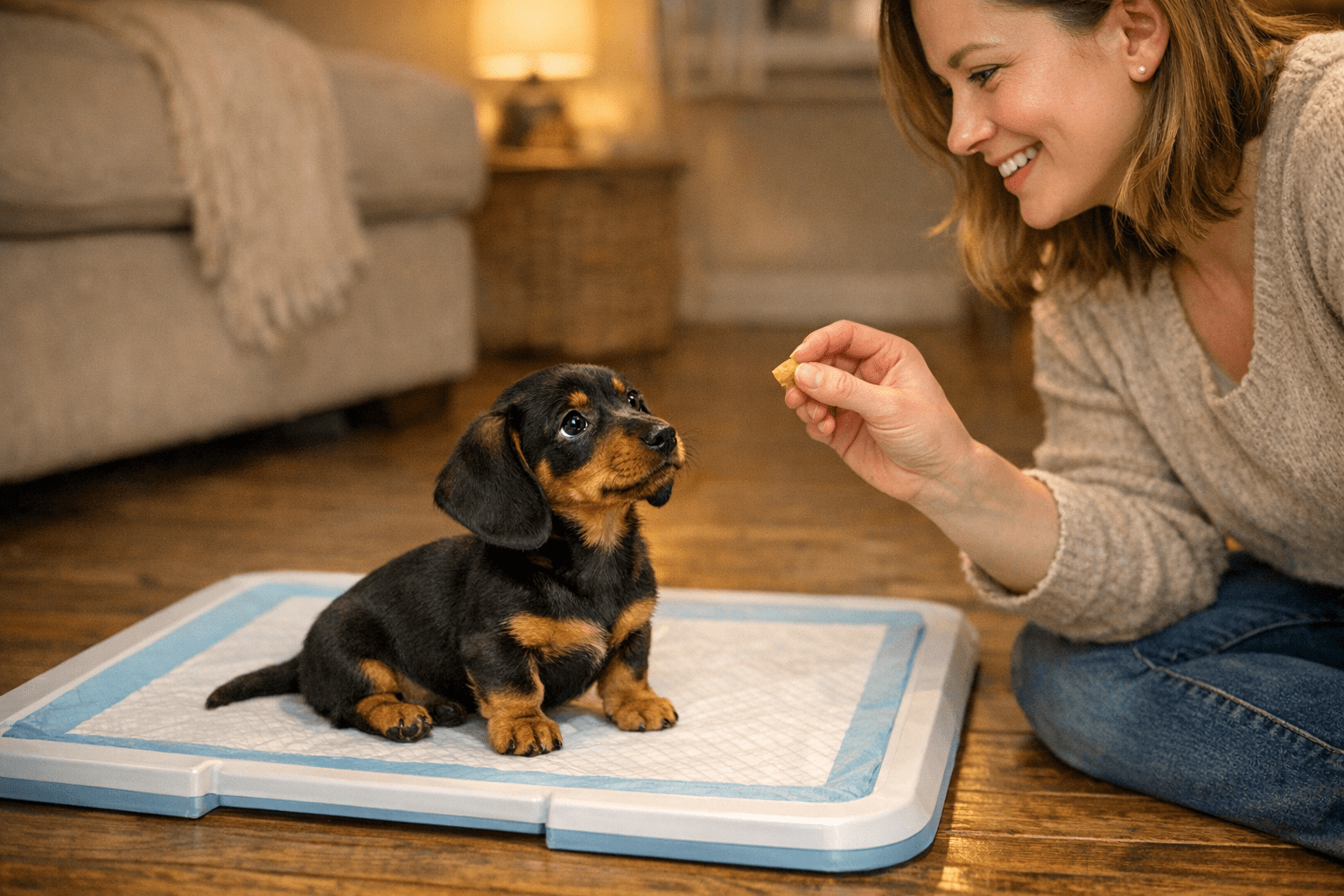
During winter, outdoor training became difficult. That’s when I explored indoor potty training solutions.
I tried pee pads and even artificial grass. It helped during bad weather.
However, I learned about dog training consistency issues. Switching too much confused him.
For example, he didn’t know whether to go outside or use the pad.
So I stuck to one approach at a time. That made training clearer.
Both methods work—but consistency is the real key.
9. Common Mistakes to Avoid ❌
I made almost every mistake possible 😅.
The biggest one? Inconsistency. It ruins puppy training progress quickly.
Another mistake was giving him too much freedom too early. That led to accidents.
I also underestimated supervision, which is crucial in dog behavior monitoring.
One time, I left him alone for just 10 minutes—big mistake.
Now I keep a closer eye until I fully trust him.
Learning from mistakes helped me improve faster.
10. Final Tips for Long-Term Success ✅
Looking back, the biggest lesson I learned is patience. Training doesn’t happen overnight.
Using long-term dog training habits, I stayed consistent every single day.
I celebrated small wins—like one successful day without accidents 🎉.
My Dachshund still has moments, but we’ve come so far.
If I could give one tip: don’t give up. These dogs take time, but they do learn.
At the end of the journey, I truly understand Dachshunds better—and I finally mastered Dachshund Potty Training Tips 😄
Dachshund Potty Training Tips and Advice
- Dachshund potty training tips include maintaining a strict routine, taking them out frequently, and rewarding success immediately 🐶
- Potty training dachshund puppy requires patience, as they can be stubborn and easily distracted 🐾
- Mini dachshund potty training follows the same principles but may require more frequent bathroom breaks due to their small size 📏
- How do you potty train a dachshund involves crate training, supervision, and consistent positive reinforcement ✅
- How to train dachshunds potty training works best when you use the same potty spot and avoid punishment 🚫
- Potty training a dachshund puppy is easier when you take them out after meals, naps, and playtime ⏰
- How to potty train dachshund routines should be consistent to avoid confusion and setbacks 🔁
- Dachshund potty training success depends on patience and building a predictable schedule 🏡
- Potty training dachshund can take longer than other breeds due to their independent nature 🧠
- Why are dachshunds so hard to potty train is often linked to their stubbornness and sensitivity to weather 🌧️
- Are dachshund hard to potty train is commonly yes, but with consistency and rewards they can learn effectively 🎯